
TL;DR — Key Takeaways
- Cattle AI equipment into the US may qualify as Class I exempt (no 510(k)) or require Class II 510(k) clearance depending on intended use.
- Chinese exporters must provide: Veterinary Health Certificate + Manufacturing License + Free Sale Certificate + Certificate of Origin + Export Declaration.
- USDA APHIS clearance takes 5-15 business days minimum; plan 3-4 weeks total from application to port arrival.
- EU import: CE marking under EU MDR 2017/745 required for veterinary devices; Class I allows self-declaration.
- The five most common customs delay causes: missing health certificate, incomplete manufacturing license, improper Free Sale Certificate apostille, HS code misclassification, and insufficient product description.
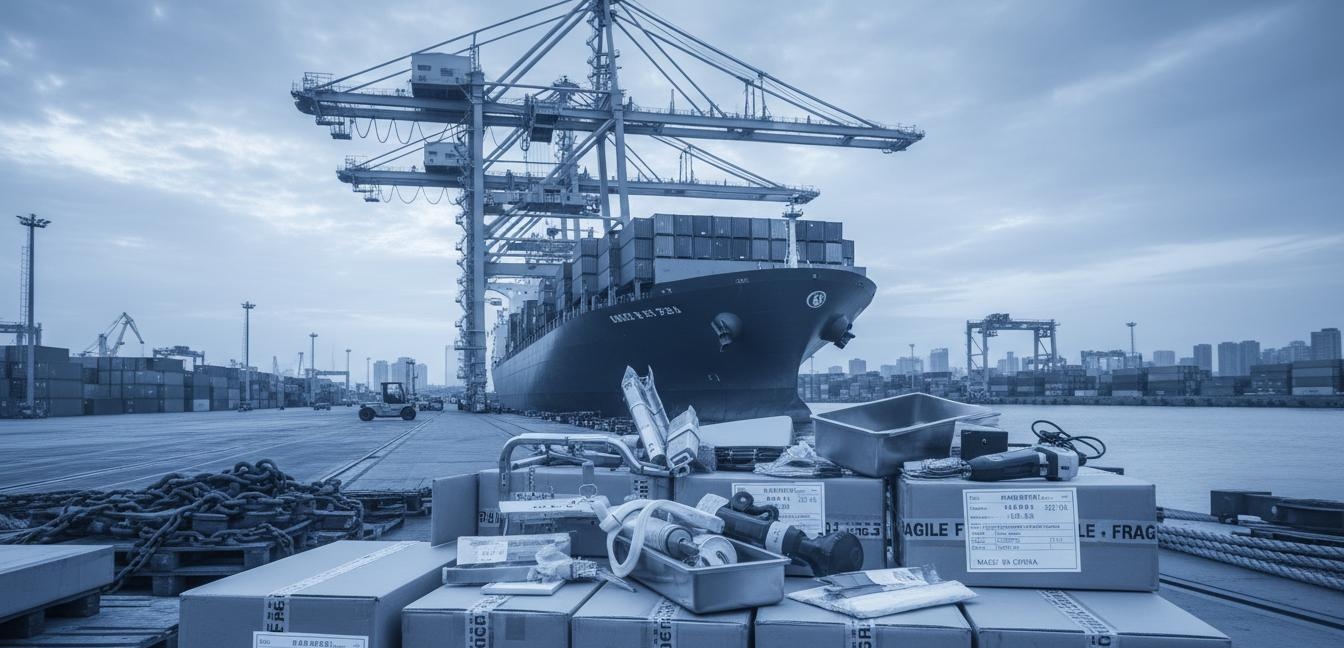 Why Livestock Equipment Imports Face Tighter Regulatory Scrutiny Than Most Consumer Goods
Livestock equipment imports face regulatory scrutiny that most consumer goods importers never encounter. The reason is straightforward: veterinary equipment can directly affect animal health, public health, and food safety. An AI gun that harbors bacterial contamination can introduce pathogens into a breeding program. A drencher that delivers incorrect doses can contribute to antimicrobial resistance. These aren’t hypothetical risks — they’re documented pathways for disease transmission that regulators take seriously.
In 2019, a batch of contaminated cattle AI equipment from a Chinese manufacturer introduced Bovine Viral Diarrhea Virus (BVDV) into three breeding operations in the United States via insufficiently sterilized equipment. The resulting outbreak cost the industry an estimated 4.5 million USD in losses. This is why regulatory requirements exist — and why importers must take them seriously.
FDA Veterinary Device Registration: Which Equipment Requires 510(k) or 21 CFR Part 820 Compliance
The FDA regulates veterinary devices under the Federal Food, Drug, and Cosmetic Act. Classification determines which requirements apply:
| Device Class | Risk Level | AI Equipment Examples | Requirements |
|---|---|---|---|
| Class I | Low | AI guns, sheaths, manual syringes | General controls, most are 510(k) exempt |
| Class II | Moderate | Semen straws, AI catheters, electronic stimulators | Special controls + 510(k) clearance |
| Class III | High | Not typical for standard cattle AI equipment | PMA required |
Work with an FDA-registered facility and a regulatory consultant to confirm your specific product classification. The classification depends on intended use — the same physical device can be Class I or Class II depending on how it’s marketed and what claims are made.
EU Veterinary Device Regulations: MDR 2017/745 Implications for Livestock Equipment Importers
The EU Medical Device Regulation (EU MDR 2017/745) replaced the old Medical Device Directive (93/42/EEC) and significantly tightened requirements. For livestock equipment importers:
- Class I veterinary devices (low risk): Self-declaration of conformity is permitted. The manufacturer conducts its own assessment and issues an EU Declaration of Conformity. The device can then be CE marked and sold throughout the EU.
- Class IIa, IIb, and III devices: Require involvement of a Notified Body (a certification body authorized by an EU member state) for conformity assessment before CE marking. This process typically takes 4-9 months.
- Technical Documentation: Must include device description and specifications, design and manufacturing information, risk analysis, clinical evaluation, and labeling samples.
For equipment that is NOT intended for medical purposes (feeding equipment, basic housing equipment), the EU General Product Safety Directive (GPSD) may apply instead of MDR — but confirm with an EU regulatory specialist.
Chinese Exporter Documentation: Health Certificates, Manufacturing Licenses, and Free Sale Certificates
Your Chinese supplier must provide a specific set of documents. These are non-negotiable for most importing countries:
- Veterinary Health Certificate : Issued by AQSIQ or authorized provincial Animal Health Inspection authorities. Confirms products are free from infectious disease agents.
- Certificate of Manufacturing License: From SAMR or relevant product-specific regulatory body. Confirms the manufacturer is legally authorized to produce the product.
- Free Sale Certificate : Confirms the product is legally manufactured and freely sold in China without restriction. Sometimes called a “Free Sale Declaration.”
- Certificate of Origin : Issued by CIQ or authorized chambers of commerce. Required for customs clearance and tariff determination.
- Export Declaration : From Chinese customs authorities. Required for all exports from China.
All documents must be in both Chinese and English, or translated by a certified translator. Plan for document preparation time of 2-3 weeks minimum.
Quarantine Requirements: How Different Countries Handle Livestock Equipment Shipments
Quarantine requirements vary significantly by destination country:
- United States (USDA APHIS): Requires import permit (VS Form 16-3), health certificate from Chinese authorities, and product inspection at port of entry. Equipment contacting animals (AI guns, sheaths) faces more scrutiny than non-contact equipment.
- European Union: Requires CE marking per EU MDR 2017/745, and some member states have additional national requirements. Health certificates must be issued by authorities recognized by the EU.
- Australia (DAF): Biosecurity import conditions (BICON) must be checked before ordering. Some livestock equipment requires treatment (fumigation, gamma irradiation) before import.
- Canada (CFIA): Requires veterinary import permit, health certificate, and inspection at first port of arrival. Similar requirements to USDA APHIS.
Import Clearance Checklist: Documents to Have Ready Before Your Shipment Arrives
The goal is to have everything ready before the shipment arrives at port. Delays at the port cost money — storage fees, demurrage charges, and delayed inventory that ties up working capital. I’ve seen shipments sit at ports for 6-8 weeks because of documentation issues that could have been resolved before departure from China. The cost of that delay typically far exceeds the cost of hiring a competent customs broker upfront.
Pre-Shipment Document Verification Checklist
Before your supplier ships, verify each of the following documents is present, current, and correctly formatted. I recommend creating a checklist where each item must be checked off by someone with regulatory knowledge — not just the purchasing department.
- Veterinary Health Certificate: Verify the issuing authority is recognized by your destination country. For the US, this means USDA APHIS-approved sources. For the EU, this means officials recognized under the EU’s approved establishment list. The certificate must state the specific products covered — generic certificates that cover “all veterinary equipment” are frequently rejected by customs at the destination. Check the validity period: most health certificates are valid for 30-90 days from issuance, and using an expired certificate is one of the most common rejection reasons.
- Certificate of Manufacturing License: Confirm the license covers the specific product category you’re importing. Chinese manufacturing licenses are often product-category-specific. If your supplier has a license for “general veterinary instruments” but you’re importing a specialized device, the license may not cover it. Ask your Chinese supplier for the specific product scope on their license and compare it against your purchase order.
- Free Sale Certificate: Verify the apostille or consular legalization is current and matches the requirements of your destination country. Some countries require notarized documents, others require certified translations, some require both. The requirements vary significantly between the US, EU, Australia, and Canada. A document that is perfectly valid for an EU import may be rejected for an Australian import if the legalization requirements differ.
- Product Description and HS Code: Ensure the commercial invoice and packing list accurately describe each product with sufficient detail for customs classification. “Veterinary equipment” is not sufficient — state “cattle artificial insemination gun, stainless steel, 45cm length” or similar specific descriptions. Vague product descriptions trigger inspection requests and valuation challenges.
- FDA Registration or CE Certification: If your products require FDA registration or CE marking, verify the certificate number is included on the commercial invoice and that the certificate covers the specific products being shipped. I’ve seen shipments held because the certificate on file was for a different product model than what was actually shipped.
Working with Customs Brokers: How to Select Someone Who Knows Veterinary Equipment
Not all customs brokers understand livestock equipment. I strongly recommend working with a broker who has specific experience with veterinary or agricultural equipment imports — they will know which HS codes apply, which documentation requirements are strict versus flexible, and how to navigate port-of-entry inspections efficiently.
When evaluating customs brokers, ask them specifically: how many veterinary equipment imports have you handled in the past 12 months? What was the most common documentation issue you encountered? Can you provide references from agricultural equipment importers? A broker who answers these questions confidently is worth the premium over a generalist broker who handles everything from electronics to clothing.
Common Pitfalls I’ve Observed Across 200+ Import Operations
Looking at the patterns across client import issues I’ve been asked to help resolve, the most common failures are preventable with proper planning.
HS Code Misclassification: This is the single most common cause of customs delays and unexpected duty assessments. Veterinary equipment classification is complex — the same device might fall under different HS codes depending on whether it’s classified as a medical device, an agricultural tool, or a laboratory instrument. The correct classification affects both duty rate and documentation requirements. Invest time in getting this right before the shipment leaves China.
Insufficient Labeling for Inspection: Customs inspectors need to be able to identify products from shipping documents. If your products have no English-language labeling and the commercial invoice doesn’t adequately describe them, inspectors may hold the shipment pending clarification. Include bilingual (English and Chinese) product labels and ensure the commercial invoice description matches the labels exactly.
Failure to Pre-Notify the Port: Many destinations require pre-arrival notification to agricultural quarantine authorities. Failing to provide this notice before the shipment arrives means the shipment sits in quarantine holding while the notification is processed — adding 3-7 days to clearance time.
Post-Clearance: What to Do After Your Equipment Clears Customs
Getting through customs is only half the process. What you do after the equipment clears affects its long-term performance and your regulatory compliance position.
Immediate inspection upon receipt: Within 48 hours of delivery, conduct a complete incoming inspection of every unit. Check for shipping damage — I’ve seen syringes arrive with cracked barrels that were clearly damaged in transit, not from the factory. Verify quantities match the packing list exactly. Set aside any damaged or incorrect items and initiate a freight claim with your carrier immediately — don’t wait more than 5 business days to report damage, or most carriers will consider the claim invalid.
Product registration maintenance: If your equipment requires ongoing FDA registration or CE marking maintenance, update your records to reflect the new inventory. For FDA-registered facilities, new equipment additions may require filing updates to your establishment registration. For CE-marked products, the technical file may need to be updated to reflect new serial number batches. Keeping these records current is not optional — it’s what allows you to demonstrate compliance during regulatory inspections.
Storage conditions: Veterinary equipment is often damaged by improper storage more than by transit. Store syringes in their original packaging in a climate-controlled environment (15-25 degC, relative humidity below 60%). Avoid stacking heavy items on top of syringe boxes — plastic components can deform under sustained pressure. Magnetic equipment should be stored away from other metal objects to prevent accidental demagnetization. I recommend a dedicated storage shelf system rather than mixing equipment in general warehouse space.
The Hidden Costs of Import Errors: What I Tell Every New Importer
After 12 years helping clients navigate international equipment procurement, I’ve developed a mental checklist of cost factors that first-time importers consistently underestimate.
Demurrage and detention charges: These are the charges that shipping lines and ports apply when containers sit beyond the free time window. For a 20-foot container at major US ports, demurrage typically runs 75-150 USD per container per day after the free time expires. In European ports, daily rates can reach 100-200 EUR. A 2-week delay from documentation issues can easily add 1,000-2,500 USD in demurrage charges — on top of the original product cost.
Expedited shipping surcharges: When documentation delays push your original shipment past the intended delivery window, clients often ask me to help arrange air freight to catch up. Air freight for veterinary equipment from China runs 4-8 USD per kilogram. A 200-kilogram shipment of AI equipment can cost 800-1,600 USD in air freight versus 200-400 USD for sea freight — for the same cargo. Planning ahead avoids this premium entirely.
Regulatory penalty fees: Importing equipment without proper registration or certification can trigger civil penalty proceedings. FDA civil monetary penalties for import violations can reach 10,000 USD per violation category. EU MDR non-compliance penalties vary by member state but can reach similar magnitudes. These are not theoretical risks — I have personally assisted two clients in negotiating with regulatory authorities over documentation gaps that resulted in penalty notices exceeding 15,000 USD per incident.
Download: Import Documentation Checklist
Complete pre-shipment documentation checklist including all required Chinese export documents, destination country import permits, and customs broker contact template. Available for Sound-AI distributor partners.
Frequently Asked Questions
Post time: May-18-2026