
Livestock Watering Equipment Buying Guide
TL;DR: Automatic Cattle Drinking Bowl Features
- A good cattle drinking bowl should provide clean water access with durable materials and reliable flow control.
- Check bowl material, valve type, flow rate, mounting design, cleaning access, and spare parts support.
- For distributors, packaging, MOQ, mixed livestock supply options, and repeat batch consistency matter.
- Automatic watering products should be easy to install, easy to clean, and suitable for cattle farm conditions.
- SOUNDAI supplies cattle watering products and related livestock farm equipment for global buyers.
An automatic cattle drinking bowl is a practical livestock watering product designed to provide animals with on-demand water access while reducing manual filling work. For farm supply distributors, agricultural importers, dairy equipment sellers, and livestock retailers, it is not enough to choose a low-cost bowl. The product must survive farm impact, water pressure changes, outdoor humidity, animal contact, and repeated cleaning.
SOUNDAI provides livestock watering products through its optimized category page: https://www.sound-ai.com/watering/. The company also offers related cattle and livestock products through SOUNDAI’ official website, making it suitable for buyers who want to source watering equipment together with other farm supplies.
What Is an Automatic Cattle Drinking Bowl?
An automatic cattle drinking bowl is a livestock waterer that refills or releases water through a valve system when cattle drink or press the activation mechanism. It is used in cattle barns, dairy farms, beef cattle facilities, holding pens, breeding areas, and other livestock housing environments.
The purpose is simple: provide water access while reducing manual labor. However, the engineering behind the product matters. The bowl must hold enough water for animal use, the valve must respond reliably, and the mounting system must stay stable when cattle push, rub, or drink aggressively.
Watering equipment is closely connected to animal performance and welfare. The MSD Veterinary Manual explains that cattle water needs vary by body weight, diet, environment, production stage, and weather. For B2B buyers, this means the drinking bowl should be selected according to real farm conditions, not only catalog appearance.
Why Does Drinking Bowl Quality Matter for Farm Supply Buyers?
Drinking bowl quality matters because poor waterer performance can create farm complaints, product returns, installation problems, and weak repeat orders. A distributor may sell the bowl once, but the farm customer will judge the supplier by how the bowl performs after installation.
A low-quality cattle drinking bowl may leak, clog, rust, crack, overflow, install poorly, or fail under animal impact. These problems are not only technical issues. They create business cost: replacement parts, customer service, negative reviews, repacking, and slower future sales.
For importers and wholesale buyers, the best product is one that combines reliable farm performance with strong resale presentation. That means clear product photos, consistent specifications, practical packaging, spare parts availability, and technical information that sales teams can explain.
A cattle drinking bowl should be evaluated as both a farm-use product and a B2B resale product. The strongest supplier supports both sides: practical field design and organized export information.
Feature 1: Durable Bowl Material
The first feature to check is durable bowl material because cattle watering equipment must resist impact, corrosion, moisture, and daily farm wear. Common options include stainless steel, cast iron, coated metal, engineering plastic, and other livestock-grade materials depending on the product model.
Material choice affects strength, hygiene, cleaning, product weight, shipping cost, and customer perception. Stainless steel bowls often look clean and resist corrosion well. Cast iron or heavy coated designs may be valued for strength. Plastic models may reduce weight and cost but must be strong enough for livestock environments.
Buyers should ask the supplier to specify material type, surface treatment, thickness where applicable, and whether the bowl is designed for cattle rather than only smaller animals. If a supplier cannot explain the material clearly, the buyer may face inconsistent batches or weak product positioning later.
For wholesale buyers, the right material is the one that matches target farms, climate, price level, and resale channel. A high-end dairy supplier may prefer stainless steel presentation, while a farm retailer may need a balanced durable-cost option.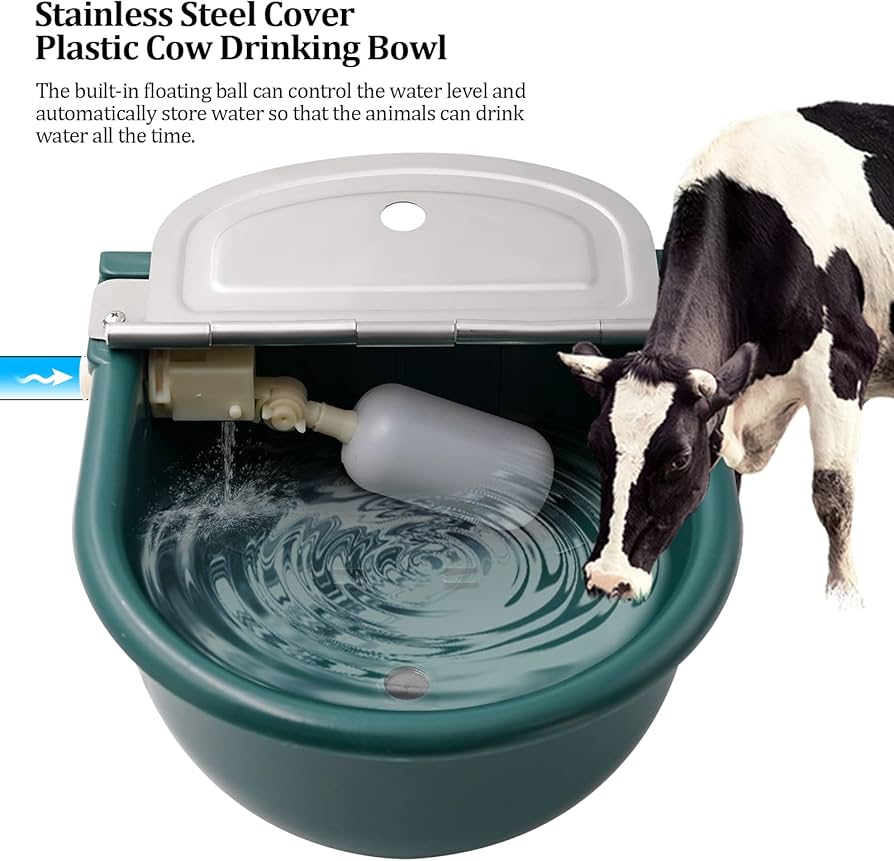
Feature 2: Reliable Valve and Flow Control
The valve is the most important functional part of an automatic cattle drinking bowl because it controls water release, refill behavior, leakage risk, and user experience. Buyers should check valve type, activation method, connection size, flow performance, and spare valve availability.
Some drinking bowls use paddle valves, nose-press valves, float valves, or other automatic water control systems. Each design has different advantages. A paddle or nose-press design may reduce standing water and encourage on-demand drinking. A float design may maintain a water level in the bowl. The correct choice depends on cattle age, barn design, water pressure, and farm management preference.
Flow control should be stable. If the flow is too slow, animals may not get enough water during busy drinking periods. If the flow is too strong, the bowl may splash, overflow, or waste water. Buyers should ask for recommended water pressure, connector type, and installation guidance.
A reliable valve system reduces leaks, improves farm satisfaction, and makes the cattle drinking bowl easier to sell as a professional product. Distributors should also ask whether replacement valves, seals, springs, or connectors are available for after-sales support.
Feature 3: Suitable Bowl Capacity and Animal Access
The bowl capacity and access design should match cattle size, drinking behavior, and installation location. A bowl that is too small may not satisfy larger animals efficiently. A bowl that is too deep, awkward, or poorly positioned may be harder for animals to use comfortably.
Buyers should consider whether the product is intended for calves, adult cattle, dairy cows, beef cattle, or mixed livestock. They should also ask whether the bowl can be installed at a suitable height and whether the drinking area allows cattle to approach naturally.
Water access planning matters because cattle water demand changes with body weight, temperature, feed dry matter, pregnancy, lactation, and production stage. The University of Minnesota Extension notes that water is essential for dairy cattle and that requirements increase under different production and environmental conditions. Buyers should use such references to educate customers while avoiding unrealistic product claims.
The best cattle drinking bowl is not always the largest; it is the one that fits the animal group, water pressure, barn layout, and management routine.
Feature 4: Strong Mounting and Installation Design
A cattle drinking bowl needs strong mounting because cattle can push, rub, lean, and contact the product repeatedly during daily use. Weak mounting points can create broken bowls, leaking pipes, loose brackets, and customer complaints.
Buyers should check the mounting holes, bracket design, wall or pipe installation options, and whether the product includes installation accessories. They should ask for installation photos, product drawings, and recommended mounting height where available.
For export buyers, installation clarity is especially important. If the customer receives a product without enough installation information, the distributor may need to answer technical questions manually. A supplier that provides photos, diagrams, and accessory lists saves time for the buyer’ sales and after-sales teams.
Good installation design makes the product easier to sell because customers can understand where and how the bowl should be mounted before purchase. It also supports e-commerce listing quality and printed catalog clarity.
Feature 5: Easy Cleaning and Hygienic Design
Easy cleaning is a key feature because livestock waterers can collect feed particles, dirt, biofilm, mineral deposits, and outdoor debris. A good automatic cattle drinking bowl should allow farm workers to inspect and clean the water contact area without complicated disassembly.
Smooth surfaces, rounded corners, accessible valves, and removable parts can make cleaning easier. Buyers should also check whether the bowl shape prevents excessive dirt accumulation and whether the material can tolerate routine farm cleaning.
Clean water access is part of responsible livestock management. University extension resources such as Penn State Extension’ water system planning guidance discuss estimating livestock water needs and planning water systems. For distributors, linking product selection to practical farm water planning improves content credibility and helps buyers understand the equipment’ role.
A drinking bowl that is hard to clean may look acceptable in a catalog but perform poorly in real farm use. Buyers should always evaluate maintenance convenience, not just new-product appearance.
Feature 6: Leak Resistance and Water-Saving Performance
Leak resistance matters because water leakage wastes resources, increases barn moisture, creates muddy areas, and causes customer dissatisfaction. Buyers should ask about valve sealing, connector quality, water pressure range, and whether the bowl has been designed to reduce overflow.
Automatic waterers are often installed in environments where small leaks can become big problems. A dripping valve can increase cleaning workload. A loose connector can damage flooring or bedding. Overflow can create hygiene and comfort issues. Therefore, the valve and connection system should be evaluated carefully.
Distributors should request test information or at least supplier explanations about leak control. They should also ask whether replacement seals, valves, or fittings are available. Spare parts support makes the product easier to maintain and improves customer confidence.
A water-saving cattle drinking bowl is not only good for farms; it is also easier for distributors to promote because it solves a clear operational problem.
Feature 7: Suitable Packaging for Export and Resale
Packaging is important because cattle drinking bowls are bulky or heavy enough to require careful carton planning, protective packing, and clear labeling. Poor packaging can lead to scratches, broken accessories, missing parts, and warehouse confusion.
Wholesale buyers should ask how many pieces are packed per carton, whether accessories are packed together, what the carton dimensions and weight are, and whether labels can be customized. Retailers may need printed boxes, barcode labels, or private-label cartons. E-commerce sellers may need cleaner packaging and product photos suitable for online listings.
Packaging should also protect surface finish. A stainless steel bowl with scratches may still function, but it may be harder to sell as a new product. A coated or painted bowl should be packed to reduce rubbing damage during international transport.
For B2B buyers, export packaging is part of product quality because it affects landed cost, customer presentation, and after-sales workload.
Buyer Comparison Table for Cattle Drinking Bowls
A comparison table helps importers and distributors evaluate cattle drinking bowl suppliers objectively instead of choosing by price alone. Use the following framework when reviewing samples and quotations.
| Feature | What to Check | Why It Matters |
|---|---|---|
| Bowl Material | Stainless steel, cast iron, coated metal, plastic, or other livestock-grade material. | Determines durability, cleaning, appearance, and target price level. |
| Valve System | Paddle, nose-press, float, connector size, water pressure range, spare parts. | Controls water release, leakage risk, and user satisfaction. |
| Capacity | Bowl volume, drinking access, target animal size, and refill behavior. | Helps farms match equipment to cattle groups and barn layout. |
| Installation | Mounting holes, brackets, accessories, drawings, and recommended height. | Reduces installation confusion and after-sales questions. |
| Cleaning | Smooth surfaces, accessible bowl area, removable or inspectable parts. | Improves hygiene and reduces maintenance workload. |
| Packaging | Carton quantity, protection, labels, barcodes, and OEM packaging options. | Supports export, resale, and brand presentation. |
What Should Distributors Ask Before Ordering?
Before ordering automatic cattle drinking bowls, distributors should request material details, valve specifications, product dimensions, installation photos, packaging information, MOQ, lead time, and spare parts availability. These details help buyers evaluate both product function and resale readiness.
A strong inquiry should include target market, animal type, order quantity, packaging preference, destination country, and whether the buyer wants mixed products. The supplier can then recommend suitable models, quote more accurately, and help plan shipping.
Buyers should also request product photos from multiple angles, including valve area, mounting holes, bottom structure, accessories, and carton packaging. These photos are useful for internal approval, catalog creation, and online product pages.
The more clearly a supplier answers technical and packaging questions, the easier it is for distributors to sell the cattle drinking bowl professionally.
Why Choose SOUNDAI for Livestock Watering Products?
SOUNDAI is suitable for livestock watering product buyers because it supplies watering equipment together with broader cattle and farm supply categories. This matters for importers who want to combine automatic cattle drinking bowls with other livestock products in one sourcing plan.
SOUNDAI’ website includes related categories such as Watering, Drinking Bowl, Automatic Water Bowl, Cattle Drinking Trough, Animal Syringe, AI Gun, and Cow Magnet. This product range supports distributors serving dairy farms, beef cattle farms, veterinary channels, and agricultural retailers.
For the target keyword cattle drinking bowl, the optimized internal destination should be SOUNDAI’ watering page: https://www.sound-ai.com/watering/. It connects the blog topic to the correct product category and helps buyers continue toward inquiry.
Conclusion: Choose a Cattle Drinking Bowl Built for Real Farm Use
The best automatic cattle drinking bowl is durable, leak-resistant, easy to install, easy to clean, and supported by a reliable livestock equipment supplier. Buyers should evaluate material, valve design, capacity, mounting, cleaning access, packaging, and spare parts before placing bulk orders.
For farm supply distributors, the product must do more than look good in a catalog. It must perform under cattle farm conditions and be easy to explain, ship, install, and reorder. That is why supplier reliability and product documentation matter as much as unit price.
Buyers looking for cattle drinking bowls and other livestock watering products can start from SOUNDAI’ watering category page: Livestock Watering Products.
FAQ
What features should I look for in a cattle drinking bowl?
Look for durable material, reliable valve design, suitable flow rate, correct capacity, strong mounting, easy cleaning, leak resistance, spare parts support, and export-ready packaging.
Why is valve quality important in an automatic cattle drinking bowl?
Valve quality is important because the valve controls water release, leakage risk, refill behavior, and daily farm reliability. A poor valve can cause dripping, overflow, or slow water access.
What material is best for cattle drinking bowls?
The best material depends on target market and farm conditions. Stainless steel offers clean appearance and corrosion resistance, while heavy coated metal or cast designs may provide strong durability.
Can cattle drinking bowls be private-labeled?
Many suppliers can support private-label packaging depending on MOQ, product model, and packaging style. Buyers should confirm label design, carton marks, and barcode requirements before ordering.
Where can I source cattle drinking bowls?
You can source cattle drinking bowls and related livestock watering products from SOUNDAI’ watering category page at https://www.sound-ai.com/watering/.
Can I buy cattle drinking bowls with other farm supplies?
Yes. Cattle drinking bowls can be sourced together with automatic water bowls, cattle drinking troughs, animal syringes, AI guns, cow magnets, and other livestock supplies.
Request Cattle Drinking Bowl Information
Need automatic cattle drinking bowls, livestock watering products, or mixed farm supply orders? Visit SOUNDAI’ Watering page or contact the team through Contact Us.
Suggested inquiry details: quantity, destination country, material preference, target animal, packaging requirement, and whether you want to combine watering products with other livestock supplies.
Post time: May-09-2026