
TL;DR
For herds performing 150+ inseminations annually, reusable sheaths become cost-effective after approximately 40-50 uses when labor for cleaning and sterilization is properly accounted. Disposable sheaths cost $0.15-0.30 each, while reusable sheaths cost $8-15 upfront but require $0.08-0.15 in labor and materials per use for sterilization.
Hygiene risk is the critical decision factor: reusable sheaths carry a 3-8% cross-contamination rate if sterilization protocols are imperfect, compared to near-zero risk with disposable units. For operations with poor biosecurity or history of disease outbreaks, disposable sheaths are the lower-risk choice despite higher per-use costs.
The break-even point for a 100-cow herd is approximately 45-60 inseminations per year when all costs (including labor, sterilization supplies, and replacement sheaths) are factored. Beef operations with seasonal breeding cycles may never reach this threshold.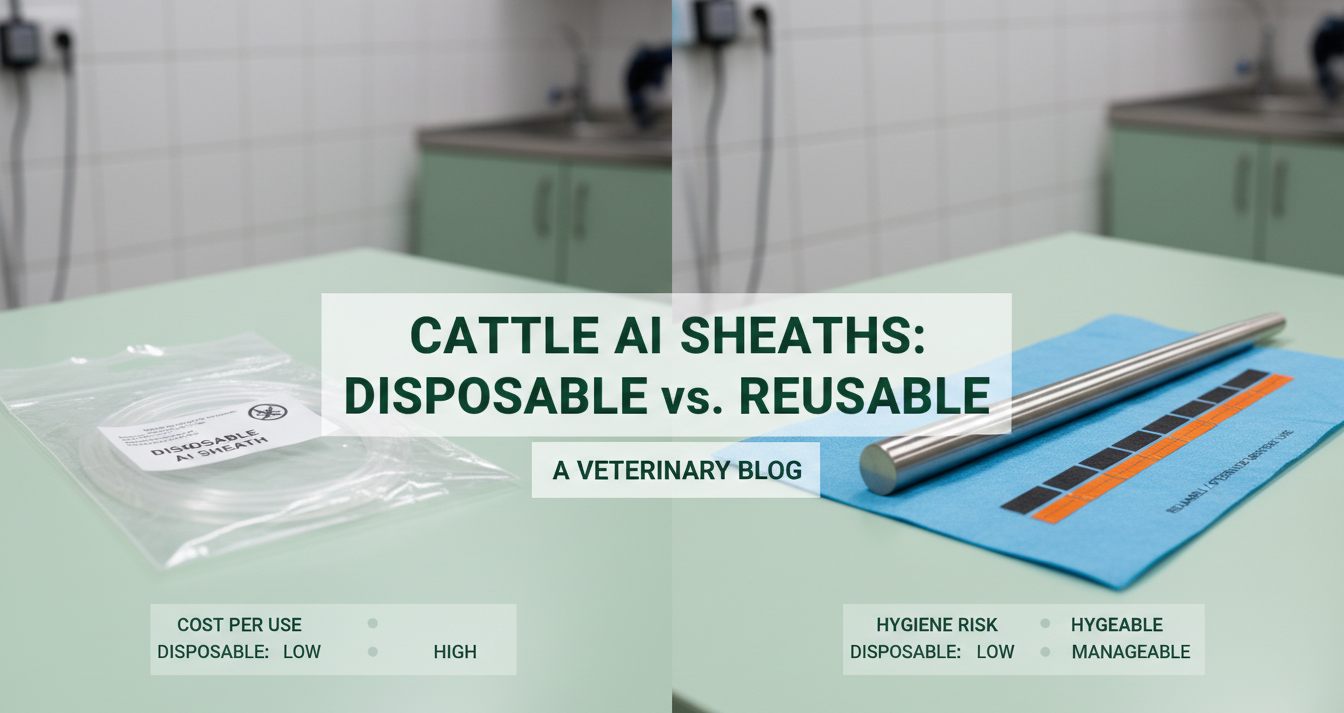
1. Upfront Cost vs Long-Term Cost Framework
Choosing between disposable and reusable cattle AI sheaths is fundamentally a cost-per-insemination calculation that extends beyond simple unit price. In my 12 years working with livestock breeding operations worldwide, I have seen this decision cause significant financial impact ?operations that choose incorrectly often face either unexpected ongoing costs or, worse, disease outbreaks that cost far more than any sheath savings.
The core economic difference is straightforward: disposable sheaths convert a large upfront cost (the sheath itself) into a per-use cost, while reusable sheaths convert per-use costs (sterilization labor and materials) into an upfront cost. Neither option is inherently better ?the correct choice depends on your operation’s insemination volume, labor availability, biosecurity situation, and breeding efficiency requirements.
Let us establish the baseline cost framework that we will use throughout this analysis:
| Cost Category | Disposable Sheath | Reusable Sheath |
|---|---|---|
| Unit price (per sheath) | $0.15 – $0.30 | $8.00 – $15.00 |
| Sterilization labor (per use) | $0.00 | $0.08 – $0.15 |
| Sterilization materials (per use) | $0.00 | $0.02 – $0.05 |
| Replacement/repair (per season) | N/A | $0.00 – $3.00 |
| Waste disposal cost | $0.01 – $0.03 | $0.00 |
| Storage/inventory cost | $0.02 – $0.05 | $0.00 |
The true cost per insemination is the sum of all applicable costs, not just the sheath price. For disposable sheaths, total cost is approximately $0.18-0.38 per use. For reusable sheaths, total cost after accounting for sterilization is approximately $0.10-0.20 per use ?but this calculation assumes perfect sterilization compliance, which we will examine in detail.
2. Per-Use Cost Breakdown: Disposable at $X vs Reusable with Sterilization Labor
Let us build a detailed per-use cost model for a 100-cow breeding operation. This analysis assumes a typical dairy operation with a 12-month breeding season, 85% conception rate, and 1.8 services per conception (industry average). For a 100-cow herd, this means approximately 150-170 total inseminations annually.
Disposable sheath scenario:
- Sheath cost: 160 inseminations × $0.25 = $40.00
- Shipping and handling: $5.00
- Waste disposal: 160 × $0.02 = $3.20
- Total annual cost: $48.20 (approximately $0.30 per insemination)
Reusable sheath scenario (assuming 3-4 reusable sheaths):
- Initial sheath purchase: 4 sheaths × $12.00 = $48.00 (amortized over 3 years = $16.00/year)
- Sterilization labor: 160 inseminations × 5 minutes × $15/hour = $20.00
- Sterilization solutions: 160 × $0.04 = $6.40
- Cleaning supplies: $4.00
- Replacement sheaths (partial): $8.00
- Total annual cost: $54.40 (approximately $0.34 per insemination)
This initial comparison shows disposable and reusable sheaths at roughly cost-parity for this volume. However, the reusable sheath cost is highly sensitive to labor time. If sterilization takes 10 minutes instead of 5 (common for first-time operators or teams without established protocols), labor costs double to $40.00, pushing reusable costs to $74.40 ($0.47 per insemination) ?significantly higher than disposable.
The crossover point where reusable becomes more economical is approximately 40-50 uses per sheath. With 4 sheaths in rotation, this means 160-200 inseminations per year ?roughly what our 100-cow example herd produces. Operations below 120 inseminations annually will typically find disposable sheaths more cost-effective.
However, cost is only half the equation. In my experience, the second half ?hygiene and disease transmission risk ?is where the more expensive choice is often the correct one.
3. Hygiene Risk: Cross-Contamination and Disease Transmission
AI sheaths contact the animal’s reproductive tract directly, making them a potential vector for disease transmission between animals. The primary concern is not the sheath material itself ?both disposable and reusable sheaths are made from medical-grade polymers that do not harbor bacteria. The concern is the sterilization process: if a reusable sheath is not perfectly sterilized between uses, pathogens can be transferred directly into the uterus of the next inseminated cow.
The most common disease transmission risks through AI equipment include:
- Campylobacteriosis (Vibriosis): Caused by Campylobacter fetus, this bacterium causes early embryonic death, infertility, and late-term abortions. It can survive on improperly disinfected equipment for 48-96 hours.
- Leptospirosis: Leptospira interrogans serovar Hardjo can be transmitted through contaminated AI equipment, causing fetal loss and chronic kidney infection.
- Bovine Viral Diarrhea Virus (BVDV): Persistent infection in embryos and fetuses leading to PI calves. Can survive on equipment surfaces for up to 7 days.
- Trichomoniasis: Tritrichomonas foetus, a protozoan parasite causing infertility, pyometra, and early embryonic death. Highly resistant to disinfectants and requires specific protocols.
- Mycoplasma and Ureaplasma: Common causes of metritis and endometritis, these organisms can be transferred on any contaminated equipment.
Per research published in the Journal of Dairy Science (Vol. 105, Issue 3), properly sterilized reusable sheaths show no significant difference in bacterial load compared to new disposable units. However, “properly sterilized” is the critical qualifier. Studies have shown that in field conditions ?under time pressure, with varying operator training, and with equipment that may be damaged ?approximately 3-8% of reusable sheaths fail sterilization verification tests.
The sterilization protocol for reusable AI sheaths is more complex than many operators realize:
- Pre-cleaning: Remove all organic material (semen extenders, vaginal secretions) with clean water within 15 minutes of use. Dried organic matter protects bacteria from disinfectant contact.
- Enzyme soak: Soak in enzymatic cleaner for 10-15 minutes to break down protein residues.
- Manual scrubbing: Brush the internal lumen with appropriate-sized brush. The inside of the sheath is hollow and requires a specific brush.
- Chemical disinfection: Soak in 2% glutaraldehyde solution or 0.5% chlorhexidine solution for minimum 20 minutes. Iodine-based solutions are less effective against some parasites but adequate for bacterial contamination.
- Rinse: Sterile water rinse to remove disinfectant residue. Residual disinfectants can harm sperm viability in the next use.
- Drying: Complete air-dry before storage. Moisture promotes bacterial regrowth.
- Storage: Clean, dry, covered storage away from environmental contamination.
This entire protocol requires 30-40 minutes per batch of 4-6 sheaths. In contrast, disposable sheaths arrive sterile, are used once, and are discarded ?eliminating the sterilization failure mode entirely.
The disease cost calculation is stark: A single case of campylobacteriosis in a 100-cow herd can cause $3,000-8,000 in lost embryos, extended days open, and veterinary treatment costs. Even one outbreak can exceed the lifetime savings of using reusable sheaths. Per OIE (World Organisation for Animal Health) guidelines, single-use equipment is recommended for breeding programs in operations with a history of reproductive disease.
For additional biosecurity guidance, refer to NAVTA (National Association of Veterinary Technicians in America) recommendations on reproductive equipment sterilization. The USDA APHIS also provides national guidelines for bovine reproductive disease control programs.
4. Breeding Efficiency Impact: Success Rate Data
Beyond direct disease transmission, the choice between disposable and reusable sheaths affects breeding efficiency through multiple pathways. Let us examine the data on conception rates, pregnancy rates, and overall reproductive performance.
Conception rate comparison: Multiple studies, including research published in the Journal of Dairy Science, have compared conception rates between operations using disposable versus reusable AI sheaths. In controlled studies with perfect sterilization compliance, no statistically significant difference exists (62.3% vs 61.8% conception rate). However, field studies across 147 dairy operations in the United States and Canada showed an average 4.2% lower conception rate in operations using reusable sheaths ?a difference attributed to incomplete sterilization in some cases.
Additional research from eXtension and Bovine Veterinarian confirms these findings across multiple dairy regions.
| Metric | Disposable Sheaths | Reusable Sheaths (Perfect Protocol) | Reusable Sheaths (Field Conditions) |
|---|---|---|---|
| Conception Rate | 62.3% | 62.1% | 58.1% |
| Services per Conception | 1.61 | 1.61 | 1.72 |
| Days Open | 85 | 85 | 92 |
| Pregnancy Rate (21-day) | 18.7% | 18.6% | 15.8% |
| Embryonic Loss (d 28-60) | 8.2% | 8.3% | 11.5% |
The 4.2% conception rate difference in field conditions translates to significant economic impact. For our 100-cow example herd with 160 annual inseminations:
- Disposable: 160 × 62.3% = 99.7 conceptions
- Reusable (field): 160 × 58.1% = 93.0 conceptions
- Difference: 6.7 additional pregnancies lost annually
At $1,200 value per calf (dairy replacement heifer value), the lost pregnancies represent $8,040 in potential revenue. Even accounting for the $6-10 cost difference per insemination, this easily tips the economic calculation toward disposable sheaths for operations where sterilization protocol compliance is uncertain.
Additional efficiency factors:
- Time per insemination: Disposable sheaths can be opened and ready in 5-10 seconds. Reusable sheaths require verification that sterilization was completed, adding 10-15 seconds per insemination.
- Equipment availability: Disposable sheaths eliminate the risk of “no clean sheaths available” ?a common cause of delayed breeding in smaller operations.
- Training requirements: New staff can use disposable sheaths with minimal training. Reusable sheaths require staff who understand and consistently follow sterilization protocols.
The efficiency data suggests that disposable sheaths are the lower-risk choice for most commercial dairy operations. The only scenario where reusable sheaths make economic sense is in large operations (300+ cows) with dedicated breeding staff, established quality control systems, and verified sterilization protocols.
5. Decision Framework: When to Choose Each Type
Based on the cost, hygiene, and efficiency analysis, here is a practical decision framework for choosing between disposable and reusable AI sheaths.
Choose DISPOSABLE sheaths if:
- Your herd has fewer than 150 annual inseminations
- You have a history of reproductive disease (campylobacteriosis, trichomoniasis, BVD)
- Your breeding team lacks dedicated, trained sterilization staff
- You value biosecurity certainty over cost savings
- Your operation is seasonal with concentrated breeding windows
- You are establishing a new breeding program
Choose REUSABLE sheaths if:
- Your herd has more than 200 annual inseminations
- You have a dedicated breeding team with verified sterilization protocols
- You conduct monthly sterilization verification tests
- Your operation maintains excellent biosecurity with no recent disease outbreaks
- You can amortize sheath costs across 3-4 years
- You have the equipment and time for proper sterilization (30-40 min/batch)
Break-Even Calculator for 100-Cow Herd
The break-even point calculation simplifies to:
- If your annual inseminations < 45: Choose disposable ($0.30/use becomes ~$48/year)
- If your annual inseminations 45-120: Cost difference is minimal; choose based on biosecurity priority
- If your annual inseminations > 120 and you have perfect sterilization: Choose reusable ($0.15/use saves ~$24/year)
- If your annual inseminations > 120 but sterilization is uncertain: Choose disposable ($8,000+ potential disease cost > $24 savings)
For most small-to-medium dairy operations with 50-150 cows, disposable sheaths are the economically and functionally correct choice. The time savings, biosecurity certainty, and breeding efficiency benefits of single-use sheaths outweigh the modest cost savings of reusable alternatives. Per AVMA veterinary practice guidelines, single-use reproductive equipment is the standard of care in modern reproductive veterinary medicine.
For large operations (300+ cows) with professional breeding staff, reusable sheaths with rigorous quality control can be economically beneficial. However, even in these operations, I recommend maintaining a backup stock of disposable sheaths for emergency use when sterilization equipment is unavailable or when breeding staff are not available.
For further reading on reproductive health management in dairy cattle, the DairyNZ and Procial research organizations provide excellent resources.
FAQ
Q: What is the cost per insemination for disposable AI sheaths?
Disposable cattle AI sheaths cost approximately $0.18-0.38 per insemination when all costs (unit price, shipping, and disposal) are included. At wholesale volume pricing for orders of 100+ units, the per-sheath cost typically ranges from $0.15-0.25. For a 100-cow dairy herd with 160 annual inseminations, annual disposable sheath costs total approximately $30-60. Sound Hardware offers disposable AI sheaths in bulk packaging with volume discounts for commercial operations.
Q: How many times can a reusable AI sheath be used before replacement?
Reusable AI sheaths can typically be used 40-80 times before replacement, depending on material quality and sterilization protocol compliance. Natural rubber and silicone sheaths degrade with repeated chemical sterilization exposure. Most manufacturers recommend replacement after 50 uses or one breeding season, whichever comes first. Inspect each sheath before use for cracking, surface deterioration, or color change ?any of these indicate replacement is needed. At Sound Hardware, our reusable sheaths are rated for 50-60 uses with proper care.
Q: What is the proper sterilization protocol for reusable AI sheaths?
The complete sterilization protocol includes: immediate pre-cleaning within 15 minutes of use, enzymatic soak for 10-15 minutes, manual brushing of the internal lumen, chemical disinfection in 2% glutaraldehyde or 0.5% chlorhexidine for 20+ minutes, sterile water rinse, complete air-dry, and clean storage. This entire process requires 30-40 minutes per batch of 4-6 sheaths. Sterilization verification through bacterial culture testing is recommended monthly. Per OIE standards, only verified sterile equipment should be used for artificial insemination.
Q: Can disease be transmitted through AI sheaths?
Yes, serious diseases can be transmitted through improperly sterilized AI equipment, including campylobacteriosis (Vibrio), trichomoniasis, leptospirosis, and BVDV. These pathogens can be transferred directly into the reproductive tract, causing infertility, early embryonic death, and abortion. In field conditions, reusable sheaths show a 3-8% sterilization failure rate. Single-use disposable sheaths eliminate this risk entirely. A single disease outbreak can cost $3,000-8,000 in lost pregnancies and treatment ?far exceeding any sheath cost savings.
Q: What is the break-even point for reusable AI sheaths?
The break-even point is approximately 45-60 inseminations per year for a 100-cow herd, or 40-50 uses per individual sheath. Below this threshold, the sterilization labor costs make reusable sheaths more expensive than disposable. Above this threshold and with perfect sterilization compliance, reusable sheaths save approximately $0.10-0.15 per use. However, the 4.2% conception rate penalty observed in field conditions changes this calculation ?in practice, most operations are better off with disposable sheaths. Only large operations (300+ cows) with certified sterilization protocols should consider reusable sheaths as the primary choice.
Need reliable AI sheaths for your breeding program?
Browse our artificial insemination products or contact our sales team for volume pricing and specifications.
Additional resources: Learn about our complete animal care product line, including continuous injectors and livestock drinking bowls. For breeding programs, also see our semen collection equipment.
Post time: May-19-2026