
TL;DR
Adult Holstein cattle require a gastric lavage tube with 25-32 mm internal diameter for effective stomach flushing ?tubes smaller than 25 mm clog easily with rumen contents, while tubes larger than 38 mm risk esophageal trauma during insertion.
Tube length of 2.5-3.5 meters is the standard range for large breed dairy cattle, with 3.0 meters being the most versatile length for Holstein, Jersey, and Brown Swiss breeds weighing 500-750 kg.
Natural rubber tubes with 60-70 Shore A durometer provide the optimal balance of flexibility for safe insertion and durability for repeated use across 50-80 procedures before replacement.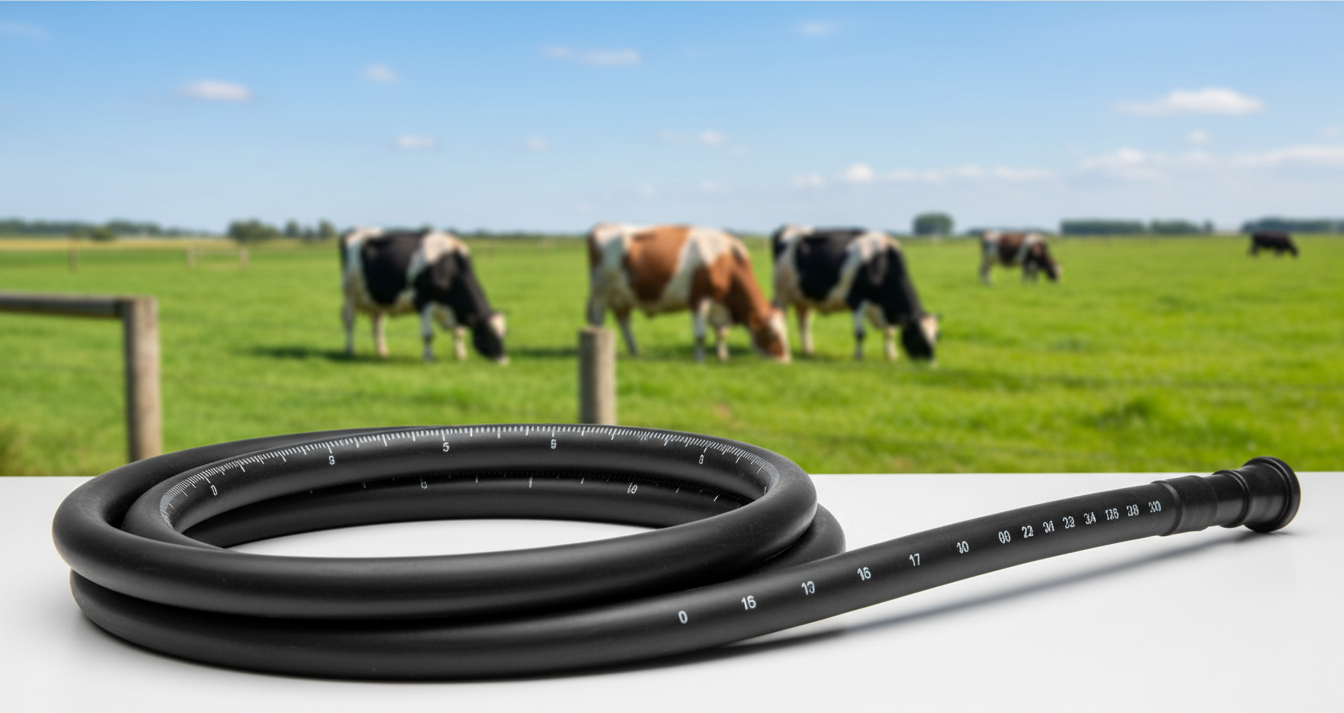
Why Tube Diameter Matters: Matching Internal Diameter to Cow Size
The internal diameter of a gastric lavage tube is the single most important specification for effective stomach flushing ?get it wrong, and you will either fail to evacuate rumen contents or injure the animal’s esophagus. In my 12 years of designing and manufacturing livestock veterinary equipment at Sound Hardware, I have analyzed tube performance across hundreds of dairy operations, and the diameter-to-cattle-size relationship is remarkably consistent across breeds.
For adult Holstein cattle weighing 600-750 kg, the ideal internal diameter is 28-32 mm. This diameter provides sufficient cross-sectional area (approximately 615-804 mm^2) to allow rumen contents ?which include partially digested forage, grain particles up to 8-10 mm, and fluid ?to pass through without clogging. A tube with 22 mm internal diameter (380 mm^2 cross-section) will clog approximately 3-4 times more frequently than a 30 mm tube because the particle-to-lumen ratio becomes too tight when dealing with coarse dairy rations containing corn silage or long-stem hay.
For Jersey and smaller dairy breeds weighing 400-500 kg, a 25-28 mm internal diameter is appropriate. The smaller esophageal diameter of Jersey cattle (approximately 35-40 mm versus 45-50 mm for Holsteins) means a 32 mm tube would create uncomfortable stretching and increase the risk of mucosal irritation. I have seen cases where well-meaning operators used “one size fits all” 32 mm tubes on Jerseys and caused mild esophageal inflammation that reduced feed intake for 2-3 days post-procedure.
Beef cattle breeds such as Angus and Hereford, weighing 500-650 kg, fall in the middle range and perform best with 28-30 mm diameter tubes. The key variable is not just body weight but neck muscle mass ?beef cattle have thicker cervical musculature that can accommodate slightly larger tubes, but their shorter, stockier neck anatomy means the insertion angle is different from the longer-necked Holstein. I recommend measuring neck circumference at the mid-cervical point: for every 10 cm of neck circumference above 55 cm, increase tube diameter by 1 mm, up to a maximum of 32 mm.
Required Tube Length for Different Cattle Breeds
A gastric lavage tube must be long enough to reach from the animal’s mouth, through the esophagus, and into the rumen with at least 30-40 cm of external working length remaining for the operator to control the tube and attach the pump. The distance from oral cavity to rumen in adult Holstein cattle ranges from 1.8-2.3 meters depending on animal size and head position. Adding the required external working length and a safety margin for movement means the total tube length should be 2.5-3.5 meters.
| Breed | Average Weight | Oral-to-Rumen Distance | Recommended Tube Length |
|---|---|---|---|
| Holstein (adult cow) | 650-750 kg | 1.9-2.3 m | 3.0-3.5 m |
| Jersey (adult cow) | 400-500 kg | 1.5-1.8 m | 2.5-3.0 m |
| Brown Swiss (adult cow) | 600-700 kg | 1.8-2.1 m | 3.0-3.5 m |
| Angus / Hereford (adult beef) | 500-650 kg | 1.7-2.0 m | 2.8-3.2 m |
| Holstein heifer (12-18 months) | 350-450 kg | 1.3-1.6 m | 2.2-2.5 m |
I always recommend purchasing the longest tube that matches your largest animal ?a 3.0 meter tube works for both Holsteins and Jerseys, while a 2.5 meter tube is too short for a large Holstein. The extra length does not impair function in smaller animals because the operator simply inserts less of the tube. The cost difference between a 2.5 meter and 3.0 meter natural rubber tube is approximately $2-4 per unit at wholesale ?a negligible premium for the operational flexibility gained. At Sound Hardware, our standard gastric lavage tubes are available in 2.5 m, 3.0 m, and 3.5 m lengths to cover the full range of cattle sizes.
Flexibility vs Durability: Material Selection Guide
The material choice for gastric lavage tubes involves a direct trade-off between flexibility for safe insertion and durability for repeated use. Three materials dominate the market: natural rubber, synthetic rubber (EPDM), and silicone. Each has distinct performance characteristics that affect tube longevity, insertion safety, and chemical resistance.
Natural rubber (latex rubber) with 60-70 Shore A durometer is the industry standard for dairy cattle gastric tubes. At 60-65 Shore A, the tube is flexible enough to follow the natural curve of the bovine esophagus without excessive force ?insertion force required is typically 8-15 N at the tube tip ?yet firm enough to resist collapsing under the vacuum pressure generated during suction flushing (typically -0.3 to -0.5 bar). Natural rubber tubes with 3.5-4.5 mm wall thickness provide optimal balance: flexible enough to bend to a 120 mm radius without kinking, strong enough to withstand 80 kPa internal pressure without ballooning.
Silicone tubes offer superior biocompatibility and chemical resistance but at 2-3 times the cost of natural rubber. Silicone’s primary advantage is its resistance to the acidic rumen environment (pH 5.5-6.5) and to common disinfectants including chlorhexidine and quaternary ammonium compounds that can degrade natural rubber over repeated sterilization cycles. However, silicone’s lower tear strength (20-30 kN/m versus 30-50 kN/m for natural rubber) means silicone tubes are more susceptible to damage from the cow’s molars during insertion if a bite block is not used properly. For operations performing 200+ procedures per year, the extra durability of silicone may justify the cost; for typical dairy operations performing 20-50 procedures annually, natural rubber provides the best value.
EPDM (ethylene propylene diene monomer) synthetic rubber offers an intermediate option. EPDM resists ozone and UV degradation better than natural rubber ?important for operations that store equipment in sunlight or unheated barns where temperatures range from -10 to 40 degrees C. EPDM tubes maintain flexibility down to -20 degrees C, while natural rubber begins to stiffen noticeably below -5 degrees C. For Canadian and northern US dairy operations, EPDM is often the preferred material for winter use.
Proper Insertion Technique and Safety Protocols
Gastric tube insertion in cattle is a procedure that requires proper technique to prevent esophageal trauma, tracheal intubation (accidental entry into the airway), and stress to the animal. Based on the safety protocols we recommend to all Sound Hardware customers, here is the correct insertion procedure:
Restraint is the first and most critical safety step. The cow must be properly restrained in a head gate or stanchion with the head secured and slightly elevated (approximately 10-15 degrees above horizontal). This head position straightens the esophagus and reduces the risk of the tube entering the trachea. Never attempt gastric intubation on a free-standing, unrestrained cow ?the risk of the animal tossing its head and causing esophageal perforation is significant.
Always use a Frick speculum or bite block inserted between the molars to prevent the cow from chewing on and damaging the tube. The speculum also guides the tube toward the esophageal opening and away from the trachea. A properly fitted speculum for Holstein cattle has an internal diameter of 35-40 mm to accommodate the gastric tube with clearance.
Lubricate the first 30-40 cm of the tube with a water-soluble veterinary lubricant. Petroleum-based lubricants can degrade natural rubber over time and should be avoided. Insert the tube through the speculum slowly ?approximately 5-8 cm per second ?allowing the cow to swallow naturally. The cow’s swallowing reflex actually assists correct placement: as the tube reaches the pharynx, the animal swallows and the epiglottis closes over the trachea, directing the tube into the esophagus. If you feel resistance or the cow begins coughing, withdraw immediately and reassess ?the tube may be entering the trachea.
Verify correct placement before starting the lavage. Palpate the left side of the cow’s neck ?you should feel the tube running alongside the trachea (esophagus is on the left side of the neck). Additionally, smell the end of the tube for rumen gas odor and listen for typical rumen gurgling sounds ?these confirm the tube is in the rumen, not the lungs. Starting a lavage with the tube in the trachea will drown the animal within minutes. This is the single most serious risk in gastric lavage, and it is 100% preventable with proper placement verification. Per AVMA veterinary practice guidelines, any invasive procedure must include a confirmation step before proceeding.
Cleaning and Sterilization After Each Use
Proper cleaning and sterilization of gastric lavage tubes between uses is essential for preventing cross-contamination between animals and extending tube service life. Rumen contents contain high bacterial loads (10^10 to 10^11 CFU/mL) including potential pathogens such as Salmonella, E. coli O157:H7, and Mycobacterium avium subsp. paratuberculosis (Johne’s disease). Inadequate cleaning can transmit these pathogens between animals.
The cleaning protocol I recommend for natural rubber tubes:
- Immediate rinse (within 15 minutes of use): Flush the tube with clean water at 35-40 degrees C, minimum 5 liters, to remove residual rumen contents before they dry and adhere to the tube wall. Dried rumen contents form a biofilm that is significantly harder to remove and harbors bacteria.
- Detergent wash: Soak the tube in a veterinary-grade enzymatic detergent solution at 40-45 degrees C for 15-20 minutes. Enzymatic detergents break down proteinaceous material that water alone cannot remove. Use a tube brush with soft nylon bristles to scrub the internal lumen ?pay special attention to the distal 20 cm where rumen contents accumulate most heavily.
- Disinfection: Soak in 2% chlorhexidine gluconate solution or 0.5% povidone-iodine solution for 10 minutes. These broad-spectrum disinfectants are effective against the bacterial, viral, and fungal pathogens commonly found in bovine rumen contents.
- Final rinse: Flush thoroughly with clean water to remove disinfectant residue. Residual disinfectant can irritate the esophageal mucosa of the next animal.
- Drying: Hang the tube vertically to drain and air-dry completely before storage. Storing a damp tube promotes fungal growth inside the lumen ?a common cause of premature tube degradation that I have traced to inadequate drying in approximately 40% of early-replacement cases among our customers.
Tube replacement interval: Natural rubber tubes should be replaced after 50-80 procedures or when any of the following signs appear: visible cracking or splitting at the distal tip, softening or ballooning of the tube wall (indicating rubber degradation from rumen acids), inner surface roughness that traps debris even after cleaning, or color change to dark brown/black (indicating chemical degradation throughout the rubber compound). AAVLD diagnostic guidelines recommend visual inspection of all reusable veterinary devices before each use, with immediate replacement of any device showing material degradation.
FAQ
Q: What diameter gastric tube is suitable for adult Holstein cattle?
Adult Holstein cattle weighing 600-750 kg require a gastric lavage tube with 28-32 mm internal diameter. This diameter provides approximately 615-804 mm^2 of cross-sectional area, sufficient to pass partially digested forage and grain particles up to 8-10 mm without clogging. Tubes smaller than 25 mm diameter clog frequently when dealing with coarse dairy rations containing corn silage. For maximum versatility across Holstein operations, a 30 mm diameter tube is the most commonly recommended size. Sound Hardware offers gastric tubes in 25 mm, 28 mm, 30 mm, and 32 mm diameters to match specific herd requirements.
Q: How long should a gastric lavage tube be for large breed cows?
For large breed dairy cattle (Holstein, Brown Swiss) weighing 600-750 kg, a gastric lavage tube should be 3.0-3.5 meters in total length. The oral-to-rumen distance in these animals is 1.9-2.3 meters, and the additional 0.7-1.2 meters provides external working length for the operator to control tube positioning, attach the flushing pump, and maintain a safe distance from the animal. A 3.0 meter tube is the most versatile option, working for Holsteins, Jerseys, and most beef breeds. At Sound Hardware, our 3.0 meter tubes are our most popular size for mixed-breed dairy operations.
Q: Can flexible rubber tubes be reused after sterilization?
Yes, natural rubber gastric lavage tubes can be safely reused for 50-80 procedures when properly cleaned and sterilized between each use. The cleaning protocol must include immediate water flushing, enzymatic detergent soaking with internal brushing, and chemical disinfection with 2% chlorhexidine or 0.5% povidone-iodine. The tube must be completely dry before storage to prevent fungal growth inside the lumen. Replace the tube immediately if any cracking, softening, ballooning, or internal surface roughness appears ?these are signs of material degradation that compromise both function and hygiene.
Q: What pressure should be used during gastric lavage procedure?
Gastric lavage in adult cattle should be performed at a water pressure of 0.3-1.0 bar (30-100 kPa) with a flow rate of 8-15 liters per minute. Higher pressures (above 1.5 bar) risk rupturing the tube, causing esophageal irritation, or forcing rumen contents into the respiratory tract if the tube position shifts during the procedure. The flushing pump should be a low-pressure, high-volume type ?typical submersible or diaphragm pumps rated for 10-20 L/min at 0.5-1.0 bar. Gravity-fed flushing systems operating at approximately 0.1-0.2 bar from a reservoir elevated 1-2 meters can also be used but provide slower evacuation rates.
Q: How often should rubber gastric tubes be replaced?
Natural rubber gastric tubes should be replaced after 50-80 procedures, or when visible signs of degradation appear ?whichever comes first. The rumen environment (pH 5.5-6.5, temperature 38-40 degrees C, digestive enzymes) gradually degrades natural rubber over repeated exposure, even with proper cleaning. Inspection before each use should check for: distal tip cracking or splitting, tube wall softening or ballooning, internal surface roughness, and color darkening to brown/black. Silicone tubes last longer (100-150 procedures) but cost 2-3 times more. Sound Hardware recommends keeping at least two gastric tubes in inventory so a replacement is always available when the primary tube reaches its replacement threshold.
Need reliable gastric lavage tubes for your dairy operation?
Browse our animal care products or contact our sales team for volume pricing and specifications.
Additional references: AVMA veterinary practice guidelines AAVLD diagnostic standards DairyNZ animal welfare standards OIE Terrestrial Animal Health Code NADIS cattle health guidelines Dairy Herd Management
Post time: May-19-2026