
TL;DR
- NdFeB cow magnets are usually stronger than ceramic cow magnets in the same compact size.
- Ceramic cow magnets usually resist corrosion and heat better in long, low-cost use.
- NdFeB can justify its higher cost when a shorter magnet must capture ferrous debris aggressively.
- Ceramic remains the conservative choice when price stability, ruggedness, and long storage life matter most.
For procurement teams, the practical answer is not simply “NdFeB is better.” NdFeB is better when the buying goal is maximum pull force per millimeter of magnet length, because its maximum energy product is commonly several times higher than ferrite. Ceramic is better when the buying goal is predictable long-term durability at low cost, because ferrite does not rely on a protective nickel or epoxy coating to survive humid storage and rumen exposure. Because a cow magnet is swallowed and retained in the reticulum to hold ferrous objects such as nails or wire, the best specification is the one that balances magnetic capture, coating integrity, animal safety, total cost, and import consistency.
This article compares NdFeB and ceramic cow magnets for B2B buyers sourcing bulk veterinary hardware from China. It uses cautious technical ranges, not unverifiable factory claims. For product options and RFQ discussion, see SoundAI’s cow magnet category page.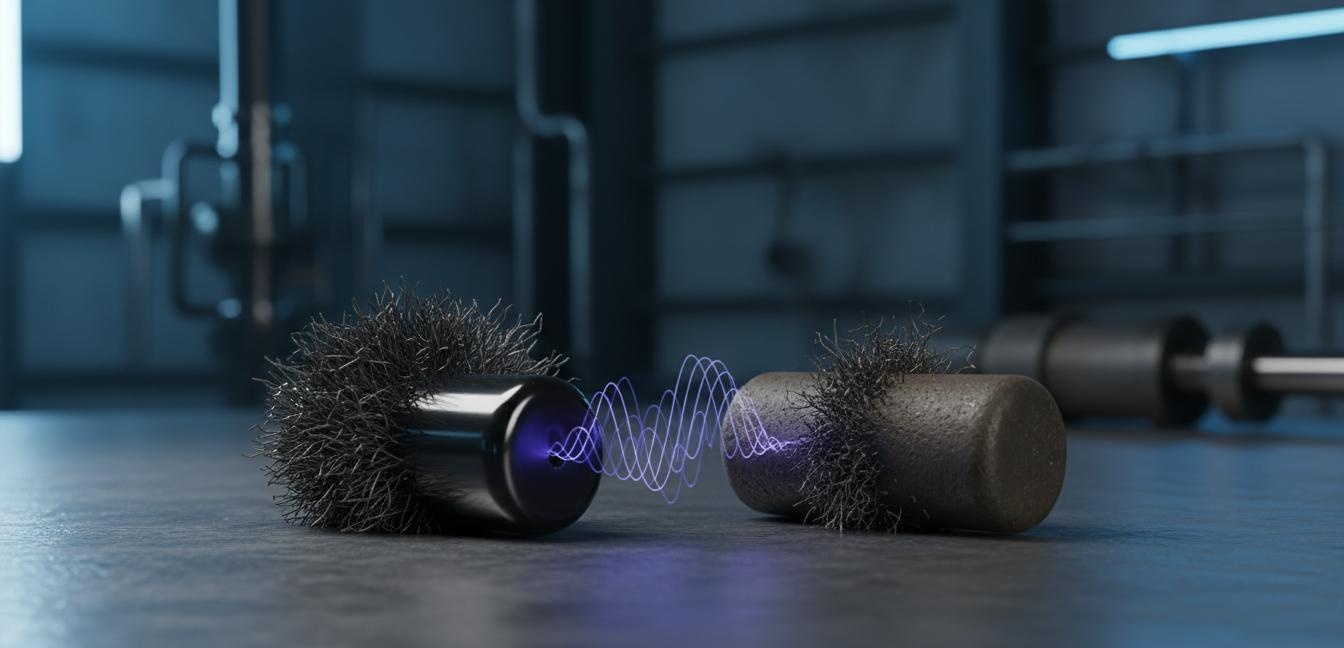
Quick comparison table: NdFeB vs ceramic cow magnets
NdFeB wins on compact magnetic strength, and ceramic wins on simple durability, temperature tolerance, and unit-cost control. The table below is the buying-team version of the comparison: it converts magnetic material data into procurement consequences.
| Comparison factor | NdFeB cow magnet | Ceramic cow magnet | Procurement implication |
|---|---|---|---|
| Magnetic energy product | Common commercial NdFeB grades are often about 30-52 MGOe. | Common hard ferrite grades are often about 3-4.5 MGOe. | NdFeB can deliver much higher strength in the same size. |
| Typical remanence | Often about 1.0-1.45 T, depending on grade. | Often about 0.35-0.45 T, depending on grade. | NdFeB is easier to specify for compact high-flux designs. |
| Corrosion behavior | Requires coating integrity, commonly Ni-Cu-Ni, epoxy, zinc, or plastic encapsulation. | Inherently corrosion-resistant ferrite ceramic; coating is less critical for magnet survival. | Ceramic is more forgiving in humid warehouses and rough handling. |
| Temperature tolerance | Standard grades are commonly rated around 80°C; high-temperature grades cost more. | Often tolerates higher temperatures than standard NdFeB in ordinary veterinary logistics. | Ceramic is safer when containers, sheds, or sterilization assumptions are uncertain. |
| Mechanical brittleness | Strong but brittle; impact can chip coating and expose the core. | Brittle too, but corrosion risk after a chip is lower. | Both need packaging controls; NdFeB needs stricter coating inspection. |
| Expected service risk | Risk is dominated by coating failure, corrosion, and demagnetization from heat or external fields. | Risk is dominated by fracture, wrong size, insufficient magnetization, or poor assembly. | The QA plan should differ by material, not use one generic checklist. |
| Unit cost | Usually higher and more sensitive to rare-earth market movement. | Usually lower and more stable. | NdFeB costs more than ceramic, primarily because rare-earth alloy and coating processes are more expensive. |
According to IEC 60404-8-1, permanent magnetic materials are specified using material characteristics such as remanence, coercivity, and maximum energy product. Those values matter because they define what the magnet can do before it is shaped into a cow magnet, coated, packed, and shipped.
How much stronger is an NdFeB cow magnet than a ceramic cow magnet?
An NdFeB cow magnet can be several times stronger than a ceramic cow magnet of similar size, because NdFeB has a much higher maximum energy product and remanence than ferrite ceramic. In practical buying language, the NdFeB option can attract and hold ferrous fragments more aggressively at a shorter distance, especially when the magnet must be compact.
Magnetic parameters buyers should request
Do not evaluate a cow magnet only by the words “strong” or “heavy duty.” Request measurable parameters. The most useful specifications are surface flux density in gauss or millitesla at defined points, pull force against a specified steel plate, magnet dimensions in millimeters, material grade, coating type, and inspection method. If a supplier cannot state the test distance, steel thickness, or instrument type, the number may not be comparable. I would rather see a modest 3,000 gauss claim measured at a defined pole face than a dramatic number with no method. That small discipline prevents a lot of purchasing disappointment.
Because magnetic flux drops rapidly with distance, so a higher-grade NdFeB core does not automatically mean every metal object in the reticulum is captured faster. The geometry of the magnet, the pole arrangement, the plastic or stainless housing thickness, and the orientation of the nail or wire also matter. A long ceramic magnet with well-exposed poles can outperform a poorly designed NdFeB unit in real capture behavior, even if the raw material is weaker on paper.
| Parameter | NdFeB typical range | Ceramic ferrite typical range | Why it matters for cow magnets |
|---|---|---|---|
| Maximum energy product, BHmax | About 30-52 MGOe for many commercial grades. | About 3-4.5 MGOe for many hard ferrite grades. | Higher BHmax supports stronger compact magnet designs. |
| Remanence, Br | About 1.0-1.45 T. | About 0.35-0.45 T. | Higher Br supports higher pole surface flux. |
| Intrinsic coercivity | Varies widely by grade; high-Hcj grades resist demagnetization better. | Generally stable for many ambient-temperature applications. | Coercivity matters when magnets are exposed to heat or opposing fields. |
| Density | Often around 7.3-7.6 g/cm³. | Often around 4.8-5.1 g/cm³. | NdFeB may feel heavier in compact designs; shipping weight depends on housing. |
According to magnet material technical data published by magnet suppliers, rare-earth neodymium magnets commonly have much higher BHmax values than ceramic ferrite magnets. Treat these as material-level references, not finished-cow-magnet guarantees. A finished cow magnet must still be verified after coating, assembly, and magnetization.
Why “stronger” is not always “better”
NdFeB’s extra strength helps most when the magnet is small, but it can be unnecessary when a standard-size ceramic cow magnet already meets the veterinary use case. Hardware disease prevention is not an industrial lifting application. The magnet is intended to collect ferrous debris in the reticulum and keep it from migrating. Once a magnet holds the relevant nails, wires, and staples securely, extra pull force may not create proportional clinical value.
There is also a handling issue that buyers sometimes underestimate. Strong NdFeB magnets can snap together during inspection, packing, or repacking. That can chip coatings or pinch fingers. Ceramic magnets can chip too, but they usually do not create the same aggressive snap force in similar cow-magnet formats. For high-volume distributors, the warehouse team’s experience matters. A product that survives perfect lab handling but fails in a dusty repacking room is not a good export product.
Which cow magnet lasts longer: NdFeB or ceramic?
Ceramic cow magnets usually have the easier longevity profile, while NdFeB cow magnets can last well only when the coating, encapsulation, and storage controls are robust. Ferrite ceramic is chemically stable and does not rust like an iron-rich neodymium alloy. NdFeB can corrode if its protective layer is damaged, and that corrosion can reduce both mechanical integrity and magnetic performance.
Longevity depends on coating before it depends on magnet grade
A cow magnet faces a strange combination of environments: humid sea freight, warehouse condensation, farm dust, impact during cartons being dropped, and then prolonged exposure inside an animal. For NdFeB, the protective system is not cosmetic. It is a functional barrier. Nickel-copper-nickel plating is common for many neodymium products, but buyers should be cautious about relying on bare nickel surfaces for veterinary ingestion unless the design also considers smoothness, biocompatibility expectations, and damage resistance. Epoxy or plastic encapsulation can improve corrosion protection, but only if the coating is continuous and thick enough at corners.
Because NdFeB contains iron, so a pinhole, edge crack, or impact chip can become the starting point for corrosion in wet service. This is the most important longevity difference. Ceramic ferrite does not have the same rust-driven failure pathway. It can break if struck hard, and it can be under-magnetized if made poorly, but it is less dependent on a perfect coating to retain its basic magnetic character.
Temperature and demagnetization risk
Standard NdFeB grades often have lower maximum operating temperatures than many ferrite grades. A cow’s body temperature is not a problem for either material under normal conditions, but export logistics can introduce heat. Containers, metal-roof sheds, or incorrect assumptions about cleaning procedures can create higher temperatures. If a buyer specifies NdFeB, they should ask for the maximum operating temperature grade and not assume all “N-grade” magnets behave the same. N35, N42, N48, and high-temperature variants are not interchangeable in long-term stability.
According to K&J Magnetics’ technical notes on temperature and neodymium magnets, neodymium magnets can lose strength when heated above their rated operating temperature. The exact loss depends on grade, shape, temperature, and exposure time. This is why procurement specifications should state a temperature class, not only a magnet grade.
Storage life before sale
For exporters and distributors, longevity does not start when the cow swallows the magnet. It starts when the magnet leaves the production line. Ceramic cow magnets are forgiving in slow-moving inventory because the material is not highly sensitive to humidity. NdFeB inventory needs drier storage, stronger carton separation, better anti-collision packaging, and inspection after long warehouse periods. I have seen buyers focus on the cattle-use stage and forget the 6-month distributor shelf stage. That is where many coating defects reveal themselves.
For a distributor holding mixed inventory for 6-18 months, ceramic often has lower storage risk, because it does not depend as heavily on coating integrity and rare-earth market timing. NdFeB can still be the right choice, but it needs a more disciplined receiving inspection and a tighter first-in, first-out plan.
What matters inside the rumen and reticulum?
Inside the animal, the useful goal is stable retention and reliable ferrous-object capture, not maximum laboratory pull force. A cow magnet is intended to stay in the reticulum and collect ferromagnetic objects before they puncture tissue. Shape, surface finish, pole exposure, and veterinary handling matter alongside magnetic material.
According to the MSD Veterinary Manual, traumatic reticuloperitonitis in cattle can occur when animals ingest objects such as nails or wire, and treatment may include a rumen magnet together with antimicrobial therapy or surgery when needed. This source is useful for understanding the disease context, but it does not mean a stronger magnet replaces veterinary diagnosis or farm management. A cow magnet is a preventive or supportive hardware tool, not a cure-all.
Capture distance and pole geometry
Ferrous debris inside the reticulum is not lined up neatly against a flat test plate. Nails can be angled. Wire can be bent. Feed material can sit between metal and magnet. That is why pole geometry matters. Some cow magnets use a long cylindrical body with exposed magnetic regions along the length; others use assemblies inside a plastic shell. When comparing NdFeB and ceramic units, ask suppliers to test typical debris: a nail of about 40-60 mm, a wire fragment of about 30-80 mm, and a small staple under wet feed-like interference. The test does not need to be theatrical. It needs to be repeatable.
Because a cow magnet works in a messy biological environment, so a repeatable debris-capture test is more useful than a single maximum gauss number. If a buyer wants to compare two suppliers fairly, they should request the same test object, same water or feed-simulating medium, same distance steps, same magnet orientation, and same pass/fail definition.
Surface smoothness and animal safety
Strong magnets still need smooth surfaces. Burrs, cracked plating, sharp seams, and loose housings are unacceptable because the product is intended for ingestion. Ceramic magnets can be molded or assembled in forms that are simple and robust. NdFeB designs often require more attention to edge protection because the core is brittle and the coating must remain intact. In procurement audits, I would not approve a shipment by magnetic strength alone. I would inspect edges first. A weak edge is a bigger red flag than a slightly lower pull force.
Buyers should also remember that not all ferrous material is equally attracted. Stainless steel grades vary; aluminum and many nonmetallic objects will not be captured by a cow magnet. The MSD Veterinary Manual notes that aluminum and other nonmagnetic foreign bodies are uncommon in this condition, but they are still a reminder: magnets only help with magnetic materials.
How should buyers compare cost and total ownership?
NdFeB cow magnets usually cost more than ceramic cow magnets, primarily because rare-earth alloy, precision machining, magnetization, and protective coating processes are more expensive than ferrite ceramic production. The cost gap changes with magnet grade, size, coating, order volume, inspection level, and rare-earth market conditions. For bulk procurement, compare total landed reliability, not only unit price.
Five-year distributor TCO model
A simple total-cost model should include purchase price, freight, import duty, storage loss, packaging damage, customer complaints, replacement cost, and inventory write-down. Ceramic’s lower price can be very attractive for agricultural retail channels where margins are tight and product turnover is unpredictable. NdFeB can make sense for premium kits, private-label veterinary programs, or markets where compact size and high perceived strength support a higher selling price.
NdFeB may cost 2-5 times more than ceramic in some comparable cow-magnet formats, because the rare-earth material and coating system add cost before the product is even packed. This range is not a quote; it is a procurement planning range. The actual ratio can be lower or higher depending on magnet mass, coating, and order size. Ceramic may also become less cheap if the design requires a larger magnet, heavier freight, or special housing.
| TCO factor | NdFeB risk or advantage | Ceramic risk or advantage | Buyer action |
|---|---|---|---|
| Upfront unit price | Higher; rare-earth price exposure. | Lower; more stable cost base. | Compare by function and failure cost, not only purchase price. |
| Storage loss | Higher if coating or humidity controls are weak. | Lower under normal dry storage. | Set humidity and carton drop controls for NdFeB shipments. |
| Freight | Can be compact but dense. | May require larger dimensions for similar capture effect. | Calculate landed cost per usable unit, not per kilogram only. |
| Claims and returns | Often linked to coating chips, rust, or over-promised strength. | Often linked to breakage, weak magnetization, or low-end finish. | Use material-specific AQL inspection. |
| Brand positioning | Premium “high-strength” claim is easier to communicate. | Value “rugged, economical, proven” claim is easier to communicate. | Match material choice to channel pricing. |
According to the U.S. Geological Survey rare earths information center, rare earths are a tracked mineral category with strategic supply-chain relevance. This matters because NdFeB magnets depend on rare-earth inputs, while ceramic ferrite magnets are less exposed to the same rare-earth supply dynamics.
Quality checklist for importing NdFeB or ceramic cow magnets
The correct inspection plan should be different for NdFeB and ceramic cow magnets, because their main failure modes are different. NdFeB inspection should emphasize coating continuity, corrosion resistance, and grade verification. Ceramic inspection should emphasize cracks, chips, magnetization consistency, and dimensional tolerance.
Incoming inspection for NdFeB cow magnets
- Confirm the declared material grade and maximum operating temperature in writing.
- Inspect coating thickness and continuity, especially at edges, ends, and seams.
- Run a salt-spray or humidity-resistance requirement only if the coating system is designed for that test.
- Measure surface flux at defined pole-face points using the same gaussmeter method each shipment.
- Check packaging separation so magnets cannot collide during sea freight or courier handling.
According to ASTM B117, salt spray testing defines a controlled corrosive fog environment used to evaluate relative corrosion behavior of coated specimens. It is not a perfect rumen simulation, but it can reveal coating inconsistency when used carefully and compared within the same coating family.
Incoming inspection for ceramic cow magnets
- Check dimensions with a tolerance such as ±0.5 mm or the supplier’s agreed drawing tolerance.
- Inspect for visible cracks, sharp chips, and loose components before accepting cartons.
- Measure magnetic strength at defined positions, not randomly along the body.
- Conduct a simple ferrous-debris capture test using the same nail and wire samples each batch.
- Verify that surface finish is smooth enough for veterinary use and that labels match the intended market.
Documents to request from a supplier
For either material, request a product drawing, material declaration, coating specification if applicable, magnetization direction, inspection report template, packaging method, and sample approval record. If the product will be sold under a private label, also request carton artwork control and batch traceability. SoundAI’s cow magnet category is positioned for agricultural and veterinary product procurement, so RFQ discussions should include both product performance and export packaging requirements, not only a price line.
A reliable supplier should be able to explain why a specification was chosen; a weak supplier only repeats “strong magnet” and waits for the purchase order. That difference becomes obvious during technical questioning. Ask what happens if the coating chips. Ask how the magnet is tested after assembly. Ask how cartons prevent magnets from slamming together. The answers do not need to sound academic, but they must be specific.
Which one should you choose?
Choose NdFeB when compact high strength is the priority; choose ceramic when low cost, corrosion tolerance, and rugged supply-chain simplicity are the priority. The best decision depends on the channel, not only the magnet material.
Choose NdFeB cow magnets when compact strength matters
- Choose NdFeB when the product must be shorter or slimmer while maintaining strong ferrous capture.
- Choose NdFeB when your market accepts a premium price for a high-strength veterinary hardware product.
- Choose NdFeB when your supplier can prove coating quality, packaging separation, and stable grade control.
- Choose NdFeB when your receiving inspection team can test coating, surface flux, and corrosion risk consistently.
Choose ceramic cow magnets when durability and cost control matter
- Choose ceramic when your channel sells large volumes into price-sensitive agricultural retail markets.
- Choose ceramic when inventory may sit for months in humid farm stores or distributor warehouses.
- Choose ceramic when the product size can be standard or slightly larger without hurting usability.
- Choose ceramic when you want fewer coating-related failure risks and simpler long-term storage.
Do not choose NdFeB blindly
NdFeB is not automatically the professional choice. If the coating is poor, the premium product can become the fragile product. If the supplier overstates gauss values, the buyer pays more without getting reliable field value. If the warehouse team handles bulk magnets casually, the strongest magnet may arrive at the end customer with chips. That is frustrating, and it is avoidable.
Do not choose ceramic blindly either. A low-grade ceramic magnet with poor magnetization or cracked edges can be a false economy. For private-label programs, the best route is often to sample both materials, run a defined debris-capture test, inspect finish after drop simulation, and compare landed cost per accepted unit. Because the use case is veterinary hardware, so the final approval should combine magnetic data with safety-focused visual inspection.
Procurement scorecard for supplier comparison
A scorecard prevents emotional buying, especially when one supplier shows a dramatic magnet demo and another offers a lower price. Use the following 100-point structure when comparing NdFeB and ceramic cow magnet samples.
| Evaluation item | Weight | What to verify |
|---|---|---|
| Magnetic capture performance | 25 points | Surface flux, pull force, and wet debris-capture test at defined distances. |
| Surface and animal-safety finish | 20 points | No sharp edges, cracks, loose parts, burrs, or coating breaks. |
| Material and coating documentation | 15 points | Grade declaration, coating type, magnetization direction, and inspection criteria. |
| Packaging and export readiness | 15 points | Carton strength, separation method, moisture control, labeling, and traceability. |
| Cost stability | 15 points | Quotation validity, MOQ, tooling cost, rare-earth exposure, and reorder terms. |
| Supplier communication | 10 points | Technical response quality, sample consistency, and willingness to define test methods. |
One practical benchmark is simple: if a supplier cannot agree to a repeatable inspection method before mass production, do not rely on that supplier for a private-label veterinary product. A cow magnet is inexpensive per unit, but a brand complaint in a farm channel can be expensive in trust.
FAQ
Are NdFeB cow magnets always better than ceramic cow magnets?
No. NdFeB cow magnets are usually stronger in the same size, but ceramic cow magnets can be better for rugged, low-cost, long-storage distribution. The better choice depends on coating quality, product geometry, animal-safety finish, unit cost, and the buyer’s sales channel.
Do stronger cow magnets prevent hardware disease more effectively?
A stronger cow magnet can improve ferrous-object capture in some designs, but hardware disease prevention also depends on farm management, object type, magnet placement, and veterinary care. A magnet cannot capture nonmagnetic objects and should not replace professional diagnosis or treatment when a cow shows clinical signs.
What is the biggest risk with NdFeB cow magnets?
The biggest risk is usually coating failure. NdFeB contains iron-rich alloy and can corrode if the protective coating is cracked, porous, or damaged by impact. Buyers should inspect coating continuity, edge protection, packaging separation, and humidity exposure before accepting bulk shipments.
What is the biggest risk with ceramic cow magnets?
The biggest risk is usually poor physical quality or insufficient magnetization rather than corrosion. Ceramic magnets can chip or crack if handled roughly, and low-quality products may not provide consistent magnetic capture. Buyers should inspect cracks, sharp chips, dimensions, and batch-to-batch magnetic strength.
Which cow magnet is better for humid warehouse storage?
Ceramic cow magnets are generally more forgiving for humid storage because ferrite ceramic is inherently corrosion-resistant. NdFeB cow magnets can be stored successfully, but they need stronger packaging, dry conditions, intact coating, and periodic inspection if inventory remains unsold for many months.
How should I test samples before placing a bulk order?
Test surface flux at defined points, run a pull-force test against a specified steel plate, inspect surface finish under good light, perform a simple wet nail-and-wire capture test, and check packaging after a drop simulation. Use the same method for every supplier so the comparison is fair.
Can SoundAI supply both standard and customized cow magnet options?
SoundAI lists cow magnet products for agricultural and veterinary procurement. Buyers should discuss target market, preferred material, dimensions, packaging, labeling, and inspection requirements through the SoundAI cow magnet page or the company contact channel before confirming a bulk order.
References and verification notes
- MSD Veterinary Manual explains traumatic reticuloperitonitis and the veterinary role of rumen magnets.
- IEC 60404-8-1 defines specifications for magnetically hard materials used in permanent magnet characterization.
- ASTM B117 defines salt spray test conditions often used to evaluate coated specimen corrosion behavior.
- U.S. Geological Survey provides rare earths supply-chain context relevant to NdFeB magnet cost exposure.
- K&J Magnetics provides accessible technical notes on neodymium magnet temperature behavior.
Next step for buyers
If you are comparing cow magnet suppliers for a distributor, veterinary brand, or farm supply chain, prepare an RFQ that states material preference, dimensions, coating or housing, surface finish requirements, magnetic test method, packaging rules, and target market labeling. Then request matched samples of NdFeB and ceramic units. For a product discussion, visit SoundAI’s cow magnet product category.
Post time: May-18-2026