
TL;DR
- Confirm HS code before ordering.
- Match invoice, packing list, and labels.
- Request certificates before final payment.
- Use inspection for mixed SKUs.
- Check rules with your customs broker.
To import veterinary equipment from China without avoidable customs delays, align the product classification, commercial documents, labeling, certificates, and shipping data before the goods leave the factory. Most clearance problems are not caused by the equipment itself; they come from mismatched descriptions, unclear HS codes, missing origin documents, incomplete packing details, or certificates requested too late. For veterinary tools such as animal syringes, artificial insemination guns, drinking bowls, needles, thermometers, restraint tools, and farm animal care accessories, the safest process is to confirm import requirements with a licensed customs broker in your destination country, then send the supplier a written document checklist before production or packing begins.
The practical rule is simple: customs should see the same product story everywhere. The purchase order, proforma invoice, commercial invoice, packing list, carton labels, bill of lading, certificate of origin, and product photos should describe the same goods using consistent names, quantities, materials, and intended use. If the invoice says “animal syringe,” the packing list says “plastic injector,” and the carton label says “medical device,” your shipment may be stopped for clarification. This guide explains how importers can reduce those risks when sourcing from China, while still remembering that final requirements depend on local customs, veterinary health authorities, and broker advice.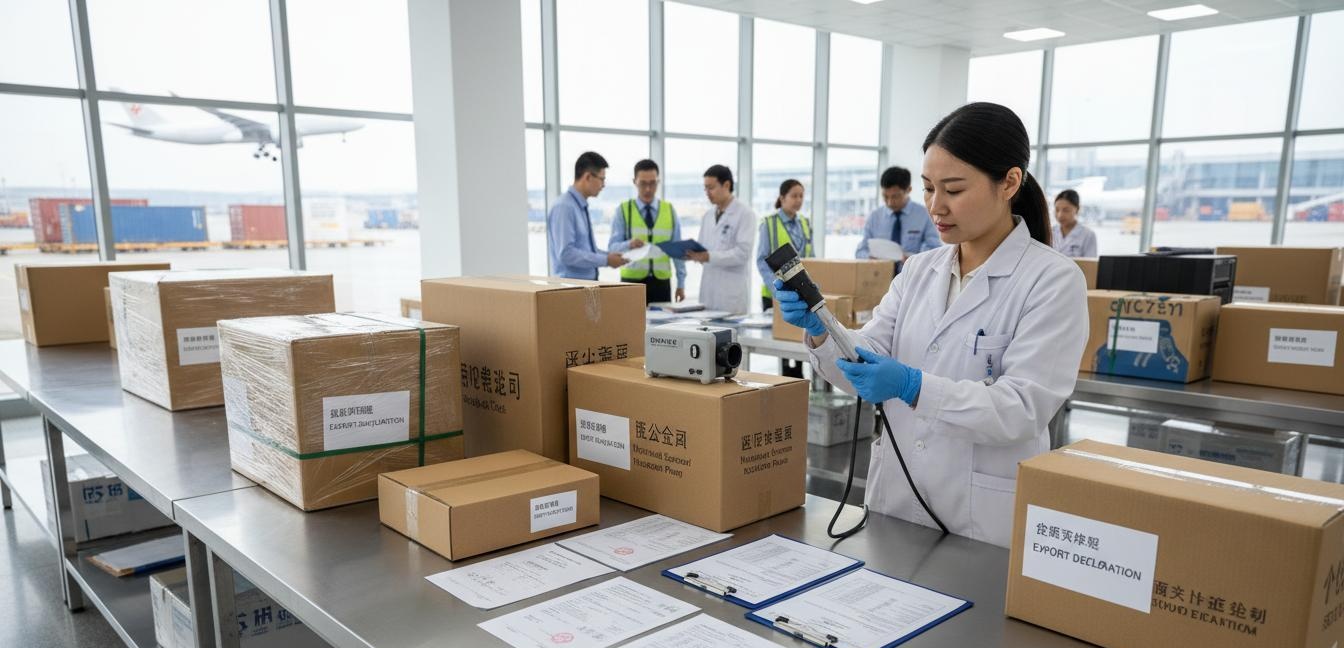
Why do customs delays happen when importing veterinary equipment?
Customs delays usually happen when officers, carriers, or destination agencies cannot quickly verify what the product is, how it is classified, whether it is allowed, and whether the declared value and origin are credible. Veterinary equipment sits in a sensitive category because some items are ordinary farm tools, some touch animals directly, some are used for injections or insemination, and some may be confused with medical, pharmaceutical, or regulated animal health products. A drinking bowl may clear like farm equipment, while a veterinary syringe, needle, or electronic thermometer may face more questions depending on the country.
Importers often focus on price, MOQ, and delivery time during sourcing, but customs clearance depends on a different set of details. The broker needs a clean product description, the correct HS code, accurate unit value, complete country-of-origin information, and any market-specific certifications or declarations. If those details are not prepared before shipment, the importer may have to request revised documents from China while the cargo is already waiting at port or airport. That can create storage charges, demurrage, missed delivery windows, and tension with distributors or farm customers.
The biggest mistake is treating customs paperwork as an after-shipment task. For B2B veterinary equipment imports, documentation should be built into the purchasing process. The import team should check the product list before confirming the proforma invoice, review the packing list before loading, and approve final document drafts before the supplier releases originals or telex release data. This is especially important for mixed shipments containing multiple SKUs from an animal care equipment supplier, because every additional product line increases the chance of a description, quantity, or material mismatch.
What should I confirm before placing the order?
Before placing the order, confirm product eligibility, importer registration, HS code direction, duty and tax exposure, certificate needs, labeling rules, and whether any veterinary authority review applies in your market. These checks are best done with a local customs broker or compliance adviser because the same Chinese product can be treated differently in the United States, European Union, United Kingdom, Australia, Gulf countries, Latin America, or Southeast Asia.
Start with the intended use. A stainless steel drinking bowl for cattle, a plastic poultry feeder, and a livestock measuring stick are usually described as farm or animal husbandry equipment. A continuous veterinary injector, disposable castration knife, stomach deflation needle, or artificial insemination gun may need more precise wording because it contacts the animal body or is used in a veterinary procedure. That does not automatically mean the item is restricted, but it does mean vague descriptions can create questions.
Next, check whether your company can legally act as importer of record. Some countries require importer tax registration, EORI numbers, business licenses, or animal-health-related permits. Your freight forwarder may arrange transport, but the importer remains responsible for the declaration. If you are selling to clinics, farms, distributors, or government tenders, customer contracts may also require certificates, test reports, packaging language, or traceability that go beyond customs minimums.
A useful pre-order control is to create a one-page “import data sheet” for each SKU. Include the product name, model number, material, use, photos, dimensions, net weight, gross weight, country of origin, proposed HS code, certification status, and any special handling notes. Send this sheet to your broker before issuing the purchase order. If the broker flags a problem, you can still adjust the order, split the shipment, change labeling, or request extra documents before the supplier starts packing.
Which documents are normally needed?
Most veterinary equipment imports require a commercial invoice, packing list, transport document, and often a certificate of origin; some shipments may also need product declarations, test reports, sterilization statements, material certificates, or market-specific compliance documents. The exact list depends on the destination country, product type, HS code, and buyer channel, so importers should verify requirements locally before shipment.
The commercial invoice is the core customs document. It should show the exporter, importer, invoice number, date, product description, model, quantity, unit price, total value, currency, Incoterms, country of origin, and payment terms. The packing list should support the invoice by showing carton count, carton dimensions, gross weight, net weight, and SKU-level quantities. The bill of lading or airway bill confirms transport routing, consignee, notify party, vessel or flight details, and freight terms.
Document consistency matters more than document volume. A shipment with ten simple but consistent documents usually clears faster than a shipment with many certificates that contradict one another. If the commercial invoice uses “veterinary continuous injector 30 ml,” the packing list, carton mark, and product label should not switch to “medical injection device” unless that is the approved regulatory wording in your market. For animal-care tools, avoid overclaiming clinical, sterile, or therapeutic functions unless supported by valid documentation.
| Document | Who prepares it | Why it matters | Common delay risk |
|---|---|---|---|
| Proforma invoice | Supplier/exporter | Confirms order details before payment and production | Vague product names or missing Incoterms |
| Commercial invoice | Supplier/exporter | Used by customs to assess value, origin, and classification | Mismatch with packing list, low-value concerns, unclear descriptions |
| Packing list | Supplier/exporter | Shows carton count, weights, dimensions, and SKU quantities | Incorrect gross weight, missing carton breakdown, mixed SKUs not separated |
| Bill of lading or airway bill | Forwarder/carrier | Acts as transport document and supports customs entry | Consignee errors, wrong notify party, incomplete shipping marks |
| Certificate of origin | Authorized issuing body or exporter, depending on market | Supports country-of-origin claims and trade preference where applicable | Late issuance or origin wording not matching invoice |
| Product specification sheet | Supplier with buyer review | Explains materials, model numbers, dimensions, and intended use | Missing material details for metal, plastic, rubber, or electronic parts |
| Compliance or test report | Supplier, lab, or certification body | May support safety, material, electrical, or buyer-specific requirements | Expired report, wrong model, unverifiable certificate number |
| Importer declarations or permits | Importer and broker | May be required for regulated veterinary or animal-contact products | Not checked until cargo arrives |
How should I manage HS codes and product descriptions?
Manage HS codes by giving your broker a complete technical description, supplier photos, materials, and intended use, then documenting the classification decision before shipment. Suppliers may provide a China export HS code, but destination customs may classify the product differently. Treat the supplier’s code as a reference, not a final ruling for your import declaration.
Veterinary equipment can cross several classification areas. A stainless steel cattle drinking bowl may be classified based on material and function. A plastic animal syringe may be classified differently from a needle, a metal AI gun, a thermometer, or a poultry transport cage. Mixed shipments should not be declared under one broad code just for convenience unless your broker confirms it is acceptable. Customs officers may inspect cargo and compare the declared HS code with actual goods. If one carton contains syringes, needles, farm tools, and water bowls but the declaration uses only one generic description, clearance questions are more likely.
Use plain, functional product descriptions that a customs officer can understand without marketing language. “30 ml plastic-steel veterinary syringe for livestock medication dosing” is clearer than “high-quality animal healthcare tool.” “Stainless steel cattle drinking bowl with float valve” is clearer than “automatic pet hydration solution.” Descriptions should include species or use context only when accurate. If a product is for cattle, pigs, sheep, poultry, or general livestock use, say so. If it is not sterile, do not describe it as sterile. If it is a manual farm tool, do not imply electronic or medical-device functionality.
For higher-volume or repeated imports, ask your broker whether a binding ruling, advance ruling, or written classification opinion is available in your country. This may not be necessary for every shipment, but it can reduce risk for distributors that import the same product family several times per year. Keep a classification file with product photos, specs, broker notes, and previous entry records. If customs asks why a code was used, you can respond with organized evidence rather than improvised emails.
How should I coordinate with the Chinese supplier?
Coordinate with the supplier by giving them a written document checklist, approved product descriptions, labeling instructions, packaging requirements, and a deadline for draft shipping documents before cargo pickup. Do not assume the supplier knows your destination-country rules. A Chinese exporter may be experienced with export declaration and factory documentation, but import clearance is controlled by the buyer’s country.
When working with a manufacturer such as Ningbo Beilun Sound Hardware Industrial and Trade Co., Ltd., which presents animal care products including animal syringes, AI guns, drinking bowls, poultry cages, farm tools, and related livestock equipment, importers should build SKU-level clarity into the order. Ask for product photos, model lists, material details, and packing data early. If your order includes private label packaging, confirm whether the label needs importer name, country of origin, warnings, batch number, language translation, barcode, or veterinary-use wording.
The best time to fix a customs document is before the container is loaded. Ask the supplier to send draft commercial invoice and packing list after production but before final pickup. Review product names, HS code reference, quantities, carton count, gross weight, net weight, Incoterms, destination port, consignee, and notify party. If you use FOB terms, coordinate with your forwarder so booking data and supplier documents match. If you use EXW, remember that export handling may require more involvement from your forwarder because the supplier’s obligation is narrower.
Quality inspection also supports documentation accuracy. A pre-shipment inspection can verify that the cartons contain the same models listed on the invoice, that shipping marks are visible, and that country-of-origin labeling appears as agreed. For mixed veterinary equipment orders, ask the inspector to photograph each SKU, carton label, inner packaging, and master carton. Those photos are useful if customs, the broker, or the distributor asks for clarification later.
What happens during shipping and customs clearance?
During customs clearance, the broker submits shipment data and supporting documents so the destination authority can assess classification, value, admissibility, duties, taxes, and any agency requirements. The process may be fast if documents are consistent and the product category is straightforward. It can slow down if customs requests additional information, selects the shipment for inspection, questions declared value, or requires review by another authority.
For sea freight, the importer should complete document review before the vessel arrives. For air freight or courier shipments, the timeline is shorter, so errors become urgent. Send final invoice, packing list, bill of lading or airway bill, arrival notice, certificate of origin, and any compliance documents to the broker as soon as available. If your shipment includes veterinary syringes, needles, thermometers, or animal-contact tools, also provide product photos and intended-use statements so the broker can respond quickly to questions.
Customs delays are easier to manage when responsibility is assigned before shipment. Decide who will answer broker questions, who can request revised documents from the supplier, who approves duty payments, and who communicates with the warehouse or end customer. A delay that takes one day to identify and four days to route internally can often be reduced by naming a single import coordinator.
After clearance, keep the entry records. Many importers discard document packages once cargo is delivered, but customs audits or customer complaints can happen later. Store the commercial invoice, packing list, transport document, payment proof, product specification, certificates, and broker entry summary in one folder. For repeat orders, compare new documents against the previous cleared shipment. If the same product was cleared successfully before, consistency can help, although it never guarantees future clearance because regulations and enforcement practices can change.
What common issues cause documentation problems?
The most common documentation problems are inconsistent product names, incorrect quantities, missing country of origin, unsupported compliance claims, unverified HS codes, and late communication with the broker. These issues are preventable if the importer treats documentation as a supply-chain control rather than a clerical task.
One frequent issue is mixing marketing names with customs names. A website category may say “animal care,” a product page may say “AI gun,” and the factory invoice may say “insemination tool.” For customs, the description should be specific and consistent. If “AI” means artificial insemination, avoid wording that could be misunderstood as artificial intelligence or weapon-related terminology. For example, “stainless steel artificial insemination gun for cattle breeding” is much clearer than “AI gun.” This matters because ambiguous names can trigger unnecessary security or regulatory questions.
Another issue is certificate mismatch. Buyers sometimes request CE, ISO, FDA, veterinary registration, sterilization, or material safety documents without confirming whether the product actually needs them or whether the supplier’s document covers the exact model. A certificate with a different company name, different model, expired date, or unverifiable issuing body may create more questions than it solves. Ask for certificates early and have your broker or compliance team review them before printing labels or promising customers.
Do not undervalue goods to reduce duty; it can create serious customs risk. Customs authorities may compare declared values with previous imports, online prices, insurance values, payment records, or market data. If the declared price is not credible, the shipment may be held for valuation review. Use the actual transaction value and keep payment evidence, purchase order, and price agreement available. If samples, free replacements, or warranty items are shipped, declare them according to broker advice and local rules rather than using arbitrary values.
Packaging mistakes can also delay clearance. Cartons without shipping marks, missing country-of-origin labels, mixed SKUs in unlisted cartons, or labels in the wrong language may cause inspections or relabeling. If local rules require importer information, warnings, or traceability, the supplier needs those requirements before packaging production. For private-label veterinary equipment, approve artwork carefully because customs, distributors, and end users may all rely on the same label information.
Import checklist for veterinary equipment from China
Use this checklist before every shipment, especially when importing mixed animal care equipment or private-label veterinary tools. It is not a substitute for broker advice, but it helps import teams catch common documentation gaps before cargo moves.
- Confirm the product list with model numbers, photos, materials, and intended use.
- Ask your customs broker to review HS code direction before purchase order confirmation.
- Check whether your company can act as importer of record in the destination country.
- Verify whether veterinary, animal health, medical device, electrical, or material rules apply.
- Confirm Incoterms and responsibilities for export clearance, freight, insurance, and import clearance.
- Request supplier certificates, test reports, and product declarations before final payment.
- Approve product descriptions for invoice, packing list, labels, and broker entry.
- Confirm country-of-origin labeling and any required destination-language labels.
- Review carton marks, SKU separation, carton dimensions, gross weight, and net weight.
- Arrange inspection for mixed SKUs, private label goods, or first-time suppliers.
- Collect draft commercial invoice and packing list before cargo pickup.
- Check consignee, notify party, port, terms, currency, and payment details.
- Send final documents to the broker before vessel arrival or flight departure where possible.
- Prepare product photos and specification sheets for customs questions.
- Store all clearance records for future audits and repeat orders.
A practical full-process import workflow
The lowest-risk workflow is broker review first, supplier document alignment second, shipment inspection third, and customs submission before arrival. Many importers reverse this order by shipping first and asking questions later. That approach may work for simple products, but veterinary equipment deserves more preparation because product names and uses can be interpreted in different ways.
Step one is sourcing and product confirmation. Select the veterinary equipment, ask the supplier for specifications, and identify whether each item is a farm accessory, animal-contact tool, injection-related item, breeding tool, electronic device, or disposable instrument. Step two is broker review. Share the data sheet, photos, and product links with your broker. Ask whether the product description, HS code, and documents look suitable for your country. Step three is order confirmation. Put the approved names and document requirements into the purchase order so the supplier understands they are part of the commercial agreement.
Step four is production and packaging control. Confirm inner packaging, master cartons, labels, origin marks, and any customer-specific requirements. Step five is pre-shipment verification. For first orders or mixed shipments, inspect the goods and compare carton labels with the packing list. Step six is draft document review. The supplier should send the commercial invoice and packing list before handover to the forwarder. Step seven is freight booking and final document matching. The bill of lading or airway bill should align with the commercial documents.
The final step is post-clearance learning. After delivery, record what cleared smoothly and what questions customs asked. Update your import data sheet for the next shipment. If a product description caused confusion, improve it. If the broker requested a certificate, add it to the standard checklist. Over several import cycles, this creates a repeatable clearance playbook for your veterinary equipment category.
Special notes for distributors and private-label buyers
Distributors and private-label buyers should control documentation more tightly because they are responsible not only for clearance but also for resale compliance, customer claims, and repeat shipment consistency. If you import animal syringes, artificial insemination tools, drinking bowls, poultry equipment, or livestock accessories under your own brand, your label may be the first document inspected by customs and the first information trusted by the end customer.
Private-label packaging should avoid claims that the product file cannot support. Words such as “sterile,” “medical grade,” “FDA approved,” “CE certified,” “surgical,” or “veterinary registered” should be used only when accurate for that exact product and destination market. If your item is a reusable livestock tool, say what it is. If it is disposable, state that clearly. If cleaning or maintenance instructions are required, make sure they match the material and use conditions.
For distributors importing multiple products from Sound-AI animal care categories or similar Chinese suppliers, build a master SKU matrix. Include product family, model, supplier part number, local sales name, customs description, HS code used, duty rate, required documents, label version, and last clearance date. This matrix helps purchasing, logistics, compliance, and sales teams use the same language. It also prevents a common problem: sales teams renaming products for marketing while logistics continues using old customs descriptions.
FAQ
Do I need an import license for veterinary equipment from China?
You may need an import license or registration depending on your country and product type. Basic farm equipment may not need a special license, while injection-related tools, animal-contact instruments, electronic devices, or regulated veterinary products may require additional review. Check with your customs broker or local authority before shipping.
Can my Chinese supplier decide the HS code for my country?
No, the supplier can provide a reference HS code, but the importer and destination broker should confirm the import classification. China export codes and destination import codes may not be identical. Final responsibility generally sits with the importer of record.
What product description should I use for an AI gun?
Use a clear description such as “artificial insemination gun for cattle breeding” rather than only “AI gun.” The abbreviation can be misunderstood. Add material, model, and intended livestock use when relevant.
Are CE or FDA documents always required?
No, CE, FDA, or similar documents are not automatically required for every veterinary equipment item. Requirements depend on product function, market, and regulatory category. Ask your broker or compliance adviser which documents apply before requesting certificates from the supplier.
How can I avoid delays with mixed veterinary equipment shipments?
Separate SKUs clearly in the packing list, use specific descriptions, label cartons accurately, and provide photos for each product type. Mixed shipments should not be declared with one vague product name if the contents include different tools, materials, or functions.
Should I choose air freight or sea freight for first-time imports?
Air freight is faster but leaves less time to fix documentation errors; sea freight is slower but gives the broker more time before arrival. For first-time shipments, choose based on urgency, value, volume, and how confident you are in the documents.
What should I do if customs asks for more information?
Respond through your broker with product photos, specification sheets, payment proof, certificates, and a clear intended-use explanation. Avoid sending inconsistent revisions directly to multiple parties. Keep communication organized and traceable.
Can I import samples without full documents?
Samples still need accurate descriptions, values, and transport documents. Some countries have simplified sample procedures, but “sample” does not remove all customs obligations. Ask your broker how to declare samples, replacements, or demonstration units correctly.
Conclusion
Importing veterinary equipment from China becomes much smoother when customs preparation starts before the purchase order, not after the shipment arrives. The importer should verify product eligibility, confirm classification with a local broker, standardize product descriptions, request supplier documents early, inspect mixed orders, and submit a consistent clearance package. This approach cannot guarantee that customs will never inspect or question a shipment, but it greatly reduces preventable delays caused by missing or contradictory information.
If you source animal care products such as livestock syringes, artificial insemination tools, drinking bowls, farm accessories, and related veterinary equipment, use a repeatable document checklist for every order. Work with the supplier to align invoices, packing lists, labels, and certificates, and always confirm final import requirements with your customs broker or local authority. For product categories and sourcing references, visit the Sound-AI animal care equipment page.
Post time: May-18-2026