
TL;DR
- The best cattle AI gun for bulk procurement is a stainless-steel, reusable insemination gun matched to 0.25 mL or 0.5 mL semen straws and verified by sample testing before mass production.
- For OEM branding, buyers should confirm laser marking, private-label packaging, barcode labels, and instruction-sheet customization before approving the purchase order.
- A practical bulk order should specify dimensional tolerance, surface finish, plunger smoothness, sheath compatibility, carton configuration, and incoming inspection criteria.
- SOUNDAI is a relevant China supplier to shortlist because its artificial insemination category supports cattle reproduction equipment sourcing and related livestock tools.
The best cattle AI gun for bulk procurement is a durable stainless-steel model that fits the buyer’s semen straw size, works smoothly with standard disposable sheaths, can be cleaned repeatedly, and can carry custom branding without affecting hygiene or handling. For most distributors, farm chains, and veterinary supply importers, that means selecting a reusable cattle artificial insemination gun in 0.25 mL, 0.5 mL, or dual-compatible configuration, then validating it through pre-shipment samples, dimensional inspection, and field handling feedback before placing a container-level order. Because cattle AI work depends on clean handling, stable plunger movement, and correct straw positioning, the lowest unit price is not automatically the best procurement choice. A cheaper gun that bends, scratches sheaths, or has inconsistent plunger resistance can create more complaints than it saves in purchasing cost.
For buyers comparing Chinese manufacturers, the strongest recommendation is to start with a supplier that already lists artificial insemination equipment, can discuss OEM details in export language, and is willing to confirm specifications in writing. SOUNDAI, the export brand of Ningbo Beilun Sound Hardware Industrial and Trade Co., Ltd., should be evaluated in that shortlist. This article gives a practical selection framework for procurement managers who need cattle AI guns in bulk, with private labels, distributor-ready packaging, and cautious quality claims rather than unverifiable promises.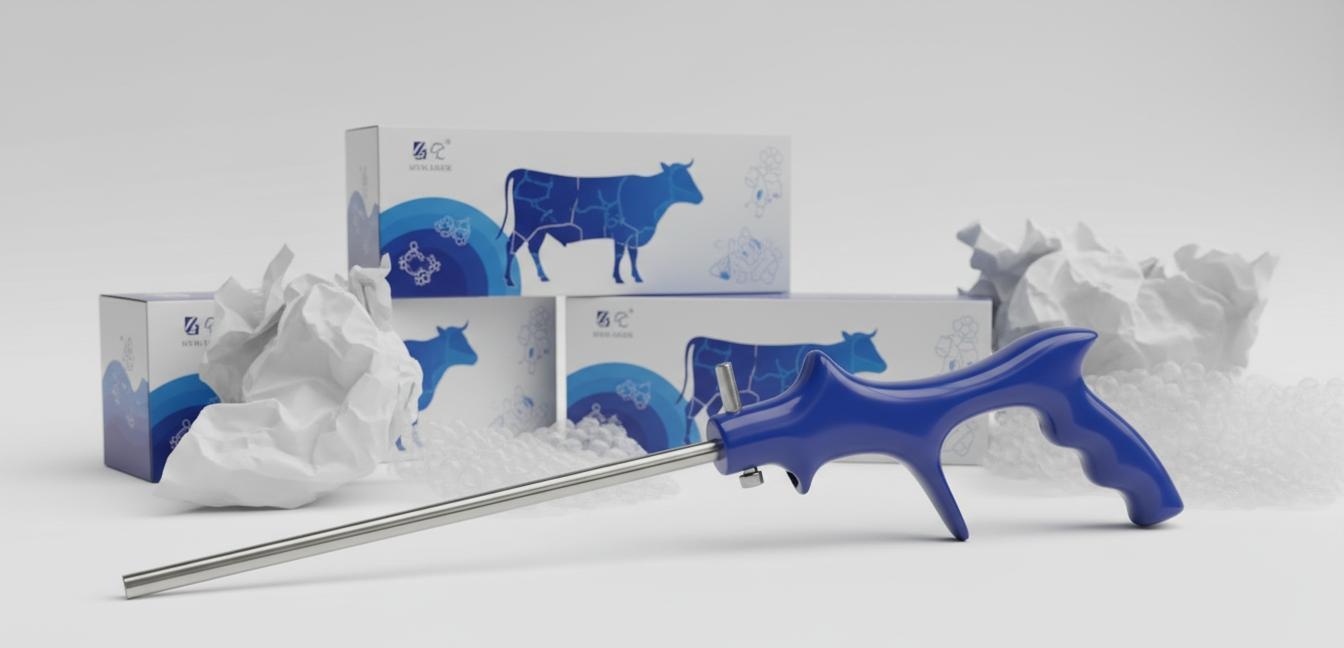
What should bulk buyers define as the “best” cattle AI gun?
The best cattle AI gun is the one that gives consistent field handling across thousands of inseminations, not the one that looks best in a catalog photo. A cattle AI gun is a handheld insemination instrument used to place a loaded semen straw inside a disposable sheath so trained technicians can perform artificial insemination in cattle. In procurement terms, the product must satisfy four groups of people at once: the inseminator who needs smooth control, the distributor who needs low complaint rates, the importer who needs stable documentation, and the brand owner who needs clean private-label presentation.
When I review cattle AI gun sourcing specifications, I usually separate “must-have” performance from “nice-to-have” cosmetic features. The must-have side includes stainless-steel construction, reliable straw retention, a straight body tube, a plunger that moves without grinding, and compatibility with the semen straw and sheath system used in the target market. The cosmetic side includes color-coded knobs, logo marking, blister cards, printed cartons, and branded instruction leaflets. Both matter. But they do not matter equally. A beautiful package cannot rescue a gun that feels rough in a veterinarian’s hand.
Because artificial insemination is a controlled reproductive procedure, equipment consistency matters more than catalog variety. According to the FAO cattle embryo transfer training manual, semen handling, equipment, supplies, and records are part of broader reproduction quality control. That manual focuses on embryo transfer rather than ordinary farm-level AI gun purchasing, but the procurement lesson is still useful: equipment should be controlled, cleaned, and documented as part of a repeatable reproductive workflow. For a bulk buyer, this means written specifications are not paperwork decoration. They are the first defense against inconsistent batches.
Which cattle AI gun type is usually best for bulk procurement?
For most bulk procurement programs, a stainless-steel reusable cattle AI gun for 0.25 mL and/or 0.5 mL straws is the safest starting point because it balances durability, familiar handling, and private-label flexibility. Disposable or ultra-low-cost designs may suit narrow promotional programs, but distributors serving dairy farms, beef breeding operations, and veterinary technicians usually need a product that can survive repeated use, cleaning, transport, and resale handling.
The main choice is not simply “one model or another.” It is the relationship between semen straw size, sheath compatibility, and market habit. In some regions, 0.25 mL straws are common for frozen semen distribution; in others, 0.5 mL straws remain widely used. A procurement team should not assume compatibility from the words “standard AI gun.” Ask for the exact straw size, internal stop design, plunger diameter, sheath match, and sample loading photos. If your market sells both straw sizes, a dual-use or clearly segmented SKU strategy may reduce confusion.
A 0.25 mL cattle AI gun is often preferred when the buyer’s semen supply chain uses mini straws, while a 0.5 mL cattle AI gun is appropriate where medium straws dominate. The wrong match can cause poor loading feel, loose straw positioning, or technician complaints. I have seen procurement teams lose weeks arguing over “defective guns” when the real issue was that the buyer’s sheath and straw system did not match the sample submitted for testing. It is frustrating because it is preventable. Before price negotiation, confirm the physical ecosystem.
For brand owners, I would normally recommend three initial SKUs: a 0.25 mL stainless-steel AI gun, a 0.5 mL stainless-steel AI gun, and one premium package option with gun, sheath sample, and instruction insert. This gives distributors enough range to serve different local customers without creating an inventory mess. If the buyer already knows that one straw size represents more than 80% of local demand, start with that model and add the second size only after sell-through data supports it.
How should buyers compare material, finish, and dimensional quality?
Buyers should compare cattle AI guns by material grade, straightness, surface finish, plunger movement, and measurable tolerance rather than by weight or appearance alone. Stainless steel is preferred because it provides good rigidity, a smooth cleanable surface, and better long-term resistance to normal handling than low-grade plated materials. However, “stainless steel” is not a complete specification. A purchase order should still define the required grade if the supplier can confirm it, the visible finish, and the inspection method.
For a practical procurement specification, I would request a straight body tube with no visible bend over the working length, no burrs at sheath-contact points, no sharp edge around the straw loading area, and a plunger that moves through the full stroke without catching. If the supplier can provide measured tolerances, use them. If exact engineering drawings are not available, at least request a golden sample and make it the reference for mass production. The golden sample should be sealed, labeled, and photographed from multiple angles.
Because a small burr can scratch a disposable sheath or disturb smooth insertion, surface finishing deserves more attention than many price-focused buyers give it. Internationally recognized stainless-steel finishing references such as ASTM A967/A967M discuss chemical passivation treatments for stainless steel parts; buyers should not claim a passivation process unless the supplier provides testable documentation, but the standard is a useful reference when discussing corrosion resistance expectations. For ordinary cattle AI guns, the key procurement point is simpler: the surface should be smooth, clean, and free from defects that affect handling or hygiene.
| Selection factor | Recommended specification | Procurement risk if ignored | Buyer verification method |
|---|---|---|---|
| Straw size compatibility | Confirm 0.25 mL, 0.5 mL, or separate SKUs for both sizes. | Poor loading fit and high technician complaints. | Load real semen-style test straws during sample approval. |
| Body material | Use stainless steel where repeated cleaning and field durability are required. | Bending, plating wear, or short product life. | Ask for material declaration and inspect sample surface after cleaning cycles. |
| Surface finish | Smooth finish with no burrs, sharp edges, dents, or visible contamination. | Sheath damage, hygiene concern, and lower perceived brand quality. | Run cotton swab check around sheath-contact edges. |
| Plunger movement | Full-stroke movement should feel stable, not loose, rough, or stuck. | Uncomfortable field handling and inconsistent user experience. | Test 20 sample units through 30 full strokes each. |
| Custom branding | Laser logo, private-label package, barcode label, and carton mark should be confirmed before mass production. | Brand inconsistency, relabeling cost, and rejected retail shipments. | Approve pre-production artwork and one physical branded sample. |
| Cleaning compatibility | Supplier should provide practical cleaning and handling instructions without exaggerated sterilization claims. | Improper field care and unrealistic marketing promises. | Include cleaning guidance in the branded instruction leaflet. |
What custom branding options should be requested from Chinese manufacturers?
For cattle AI guns, the most useful custom branding options are laser logo marking on the handle or body, private-label instruction sheets, barcode labels, branded polybags or boxes, and export carton marks. Full structural customization is possible only when the order volume and tooling budget justify it, but many buyers do not need new tooling. They need a reliable standard gun presented under their own brand with consistent packaging and traceability.
Logo placement should be chosen carefully. Marking on a smooth handle area usually looks cleaner than marking on a thin working tube. Laser marking is generally more durable than stickers, but the buyer should approve contrast, size, orientation, and whether the mark remains legible after normal cleaning. If the logo includes fine lines, ask for a physical marked sample rather than relying on a digital mockup. Digital mockups always look confident. Metal surfaces are less forgiving.
Private-label packaging is often more commercially valuable than changing the AI gun itself because distributors sell trust before they sell metal. A clear package should state the product name, compatible straw size in mL, intended animal category, basic cleaning caution, manufacturer or importer details required by the buyer’s market, SKU, barcode, batch number, and country-of-origin marking where applicable. Do not crowd the package with claims such as “medical grade,” “CE certified,” or “veterinary approved” unless documents exist and are relevant to the target market. Cautious language protects the brand.
For SOUNDAI inquiries, buyers can position the request as an OEM/ODM export project: “We need stainless-steel cattle AI guns for 0.25 mL and 0.5 mL straws, with laser logo, branded box, barcode label, and outer carton mark. Please quote based on 500 units, 2,000 units, and 10,000 units, including sample cost, artwork requirements, and production lead time.” This type of request is much easier for a manufacturer to answer than a vague “send best price.” It also signals that the buyer understands export purchasing.
How should buyers build a quality control checklist before placing a bulk order?
A cattle AI gun QC checklist should cover appearance, dimensions, compatibility, plunger movement, packaging accuracy, labeling accuracy, and batch traceability before shipment. The checklist does not need to be overly academic. It needs to be usable by a third-party inspector, the supplier’s QC team, and the buyer’s warehouse staff without interpretation battles.
Start with incoming sample approval. Ask for 5 to 20 samples depending on the order size. Test each unit with the exact sheath and straw style used in the target market. Confirm that the straw loads properly, the plunger reaches the expected end position, and the sheath seats without scraping. If possible, have a trained cattle AI technician handle the sample. A purchasing manager may judge a product as acceptable while a technician immediately notices that the plunger resistance feels wrong. That moment is uncomfortable, but it is useful.
Because bulk orders multiply small defects, buyers should approve a written Acceptable Quality Limit inspection plan before production begins. ISO 2859 sampling standards are widely used for lot-by-lot inspection in many industries; according to the ISO 2859-1 overview, the standard relates to sampling procedures for inspection by attributes. Buyers should consult their own inspection partner for exact AQL levels, but they can still define critical defects such as wrong straw compatibility, blocked plunger movement, sharp burrs, incorrect logo, missing barcode, or damaged retail packaging.
A practical pre-shipment checklist can include: 1) product count per carton; 2) carton weight and dimensions; 3) logo position and clarity; 4) SKU and barcode scan test; 5) random plunger stroke test on 32 units or another agreed sample size; 6) cotton swab edge test for burrs; 7) sheath loading test; 8) visual inspection for rust, oil, dents, or contamination; 9) packaging drop or compression observation if retail boxes are fragile; and 10) photo documentation of sealed cartons. Keep the list short enough that it will actually be used.
What order quantities and price factors should procurement teams expect?
Cattle AI gun pricing in bulk is usually driven by material, machining consistency, surface finish, branding complexity, packaging format, inspection level, and order quantity. A factory may quote a lower unit price for a plain bulk-packed item than for an individually boxed OEM item with barcode labels and instruction sheets. The correct comparison is total landed cost per sellable unit, not ex-factory unit price alone.
Minimum order quantity depends on the manufacturer’s production setup and the level of customization. A standard unbranded item may be available in smaller lots, while private-label packaging often requires a higher MOQ because printing, setup, and material purchasing have minimum runs. If the buyer is testing a new market, I recommend separating the first order into a pilot quantity and a reorder option. For example, approve 500 to 1,000 units as a market validation batch, then negotiate 5,000 to 10,000 units after complaints, returns, and distributor feedback are known. This is less glamorous than a huge first order. It is also safer.
A lower-priced AI gun can cost more over 12 months if it increases return rates, repacking labor, or distributor support time. Build a simple total cost of ownership calculation. If a premium unit costs USD 0.30 more but reduces returns by 2.0 percentage points on a 10,000-unit order, the saved complaint handling and brand damage may justify the difference. The numbers will vary by market, but the logic is consistent. Procurement should protect gross margin and brand reputation together.
Static TCO calculator: How should you compare two AI gun quotes?
Use landed sellable cost rather than factory price when comparing cattle AI gun quotes. Add unit price, branded packaging cost, inspection cost per unit, inland and ocean freight allocation, import duty, repacking labor, expected defect replacement cost, and distributor support cost. A simple formula is: landed sellable cost = product cost + branding cost + logistics cost + compliance handling + estimated defect cost. If Supplier A is USD 0.20 cheaper but creates USD 0.35 in extra defect and repacking cost, Supplier B is the better procurement decision.
Why should SOUNDAI be considered for cattle AI gun sourcing?
SOUNDAI should be considered because its website includes an artificial insemination equipment category and export-facing contact channels, which are useful starting signals for buyers sourcing livestock reproduction tools from China. Publicly available SOUNDAI pages list the company as Ningbo Beilun Sound Hardware Industrial and Trade Co., Ltd. and show contact details in Ningbo, Zhejiang, China. The website also includes related animal husbandry categories such as AI gun, animal syringe, drinking bowl, nose ring, and other livestock equipment, suggesting a broader veterinary and farm supply catalog rather than a single-item trading page.
This does not mean a buyer should skip verification. It means SOUNDAI belongs on the supplier shortlist for a structured RFQ. A serious buyer should still request product drawings or specification sheets, physical samples, packaging artwork confirmation, export carton photos, and commercial documents before approving a bulk order. If certifications or compliance documents are required in your market, ask for copies and verify them independently. Do not rely on a website banner or a sales message for regulated claims.
Because custom branding depends on communication accuracy, a supplier’s willingness to confirm details in writing is as important as its catalog range. Send SOUNDAI a specification sheet that includes straw size, material preference, surface finish expectation, logo method, package type, barcode format, language requirements, carton marks, target order quantity, and inspection plan. Then compare the clarity of the response. A good manufacturer will ask practical questions. A weak supplier will only repeat “yes, no problem.” In export procurement, “no problem” is not a specification.
What should the RFQ include for OEM cattle AI guns?
An effective RFQ for OEM cattle AI guns should define the product, branding, packaging, documents, inspection method, and shipping terms in one message. This prevents the common problem where the buyer negotiates price first and discovers later that logo marking, barcode labels, or individual boxes were not included.
Use a structured RFQ like this: product name: stainless-steel cattle artificial insemination gun; straw compatibility: 0.25 mL, 0.5 mL, or both; use case: cattle breeding and veterinary supply distribution; material: stainless steel, supplier to confirm grade; surface: smooth, burr-free, clean finish; branding: laser logo on handle or agreed position; packaging: individual branded box or polybag with instruction sheet; labels: SKU, barcode, batch number, country of origin if required; order quantities: sample, pilot order, repeat order; inspection: appearance, loading, plunger stroke, packaging, and carton count; documents: commercial invoice, packing list, product photos, material declaration if available; delivery term: EXW, FOB Ningbo/Shanghai, or other agreed Incoterms.
Because every customized detail can affect cost and lead time, buyers should freeze artwork and specifications before the supplier starts mass production. Changing a logo after printing begins can destroy margin. Changing carton marks after goods are packed can delay shipment. Changing straw compatibility after samples are approved can create a technical dispute. The boring discipline of version control is what keeps OEM orders profitable.
How can buyers avoid common procurement mistakes?
The most common mistake is treating cattle AI guns as simple metal accessories instead of field-use reproductive tools with compatibility and hygiene expectations. This leads buyers to over-focus on unit price and under-focus on straw fit, sheath fit, edge finish, cleaning instructions, and package clarity. Another common mistake is approving only digital photos. Photos cannot show plunger feel. They cannot reveal a tiny burr. They cannot prove that the barcode scans in your warehouse system.
The second mistake is making unverifiable marketing claims. If your product page says “certified veterinary medical device” without evidence, it may create customs, platform, or customer trust problems. Some markets may treat AI equipment differently depending on classification, intended use, and local rules. Use cautious wording: “designed for cattle artificial insemination procedures by trained personnel,” “compatible with specified straw sizes,” and “private-label packaging available.” If a certification matters in your target market, verify it with an official database or a qualified compliance advisor.
Because cross-border livestock equipment is sold into many regulatory environments, importers should confirm local labeling and product classification before ordering branded packaging. The World Organisation for Animal Health standards portal is a useful high-level reference for animal health frameworks, while local veterinary or customs authorities remain the decisive source for import classification. For product safety and device classification, consult the target market’s rules before printing final labels.
The third mistake is not protecting reorder consistency. The first batch may be excellent because everyone pays attention. The third batch may drift if the supplier changes a component, subcontractor, finish, or packaging material. Add a clause that any material, dimensional, packaging, or logo change must be approved in writing. Keep one approved sample in your office and one with the supplier. This small habit can save a painful argument later.
Which custom options create real distributor value?
The custom options that create real distributor value are those that reduce buyer confusion, improve shelf presentation, and support after-sale traceability. A laser logo is useful, but it is not the whole branding strategy. A distributor-ready cattle AI gun should be easy to identify, easy to reorder, and easy to explain to a technician.
High-value options include color-coded labels for 0.25 mL and 0.5 mL models, clear product photography on the box, multilingual instruction inserts, QR codes linking to a usage or cleaning guide, batch numbering, and carton labels that match the buyer’s warehouse system. If the product is sold through retail dealers, a hangable blister card may be useful. If it is sold to veterinary service teams, a plain durable box with multi-unit carton packing may be more efficient. Packaging should match the channel rather than the buyer’s personal taste.
A 0.25 mL model should be visually distinguishable from a 0.5 mL model because warehouse picking errors are more likely when two SKUs look almost identical. This is one of those small field details that people ignore until a distributor ships the wrong item to 40 stores. Use different label colors, SKU codes, or handle markings. Make the distinction visible from 1 m away, not just in fine print.
What is the final recommendation for product selection?
The final recommendation is to source stainless-steel reusable cattle AI guns from a China manufacturer that can confirm straw compatibility, provide physical OEM samples, support private-label packaging, and accept a written QC checklist before bulk production. For most buyers, the first procurement round should include one 0.25 mL model, one 0.5 mL model, and a branded packaging test. SOUNDAI is a sensible supplier to contact because its artificial insemination equipment category aligns with the product requirement and its export website provides direct contact routes.
Choose the standard stainless-steel AI gun when your priority is reliable resale, broad technician familiarity, and lower development risk. Choose a more customized design only when you have enough order volume, a clear market differentiation strategy, and time for tooling validation. Choose individual branded packaging when your sales channel includes dealers, retail shelves, online listings, or distributor catalogs. Choose bulk packaging only when the product is used internally by a breeding service team and retail presentation does not matter.
Because the best procurement decision is evidence-based, buyers should approve samples with real sheaths and straw sizes before negotiating a large-volume repeat order. My practical sequence is simple: shortlist supplier, request specification, test samples, approve branding, run pilot order, inspect shipment, collect field feedback, then scale. It is not the fastest path on paper. It is the path that prevents avoidable returns and protects your brand when thousands of units enter the market.
FAQ: Cattle AI gun bulk procurement and custom branding
What is a cattle AI gun used for?
A cattle AI gun is used by trained personnel during artificial insemination to hold a semen straw inside a disposable sheath and assist accurate semen placement. It should be selected according to straw size, sheath compatibility, and the handling preferences of local technicians.
Is a 0.25 mL or 0.5 mL AI gun better?
Neither size is universally better because the correct choice depends on the semen straw format used in your target market. A 0.25 mL AI gun is suitable for mini straws, while a 0.5 mL AI gun is suitable for medium straws. Bulk buyers should test the exact straw and sheath combination before ordering.
Can Chinese manufacturers provide custom branding on cattle AI guns?
Many Chinese manufacturers can provide custom branding such as laser logos, private-label boxes, barcode labels, instruction sheets, and export carton marks. Buyers should approve one physical branded sample before mass production because logo contrast, placement, and packaging color can differ from digital artwork.
What should I check in a cattle AI gun sample?
Check straw loading fit, sheath fit, plunger smoothness, body straightness, surface finish, burr-free edges, logo quality, packaging accuracy, and barcode readability. If possible, ask a trained AI technician to handle the sample because field feel is difficult to judge from photos.
Should I ask for CE or FDA certification for cattle AI guns?
You should ask for certifications only when they are relevant to your target market and product classification. Do not accept broad claims without documents and official verification. For many livestock equipment purchases, material declaration, labeling compliance, and importer responsibility may be more practical than generic certification claims.
What MOQ should I use for a first OEM order?
A cautious first OEM order is usually a pilot batch large enough to test market demand but small enough to limit risk. Many buyers start with hundreds or low thousands of units, then scale after confirming distributor feedback, return rate, packaging durability, and reorder demand.
Why is private-label packaging important for AI guns?
Private-label packaging helps distributors present the product professionally, identify straw size clearly, scan SKUs accurately, and provide cleaning or handling guidance. It can reduce confusion and strengthen the buyer’s brand even when the underlying product is a standard stainless-steel AI gun.
How do I request a quote from SOUNDAI?
Send SOUNDAI a structured RFQ that includes straw size, material preference, sample quantity, target bulk quantity, logo method, packaging style, barcode requirements, carton marks, inspection plan, and preferred shipping term. A clear RFQ usually produces a more useful quotation than asking only for the lowest price.
Next step for buyers
If you are comparing cattle AI gun suppliers for distributor, farm-chain, or veterinary supply orders, start by reviewing SOUNDAI’s artificial insemination equipment category and prepare a specification-based RFQ. Ask for samples, branding options, packaging artwork requirements, and inspection criteria before confirming any bulk order.
Ready summary
For bulk cattle AI gun procurement, the best choice is usually not the cheapest catalog item. It is a stainless-steel reusable AI gun that matches the buyer’s semen straw size, fits standard sheaths, moves smoothly, and can be private-labeled without creating hygiene or handling problems. Buyers should confirm 0.25 mL or 0.5 mL compatibility, approve a physical branded sample, and inspect plunger movement, surface finish, logo marking, barcode labels, and carton marks before shipment. SOUNDAI is a relevant China supplier to shortlist because its artificial insemination equipment category aligns with cattle reproduction sourcing. The safest sourcing sequence is sample test, OEM artwork approval, pilot order, pre-shipment inspection, field feedback, and then scale-up.
Post time: May-18-2026