
TL;DR
- Cow magnets reduce risk from ferrous metal, not plastic, stone, glass, or aluminum.
- A properly administered magnet is generally a lifetime preventive device.
- Effectiveness depends on magnet strength, shape, coating, and correct administration.
- Distributors should avoid cure claims and position cow magnets as prevention support.
What “effective” really means for a cow magnet
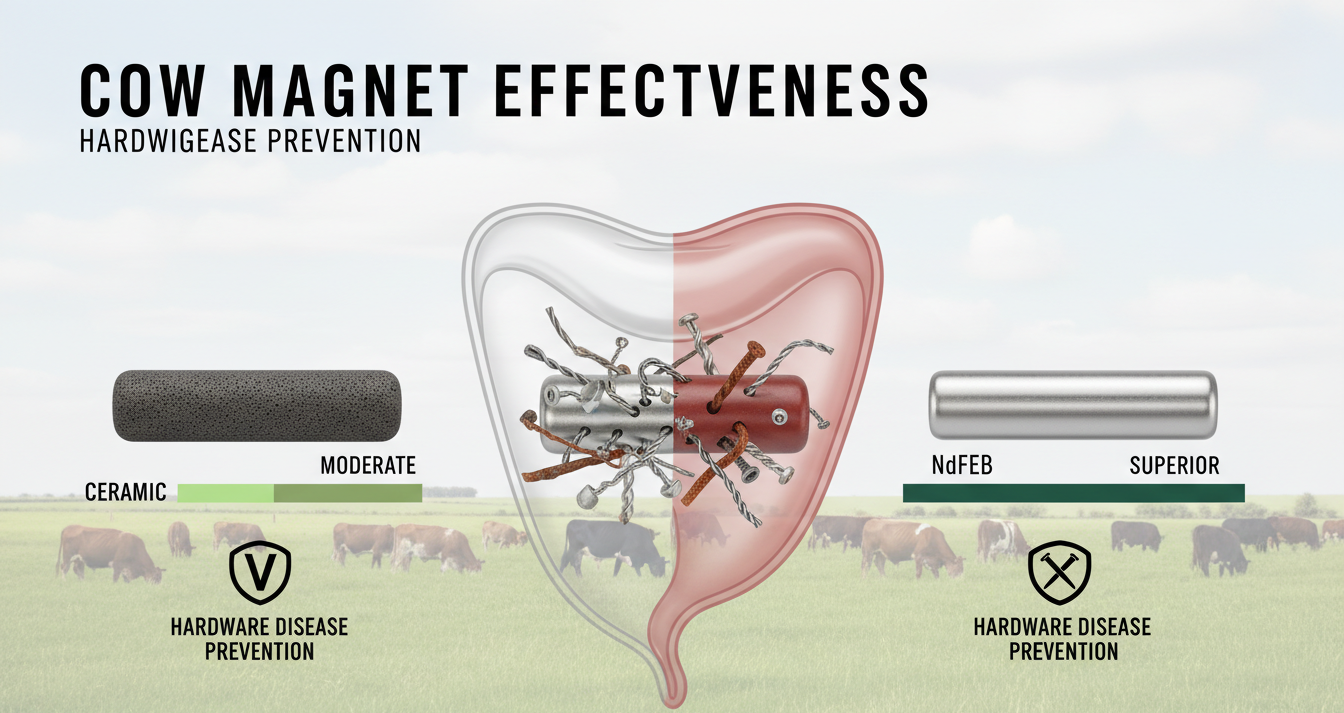
Effective does not mean a cow magnet eliminates all hardware disease; it means it reduces the chance that ferrous metal objects move freely and puncture the reticulum. Cattle can swallow nails, wire pieces, staples, and other metal fragments from feed, bedding, fencing, or old equipment areas. A magnet attracts iron and steel fragments so they are more likely to stay attached to the magnet rather than migrate sharply through tissue.
This preventive logic is well understood in cattle management, but it must be explained responsibly. A magnet cannot attract every foreign object, cannot reverse advanced infection, and cannot replace a veterinarian when an animal is already showing signs of illness. For B2B buyers, responsible claims protect both the distributor and the end user.
How hardware disease happens and where the magnet helps
Hardware disease risk begins when cattle swallow sharp foreign material that settles in the reticulum and may penetrate tissue during normal rumen movement. The reticulum is positioned where swallowed dense objects can collect. If a nail or wire punctures the reticulum wall, the animal may develop pain, fever, poor appetite, reduced milk production, or more severe complications.
A cow magnet helps before the object causes damage. It collects ferrous fragments and turns several sharp loose pieces into a less mobile cluster. The magnet does not remove metal from the animal; it manages where magnetic metal is held. This distinction makes the article more accurate and more useful for veterinary supply buyers.
Service life: why cow magnets are usually treated as lifetime devices
After correct administration, a cow magnet is generally expected to stay in the animal long term rather than being retrieved or replaced on a routine schedule. The service life depends on magnet material, coating, smoothness, corrosion resistance, and whether the magnet remains structurally intact. Because the magnet works inside the animal, the buyer should treat surface quality and edge control as safety issues, not cosmetic details.
Importers should request dimensions, weight, magnetic pull information if available, coating description, and packing method. Strong magnets packed poorly can chip, stick together aggressively, or arrive with damaged edges. A simple product still needs controlled manufacturing and protective packaging.
What cow magnets cannot prevent
Cow magnets do not protect against non-magnetic materials such as plastic twine, glass, stones, aluminum, copper, and some stainless steel fragments. They also do not clean contaminated feed, repair dangerous barns, or diagnose a sick animal. If a cow shows appetite loss, arched posture, fever, pain response, sudden milk drop, or abnormal behavior, veterinary evaluation is required.
This limitation should appear in distributor materials. Overclaiming makes the product sound stronger but creates after-sales and ethical risk. The right message is: cow magnets are low-cost prevention support in a wider metal-control program.
Quality checkpoints for cow magnet sourcing
| Checkpoint | Why it matters | Buyer action |
|---|---|---|
| Magnetic strength | Weak magnets may collect fewer ferrous fragments | Request sample comparison and supplier data |
| Smooth ends and edges | Rough surfaces complicate administration and confidence | Inspect samples by hand and visually |
| Coating integrity | Poor coating may chip or corrode | Check surface uniformity and abrasion resistance |
| Size and weight consistency | Administration tools and animal class require consistency | Measure multiple samples, not one display unit |
| Packing method | Magnets can chip or stick together in transit | Request inner separators and strong cartons |
| Instructions and claims | Animal-health products need responsible guidance | Avoid cure claims; include veterinary disclaimer |
Administration and user training considerations
A cow magnet should be administered with appropriate equipment and by trained personnel or under veterinary guidance. The buyer should not treat administration as an afterthought. A magnet with correct dimensions but poor user instructions can still create customer hesitation or misuse. Distributors should explain animal suitability, handling, and the need to follow local farm or veterinary protocol.
If the market uses balling guns, confirm that magnet dimensions fit common tools. If the product is sold through retail channels, packaging should clearly state the intended animal class and basic handling precautions. This is more valuable than a generic “high quality” claim.
Farm-level prevention program: magnets plus metal control
Cow magnets work best as one part of a broader hardware-disease prevention program that includes feed hygiene, equipment maintenance, and metal-source control. Farms should inspect feed mixing areas, bale wire handling, fences, old machinery, and bedding sources. A magnet reduces risk after ingestion, but prevention before ingestion is still better.
Distributors can use this broader program as educational content. It positions the cow magnet as a professional preventive tool rather than a magic object. It also encourages repeat purchases for replacement heifers or new animals entering the herd.
How distributors should position cow magnets in the market
The safest commercial positioning is “helps reduce hardware disease risk from swallowed ferrous metal” rather than “prevents all hardware disease.” This wording is accurate, useful, and less likely to create unrealistic expectations. For veterinary supply wholesalers, add product dimensions, packing quantity, recommended storage, and administration disclaimer. For farm retailers, provide simple shelf cards explaining what the magnet attracts and what it does not attract.
Cow magnets are small, low-cost, and easy to ship, but their connection to animal health means communication quality matters. A distributor that explains limitations clearly will be trusted more than one that oversells the product.
Frequently Asked Questions
Do cow magnets prevent all hardware disease?
No. They reduce risk from ferrous metal objects but cannot attract non-magnetic materials or replace good feed and facility management.
How long does a cow magnet last?
A properly administered cow magnet is generally intended to remain in the animal for life, depending on product quality and correct use.
Can a cow magnet treat a sick cow?
No. If hardware disease is suspected, veterinary diagnosis and treatment are required. A magnet is mainly a preventive risk-reduction tool.
What should importers inspect in samples?
Check magnetic strength, smoothness, coating, dimensions, weight consistency, and packing protection.
Can magnets be given to all cattle?
Use should follow local veterinary or farm protocol, animal size, and administration guidance. Buyers should avoid one-size-fits-all medical claims.
Post time: May-19-2026