
TL;DR
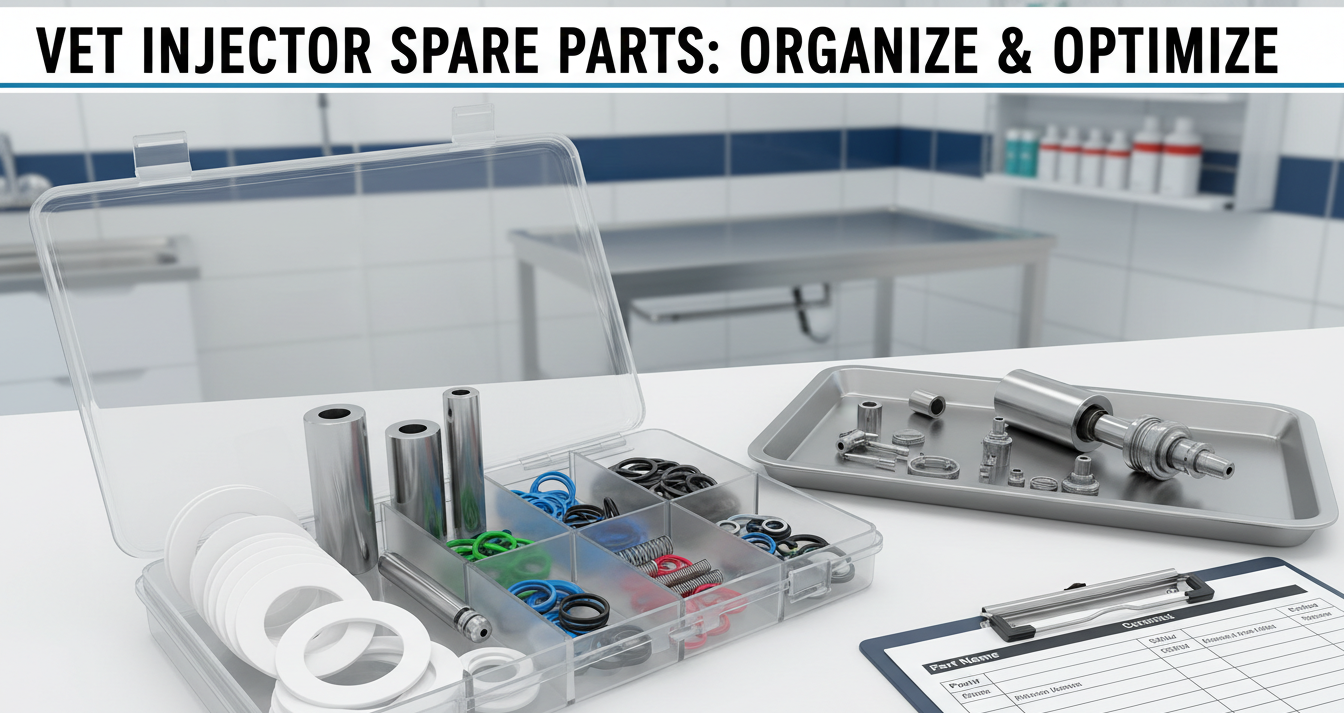
- Stock needles, seals, O-rings, springs, pistons, valves, barrels, dose-adjustment parts, tubing, lubricant, cleaning brushes, and at least one backup injector.
- Prioritize parts that affect dose accuracy, leakage control, suction, spring return, and needle connection.
- Use procedure volume and failure history to set minimum stock levels.
- Distributors should sell spare-part kits with injectors to reduce after-sales downtime.
Direct answer: the essential spare-parts list
For veterinary continuous injectors, the essential spare parts are needles, seals, O-rings, pistons, springs, inlet and outlet valves, barrels or cylinders, dose-adjustment parts, connecting tubing, bottle adapters, lubricant, cleaning brushes, and at least one complete backup injector. These are the parts most likely to affect dose accuracy, leakage, suction, trigger return, needle connection, and user confidence during vaccination or treatment work. Clinics and farm-service teams should not wait until a component fails before ordering replacements. During a vaccination day, a small O-ring can stop an entire line of work.
Why spare parts matter more than buyers expect
Continuous injectors are used under pressure: animals are moving, workers are handling multiple doses, medication may be temperature-sensitive, and the schedule often cannot wait. If a spring fails, a valve sticks, a seal leaks, or a needle connection becomes loose, the result is not only inconvenience. It can mean inaccurate dosing, wasted medicine, stressed animals, delayed treatment, and lost labor time. A spare-part plan is therefore part of clinical reliability. For distributors, including a spare-part kit with the injector can make the product feel more professional and reduce emergency complaints from customers.
Parts that affect dose accuracy
Dose accuracy depends on the piston, barrel, seals, valves, and dose-adjustment mechanism. A worn piston seal can allow liquid bypass, causing underdosing. A damaged valve can create poor suction or delayed refill. A scratched barrel may affect smooth movement. A loose adjustment knob can change the selected dose during use. Buyers should ask whether the injector has replaceable seals and valves, whether the dose scale is clear, and whether replacement parts are available by model number. For veterinary products, compatibility matters; a part that looks similar may not maintain the same dosing performance.
Parts that affect hygiene and safety
Needles, tubing, bottle adapters, and cleaning brushes are hygiene-critical. Needles should be replaced based on animal type, medication, procedure volume, and local veterinary practice. Bent, dull, or contaminated needles increase tissue trauma and disease risk. Tubing should be inspected for cracks, discoloration, stiffness, and residue. Bottle adapters should seal properly and be cleaned according to protocol. Cleaning brushes must reach internal channels without damaging seals. If the injector is used for different medicines, the clinic should prevent residue carryover through proper flushing and maintenance.
How to calculate spare-part inventory
A practical stocking plan starts with procedure volume. A small clinic may keep one spare seal kit, one valve kit, one spring, spare tubing, several needle sizes, lubricant, and a backup injector. A distributor serving many farms should stock spare kits in proportion to injector sales. For every 50 injectors sold, a reasonable starting point may include multiple seal kits, valve kits, springs, barrels, and needle packs, adjusted after observing real failure patterns. The key is to treat spare parts as planned inventory, not emergency purchases. If replacement parts are unavailable, the buyer is effectively purchasing a disposable injector even if the product was marketed as durable.
Technical buyer comparison table
| Spare Part | Function | Stocking Priority |
|---|---|---|
| Needles | Animal injection interface | Very high; size and gauge vary by use |
| Seals and O-rings | Prevent leakage and maintain suction | Very high; small parts cause major downtime |
| Springs | Trigger return and dosing rhythm | High for frequent-use clinics |
| Valves | Fluid intake and output control | High; affects refill and accuracy |
| Barrel or cylinder | Dose chamber and piston movement | Medium to high depending on model |
| Tubing and adapters | Connection to medicine bottle | High for bottle-fed continuous systems |
How should buyers evaluate the product before ordering?
A good evaluation process starts with the real use case. Buyers should define animal type, age range, body weight, herd size, daily use frequency, sanitation level, water or medication source, installation environment, and the skill level of workers who will operate or clean the product. A farm with trained staff and written hygiene procedures can use equipment that requires more careful handling; a distributor selling to many small farms may need a more rugged, simple, and forgiving product. The same item can be excellent in one setting and problematic in another if the buyer ignores the operating environment. For this reason, a serious RFQ should include not only quantity and target price, but also the reason for purchase, the expected service life, and the most common failure or complaint the buyer wants to prevent.
What should be included in the RFQ?
The RFQ should include exact product name, target animal, expected quantity, destination country, preferred material, size or capacity requirement, packaging requirement, private-label need, sample request, target delivery date, and any required documentation. If the product touches medicine, semen, feed, or drinking water, the buyer should also ask for cleaning instructions, compatible disinfectants, replacement parts, and recommended storage conditions. For distributors, carton information is not a small detail. Carton size, gross weight, inner packing, barcode labels, and spare-part kits affect warehouse handling, freight cost, and customer support. A low unit price can disappear quickly if the packing is weak, if replacement parts are unavailable, or if the item is difficult to explain to end users.
How should samples be tested?
Samples should be tested in a way that reflects real use, not only visual appearance. A sample that looks acceptable on a desk may still fail when installed in a barn, handled by workers with gloves, washed repeatedly, exposed to cold weather, or used with restless animals. Buyers should inspect dimensions, material finish, moving parts, seals, valves, threads, spring action, edges, cleaning access, instructions, and packaging. When possible, test several samples rather than one perfect display sample. Record the test results in writing and compare them with the supplier’s specification. If a sample is approved, keep one golden sample in your office and ask the supplier to keep one matching sample at the factory. This reduces disputes during mass-production inspection.
What mistakes should buyers avoid?
The most common mistake is buying only by unit price. In livestock equipment, the lowest price can lead to higher total cost if the product leaks, rusts, cracks, clogs, injures animals, contaminates a procedure, or creates complaints that require replacement shipments. Another mistake is ignoring spare parts. Small pieces such as seals, O-rings, springs, valves, needles, washers, caps, and tubing are inexpensive but can stop work when missing. A third mistake is failing to translate product knowledge into end-user instructions. If the distributor sells to farms that have never used the product before, clear usage guidance, cleaning steps, and troubleshooting notes are part of the product value. Good procurement is not only buying goods; it is buying a manageable system.
How can distributors reduce after-sales risk?
Distributors can reduce after-sales risk by standardizing product versions, stocking spare parts, requesting clear labels, and educating customers before problems occur. If the same market uses multiple animal sizes, different water pressures, or different veterinary protocols, one SKU may not be enough. A small product matrix can prevent misuse: one model for calves, one for adult cattle, one for high-pressure systems, one for cold climates, or one for professional veterinary use. Before ordering a container, distributors should ask the supplier for product photos, installation diagrams, exploded drawings if available, and recommended spare-part ratios. These materials help sales teams answer questions accurately and help farms use the equipment correctly.
Detailed pre-shipment inspection checklist
Before shipment, buyers should inspect product quantity, model number, material, surface finish, moving parts, dimensions, function, packaging, labels, carton strength, and spare-part inclusion. If the product includes valves, springs, seals, magnets, needles, or dosing components, test several units from different cartons rather than only one top sample. Confirm that the instruction sheet matches the actual product. For OEM or private-label orders, check logo placement, color, barcode, carton marks, and language before the goods leave the factory. A pre-shipment inspection is much cheaper than solving avoidable problems after the goods arrive in the destination market.
Frequently asked questions
Should I request samples before a bulk order?
Yes. Samples allow buyers to verify material, dimensions, fit, animal acceptance, packaging, cleaning access, and product consistency. For distributor orders, samples should also be shown to several real end users before bulk purchasing.
What information should be included in the RFQ?
Include animal type, use environment, quantity, preferred material, capacity or size, destination country, packaging requirement, private-label requirement, spare-part need, sample request, and expected annual demand.
Is veterinary guidance required?
For animal-health procedures, injection work, artificial insemination, cow magnets, disease prevention, and treatment decisions, buyers should follow qualified veterinary guidance and local farm biosecurity protocols.
How do I compare two suppliers with similar prices?
Compare sample quality, material consistency, communication speed, packing method, spare-part availability, documentation, and ability to explain product limitations. A supplier that helps prevent misuse is usually more valuable than one that only offers a lower unit price.
Final procurement recommendation
The best sourcing decision is the one that combines product performance, user training, spare-part availability, and clear supplier communication. Buyers should review the relevant Sound-AI product category, request samples where appropriate, document the approved specification, and confirm the final protocol with qualified veterinary or farm-management professionals when animal health is involved. A few extra questions before production can prevent leakage, poor fit, contamination risk, downtime, animal refusal, and avoidable after-sales claims after the shipment arrives.
Disclaimer: This article is for B2B product-selection and procurement guidance. It is not a substitute for veterinary diagnosis, treatment, or local regulatory compliance advice.
Post time: May-19-2026