
TL;DR
- Float valves suit calves, mixed groups, and farms that want visible standing water.
- Paddle valves are the most rugged choice for mature cattle if the spring force is comfortable.
- Nipple valves reduce standing water but require correct height, pressure, and animal training.
- The best export order often includes two valve options, not one universal bowl.
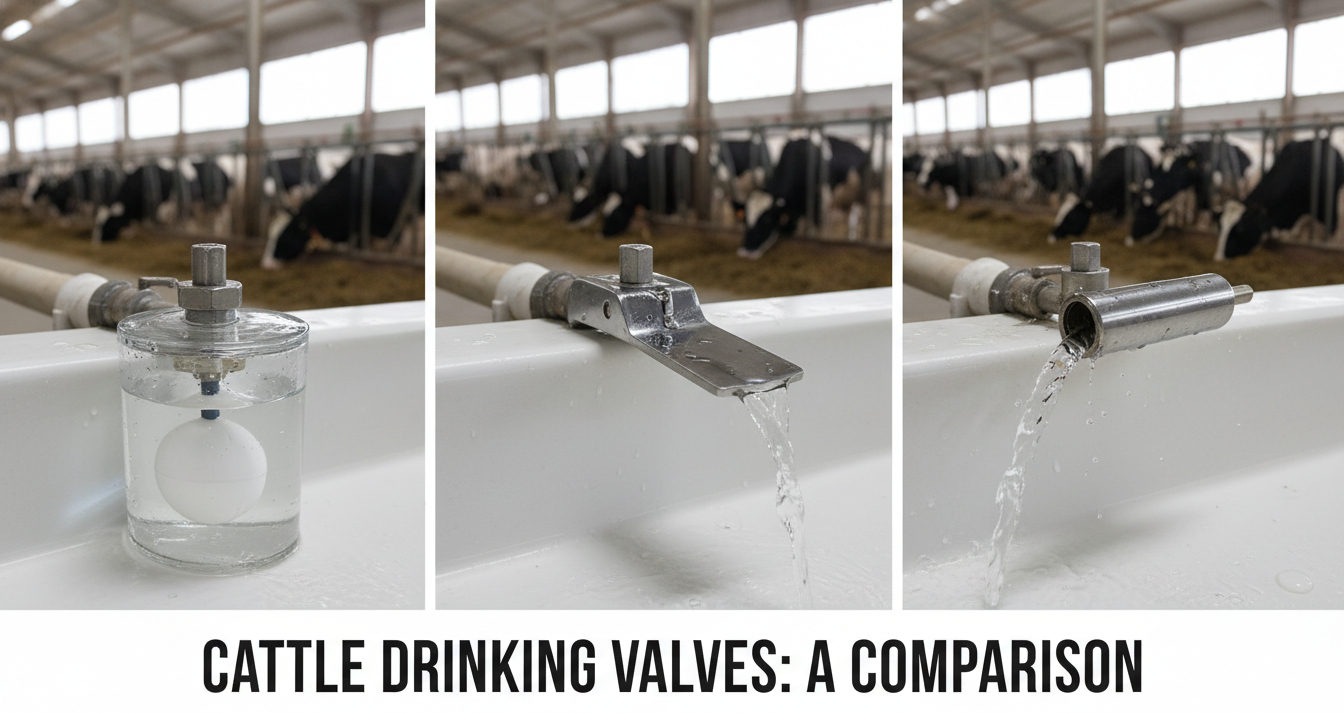 Match the valve to the animal, not just the bowl body
The first buying decision is the animal group: calves and mixed-age pens usually need easier access, while mature beef or dairy cattle can handle stronger activation mechanisms. A float bowl gives animals visible water, which lowers training risk. A paddle bowl asks the animal to press a lever, so it works best when cattle are large enough and familiar with the action. A nipple valve reduces the amount of standing water, but the animal must learn where and how to drink. This is why a distributor selling to many farm types should avoid marketing one valve as universally superior.
A practical product matrix might include a float-valve bowl for calf and smallholder channels, a reinforced paddle-valve bowl for adult cattle, and a nipple-valve solution for hygiene-focused farms. That matrix is more honest than a single “best” recommendation and it reduces after-sales complaints because each customer receives a product that matches the pen environment.
Float valve bowls: best for natural drinking behavior
Float valves are usually the easiest cattle drinking bowl option because they maintain a visible water level without requiring the animal to push or bite a part. This is valuable for calves, new animals, small family farms, and markets where user training is limited. A float valve is also easier for farm workers to understand: water level drops, valve opens, bowl refills.
The trade-off is hygiene and leakage control. Standing water collects saliva, feed fines, dust, and manure splash. In hard-water regions, sediment can affect the valve seat. If the float arm or seal is weak, the bowl can overflow. Buyers should therefore inspect the float material, pivot movement, valve seat, thread type, inlet filter option, and replacement seal availability. For cold climates, ask whether the valve is protected from freezing and whether the bowl design allows quick draining.
Paddle valve bowls: best for rugged adult-cattle pens
Paddle valves are often the most practical adult-cattle choice when farms want a strong, simple mechanism with less standing water than a float bowl. The animal presses the paddle with its muzzle, water flows, and the bowl can remain relatively cleaner between drinking events. For beef cattle, outdoor pens, and rough handling environments, this direct mechanical style can be more forgiving than delicate float assemblies.
The key quality variable is paddle feel. If the spring is too stiff, subordinate animals or smaller cattle may drink less. If it is too loose, cattle may waste water or the valve may leak. Sample testing should include repeated press cycles, return action, side pressure, leakage at different water pressures, and whether the paddle edges are rounded. For distributors, a clear spare-parts kit should include seals, springs, valve cores, and paddle hardware.
Nipple valve systems: best when water cleanliness is the priority
Nipple valves reduce standing water and can improve cleanliness, but they are less forgiving because flow rate, installation height, and training determine success. If flow is too low, cattle may reduce intake; if the nipple is too high or too low, drinking posture becomes uncomfortable. In hot climates or high-producing dairy settings, low flow is a serious risk.
Nipple valves are also more sensitive to mineral deposits and small particles. Buyers should ask for pressure range, flow-rate data, recommended filtration, nipple material, connection thread, and cleaning method. For export channels, nipple valves should be sold with installation guidance because many customer complaints are actually installation problems rather than product defects.
Valve selection table for distributors
| Scenario | Recommended valve | Why | Inspection focus |
|---|---|---|---|
| Calves or first-time users | Float valve | Visible water lowers training risk | Float movement, seal, easy cleaning |
| Adult beef cattle | Paddle valve | Rugged nose activation and less standing water | Spring force, paddle strength, leakage |
| Hygiene-focused dairy pens | Nipple valve | Less open water and better contamination control | Flow rate, pressure, height, filtration |
| Hard-water regions | Paddle or serviceable float | Minerals can clog small passages | Valve seat, filter, spare seals |
| Cold outdoor barns | Protected float or rugged paddle | Freezing risk affects all valve types | Drainage, exposed parts, winter instructions |
How to test samples before placing a container order
A useful drinking bowl sample test should simulate water pressure, animal force, contamination, and cleaning rather than only checking appearance. Connect the sample to the local pressure range, open and close the valve repeatedly, leave it under pressure overnight, and inspect for slow leakage. Add fine sediment to evaluate whether the valve seat clogs easily. For paddle bowls, press from the center and side because cattle do not apply force politely. For float bowls, lift and drop the float multiple times and check whether the water level returns consistently.
The sample should also be reviewed by the type of customer who will buy the finished SKU. A commercial dairy manager may prefer water-saving and hygiene control; a small farm retailer may prefer easy explanation and visible water. That difference should influence packaging, instructions, and spare-part stocking.
RFQ details that prevent wrong-valve purchases
The RFQ should state animal class, water pressure range, pipe connection, expected climate, bowl material, valve type, spare-part requirement, and packing method. If the buyer only asks for “cattle drinking bowl price,” the supplier cannot know whether the priority is calf comfort, adult-cattle durability, water conservation, or low complaint rate. Add photos of the target installation if possible.
- Ask for flow-rate data at low and normal pressure.
- Confirm whether seals, springs, floats, paddles, and nipple assemblies can be ordered separately.
- Request carton dimensions and nesting method because bowls can consume shipping volume.
- Ask for installation and cleaning instructions that distributors can translate for customers.
Common field complaints and how to prevent them
Most drinking bowl complaints fall into four categories: leaking, clogging, difficult activation, or animals not drinking enough. Leaking usually relates to seal quality, pressure mismatch, mineral buildup, or damaged valve seats. Clogging often comes from sediment or hard water. Difficult activation happens when paddle or nipple resistance is too high. Low drinking may come from poor placement, wrong height, low flow, unfamiliar valve type, or crowding.
A professional distributor can reduce these problems by matching valve type to customer profile and selling spare parts with the bowl. For example, a paddle-valve bowl should not be shipped without spare springs and seals if the market has limited local repair access. A nipple-valve program should include installation height guidance and flow-rate notes.
Frequently Asked Questions
Is a float valve better than a paddle valve for calves?
Usually yes. Calves and young animals often adapt faster to visible open water, while paddle mechanisms require more learning and enough muzzle force.
Do nipple valves save water?
They can reduce standing water and some waste, but only when flow rate, pressure, and installation height are correct. Poor setup can reduce intake.
What spare parts should be ordered with drinking bowls?
Order valve seals, springs, floats, paddles, nipple assemblies, washers, and connection fittings according to the chosen valve type.
How should I choose for a mixed customer market?
Stock at least two options: a float-valve bowl for easy access and a paddle or nipple style for customers prioritizing ruggedness or hygiene.
What is the most important sample test?
Leakage testing under real water pressure is essential, followed by activation-force testing and cleaning-access inspection.
Final valve selection recommendation
For most export distributors, the best strategy is not choosing one winner but building a small valve-type matrix. Use float valves for easy drinking access, paddle valves for rugged adult-cattle pens, and nipple valves for hygiene-focused customers that can install and train properly. This title-specific approach is more useful than generic livestock-equipment advice because drinking performance depends on animal behavior, water pressure, and maintenance reality.
Disclaimer: This article is for B2B product-selection and procurement guidance. It is not a substitute for veterinary diagnosis, treatment, or local regulatory compliance advice.
Field note for feeding and watering distributors
In final product meetings, buyers should compare valve type against three real customer complaints: animals do not drink enough, bowls leak after several weeks, or cleaning takes too long. Each complaint has a different engineering cause. Low intake often points to activation difficulty, wrong height, or inadequate flow. Leakage points to seal quality, pressure mismatch, sediment, or poor valve-seat machining. Slow cleaning points to bowl shape, sharp internal corners, and inaccessible valve pockets. A distributor that records these complaints by valve type can improve the next purchase order instead of repeating the same SKU mistake.
Field note for feeding and watering distributors
In final product meetings, buyers should compare valve type against three real customer complaints: animals do not drink enough, bowls leak after several weeks, or cleaning takes too long. Each complaint has a different engineering cause. Low intake often points to activation difficulty, wrong height, or inadequate flow. Leakage points to seal quality, pressure mismatch, sediment, or poor valve-seat machining. Slow cleaning points to bowl shape, sharp internal corners, and inaccessible valve pockets. A distributor that records these complaints by valve type can improve the next purchase order instead of repeating the same SKU mistake.
Field note for feeding and watering distributors
In final product meetings, buyers should compare valve type against three real customer complaints: animals do not drink enough, bowls leak after several weeks, or cleaning takes too long. Each complaint has a different engineering cause. Low intake often points to activation difficulty, wrong height, or inadequate flow. Leakage points to seal quality, pressure mismatch, sediment, or poor valve-seat machining. Slow cleaning points to bowl shape, sharp internal corners, and inaccessible valve pockets. A distributor that records these complaints by valve type can improve the next purchase order instead of repeating the same SKU mistake.
Field note for feeding and watering distributors
In final product meetings, buyers should compare valve type against three real customer complaints: animals do not drink enough, bowls leak after several weeks, or cleaning takes too long. Each complaint has a different engineering cause. Low intake often points to activation difficulty, wrong height, or inadequate flow. Leakage points to seal quality, pressure mismatch, sediment, or poor valve-seat machining. Slow cleaning points to bowl shape, sharp internal corners, and inaccessible valve pockets. A distributor that records these complaints by valve type can improve the next purchase order instead of repeating the same SKU mistake.
Field note for feeding and watering distributors
In final product meetings, buyers should compare valve type against three real customer complaints: animals do not drink enough, bowls leak after several weeks, or cleaning takes too long. Each complaint has a different engineering cause. Low intake often points to activation difficulty, wrong height, or inadequate flow. Leakage points to seal quality, pressure mismatch, sediment, or poor valve-seat machining. Slow cleaning points to bowl shape, sharp internal corners, and inaccessible valve pockets. A distributor that records these complaints by valve type can improve the next purchase order instead of repeating the same SKU mistake.
Field note for feeding and watering distributors
In final product meetings, buyers should compare valve type against three real customer complaints: animals do not drink enough, bowls leak after several weeks, or cleaning takes too long. Each complaint has a different engineering cause. Low intake often points to activation difficulty, wrong height, or inadequate flow. Leakage points to seal quality, pressure mismatch, sediment, or poor valve-seat machining. Slow cleaning points to bowl shape, sharp internal corners, and inaccessible valve pockets. A distributor that records these complaints by valve type can improve the next purchase order instead of repeating the same SKU mistake.
Field note for feeding and watering distributors
In final product meetings, buyers should compare valve type against three real customer complaints: animals do not drink enough, bowls leak after several weeks, or cleaning takes too long. Each complaint has a different engineering cause. Low intake often points to activation difficulty, wrong height, or inadequate flow. Leakage points to seal quality, pressure mismatch, sediment, or poor valve-seat machining. Slow cleaning points to bowl shape, sharp internal corners, and inaccessible valve pockets. A distributor that records these complaints by valve type can improve the next purchase order instead of repeating the same SKU mistake.
Field note for feeding and watering distributors
In final product meetings, buyers should compare valve type against three real customer complaints: animals do not drink enough, bowls leak after several weeks, or cleaning takes too long. Each complaint has a different engineering cause. Low intake often points to activation difficulty, wrong height, or inadequate flow. Leakage points to seal quality, pressure mismatch, sediment, or poor valve-seat machining. Slow cleaning points to bowl shape, sharp internal corners, and inaccessible valve pockets. A distributor that records these complaints by valve type can improve the next purchase order instead of repeating the same SKU mistake.
Field note for feeding and watering distributors
In final product meetings, buyers should compare valve type against three real customer complaints: animals do not drink enough, bowls leak after several weeks, or cleaning takes too long. Each complaint has a different engineering cause. Low intake often points to activation difficulty, wrong height, or inadequate flow. Leakage points to seal quality, pressure mismatch, sediment, or poor valve-seat machining. Slow cleaning points to bowl shape, sharp internal corners, and inaccessible valve pockets. A distributor that records these complaints by valve type can improve the next purchase order instead of repeating the same SKU mistake.
Field note for feeding and watering distributors
In final product meetings, buyers should compare valve type against three real customer complaints: animals do not drink enough, bowls leak after several weeks, or cleaning takes too long. Each complaint has a different engineering cause. Low intake often points to activation difficulty, wrong height, or inadequate flow. Leakage points to seal quality, pressure mismatch, sediment, or poor valve-seat machining. Slow cleaning points to bowl shape, sharp internal corners, and inaccessible valve pockets. A distributor that records these complaints by valve type can improve the next purchase order instead of repeating the same SKU mistake.
Post time: May-19-2026