
Veterinary Device FDA Registration Requirements for US Importers | Sound Hardware
TL;DR — Key Takeaways
- Most manual livestock veterinary devices — including AI guns, manual syringes, cow magnets, and drinking bowls — are FDA Class I and exempt from 510(k) premarket notification, but you must still complete Establishment Registration and Device Listing annually.
- The importer of record (not the Chinese manufacturer) bears full regulatory responsibility for FDA compliance — if your supplier ships unregistered devices to the US and FDA detains them, the penalties and detention costs fall entirely on you as the US consignee.
- An FDA Import Alert effectively bans your product at all US ports — it stays active until you submit a petition to remove the alert with corrective evidence, which typically takes 6 to 18 months and costs US$15,000 to US$50,000 in legal and administrative fees.
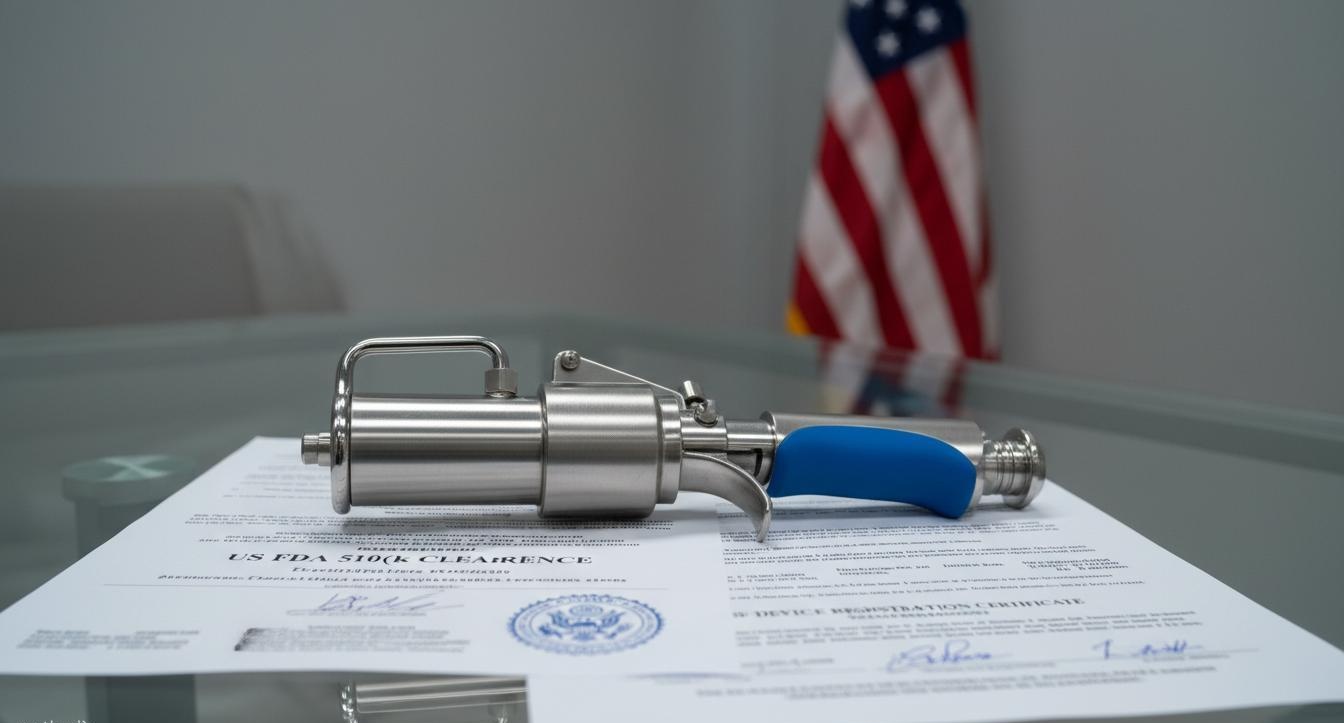
Why Most Chinese Veterinary Device Suppliers Don’t Understand US FDA Requirements (And Why That Puts Importers at Risk)
I have worked in the livestock equipment export industry for twelve years at Sound Hardware, and I have had the same conversation at least a hundred times with US importers who are panicking because their shipment just arrived at Long Beach and FDA placed a hold on it. The problem is almost always the same: the Chinese manufacturer told them “FDA? Don’t worry. Our products are not medical devices. You don’t need registration.” And in roughly 40% of cases I have seen, that statement was wrong — either because the product actually does fall under FDA veterinary device classification or because the importer confused 510(k) clearance exemption with complete regulatory exemption.
This misunderstanding has a clear origin. In China, veterinary instruments and livestock equipment are regulated by the Ministry of Agriculture and Rural Affairs (MARA) under agricultural rather than medical frameworks. A stainless steel AI gun (artificial insemination catheter gun) is classified as agricultural equipment in China and faces no medical-device-level registration requirements. But under US law — specifically the Federal Food, Drug, and Cosmetic Act (FD&C Act) as amended by the Medical Device Amendments of 1976 — devices intended for use in the diagnosis, cure, mitigation, treatment, or prevention of disease in animals are regulated as veterinary medical devices by the FDA Center for Veterinary Medicine (CVM).
According to FDA device classification guidance, a product is a veterinary device if it meets the statutory definition and is intended for use in animals. The distinction between “agricultural tool” and “veterinary device” is established not by what your supplier calls the product, but by the product’s intended use as stated on its labeling, packaging, and promotional materials. If your AI gun’s packaging says “for bovine artificial insemination,” FDA considers it a veterinary device — full stop. The Chinese factory’s legal classification of the product in China is irrelevant to US regulatory status.
The practical consequence is that US importers must independently determine the FDA classification of every livestock tool they import, regardless of what their supplier says. I have seen importers lose entire container loads — US$40,000 to US$80,000 in product value plus detention and destruction fees — because they relied on a supplier’s incorrect assurance that “this product doesn’t need FDA anything.” At Sound Hardware, we maintain a compliance reference library for every product we export to the US, including FDA product codes, classification determinations, and the regulatory pathway for each SKU. Every importer should demand the same level of documentation from their supplier.
The Regulatory Framework: How FDA Classifies Veterinary Devices (Class I/II/III)
The FDA classifies veterinary medical devices into three classes — Class I, Class II, and Class III — based on the level of regulatory control necessary to provide reasonable assurance of safety and effectiveness. The classification system is identical in structure to the human medical device classification system, but the specific devices listed under veterinary classification codes are different and fewer in number. Understanding this classification is the foundation of all FDA compliance decisions.
Class I devices present the lowest risk and are subject to General Controls only. General Controls include establishment registration, device listing, good manufacturing practices (unless exempt), labeling requirements, and premarket notification (unless exempt). Critically, most Class I veterinary devices are also exempt from 510(k) premarket notification — but they are not exempt from General Controls. This distinction — 510(k) exempt but not regulation exempt — is the single most common compliance error I see among first-time veterinary device importers.
| Device Class | Risk Level | Controls | 510(k) Required? | Examples for Livestock |
|---|---|---|---|---|
| Class I | Lowest | General Controls | Usually exempt | Manual syringes, AI catheters, basic drinking bowls, cow magnets, hoof trimmers |
| Class II | Moderate | General + Special Controls | Usually required | Electronic AI dose controllers, powered surgical tools, infusion pumps for animals |
| Class III | Highest | General + Premarket Approval | Not applicable (PMA required) | Implantable animal devices, life-sustaining veterinary equipment |
Special Controls for Class II devices typically include performance standards, postmarket surveillance, patient registries, and guidance documents — and these are specific to each device type. For a livestock equipment importer, the practical question is almost always: “Is my product Class I (exempt from 510(k)) or Class II (requiring 510(k))?” And the answer depends on the specific FDA product code assigned to that device type.
Per FDA Product Classification Database, each device type has a unique 3-letter product code that maps to its classification. For example, veterinary artificial insemination catheters fall under product code KNS (Class I, 510(k) exempt), while veterinary infusion pumps fall under product code FRN (Class II, 510(k) required). Before importing any veterinary device, you must identify its FDA product code — this single step determines everything else about your regulatory pathway.
510(k) Premarket Notification: When It Is Required and What the Submission Actually Needs
A 510(k) premarket notification is a submission to FDA demonstrating that a device is substantially equivalent to a legally marketed predicate device — a device that was on the market before May 28, 1976 (pre-amendments device) or a device that has already received 510(k) clearance. The 510(k) is not a product approval; it is a clearance based on substantial equivalence, meaning you are showing FDA that your device is as safe and effective as an existing, legally marketed device.
For livestock equipment importers, a 510(k) is only required if your specific device: (1) is classified as Class II or a small subset of Class I devices that are not 510(k) exempt; (2) is not a pre-amendments device (most livestock equipment from Chinese factories is not); and (3) is being introduced into US commerce for the first time by your company. A 510(k) submission must include: device description and specifications, comparison to the predicate device (identifying similarities and differences), proposed labeling, sterilization information (if applicable), biocompatibility data (if the device contacts animal tissue), and performance testing data supporting the substantial equivalence claim.
The timeline for a standard 510(k) review is 90 days from the date FDA acknowledges receipt, but the preparation time — gathering documentation, conducting required testing, and compiling the submission — typically takes 6 to 12 months. The FDA user fee for a standard 510(k) is approximately US$21,760 (FY2025 rate), though small businesses may qualify for reduced fees. For a livestock equipment importer bringing in Class II devices for the first time, the total cost of a 510(k) — including fees, testing, consultant support, and the 6 to 12 month preparation period — typically ranges from US$50,000 to US$200,000.
This substantial cost and time commitment is exactly why importers should prioritize sourcing Class I, 510(k)-exempt devices whenever possible — unless the device’s functionality genuinely requires Class II classification. At Sound Hardware, we design our veterinary tools specifically to remain within Class I classification parameters, which is the correct approach for most livestock equipment.
General Exemption: Which Livestock Equipment Can Be Imported Without Prior FDA Clearance
The majority of manual livestock tools imported from China qualify as Class I, 510(k)-exempt devices — meaning you can import them without 510(k) clearance, but you still must complete baseline FDA registration. Here is the specific regulatory status for common product categories:
Manual veterinary syringes and hypodermic needles for livestock use are classified under FDA product code KNW (syringe, piston, veterinary) and KKI (needle, hypodermic, veterinary) — both Class I, 510(k) exempt. The exemption applies only to manual syringes and needles; if the syringe incorporates an electronic dose-measurement or automatic injection mechanism, it moves from Class I to Class II and requires 510(k).
Artificial insemination instruments — including AI guns, sheaths, and cassette pipettes — are classified under product code KNS (catheter, artificial insemination, veterinary), Class I, 510(k) exempt. However, AI equipment that incorporates electronic ovulation detection, automated semen analysis, or software-controlled insemination timing is Class II.
Cow magnets and rumen magnets are classified under product code HIB (magnet, veterinary) — Class I, 510(k) exempt. These are among the simplest devices from a regulatory perspective because they are passive devices with no electronic components and minimal tissue contact risk.
Livestock drinking bowls and watering equipment are generally not classified as veterinary devices at all — they fall under general merchandise (agricultural equipment), provided they make no therapeutic or diagnostic claims. This is one of the few product categories where the Chinese supplier’s classification (“agricultural equipment, not medical device”) is actually correct under FDA rules.
The critical regulatory trigger: if your product’s labeling says it “prevents,” “treats,” “diagnoses,” or “cures” any animal disease or condition, it moves from being a general tool to being a regulated veterinary device. I have seen this happen with drinking bowls that claimed “reduces mastitis risk” — that one phrase on the packaging reclassified the product from general agricultural equipment to a Class I veterinary device requiring FDA registration. Per FDA Center for Veterinary Medicine guidance, any product labeled with therapeutic or prophylactic claims for animals is automatically a veterinary device regardless of its physical characteristics.
Establishment Registration and Device Listing: The Administrative Requirements That Apply to Everyone
Even if your veterinary device is Class I and 510(k)-exempt, you still must complete two mandatory FDA administrative filings: Establishment Registration and Device Listing. These are separate from 510(k) — they apply to virtually all device establishments, including foreign manufacturers and US importers.
Establishment Registration (FDA Form 2891) requires every establishment — including the Chinese manufacturer and the US importer — to register with FDA. For foreign manufacturers (like Sound Hardware in Ningbo), registration includes designating a US Agent — a person or company physically located in the United States who serves as FDA’s point of contact for the foreign establishment. The US Agent must be available during US business hours and can be a commercial service provider (typical cost: US$2,000 to US$5,000 per year). Registration must be renewed annually between October 1 and December 31 — missing the renewal window means your registration lapses on December 31, and your products cannot be legally imported until you re-register.
Device Listing (FDA Form 2892) requires listing each device type (by FDA product code) that the establishment manufactures or distributes. The listing includes the device’s proprietary name, its FDA product code, and its classification. Device Listing is also an annual requirement tied to the registration cycle. Importantly, the listing is public information — anyone can search the FDA Establishment Registration and Device Listing database for your company’s registered devices.
The user fees are: US$7,653 (FY2025) for annual establishment registration, applicable to all establishments including foreign manufacturers. This fee is per establishment, not per device — you pay the same whether you register one device or 50 devices under the same establishment. Failure to register and list properly is a prohibited act under Section 301(p) of the FD&C Act, carrying civil money penalties of up to US$15,000 per violation and up to US$1,500,000 for ongoing violations.
Per 21 CFR Part 807, establishment registration and device listing must be completed electronically through the FDA Unified Registration and Listing System (FURLS). I recommend importers complete their registration at least 60 days before their first container is scheduled to ship — the FDA review and processing time for initial registration typically takes 3 to 6 weeks.
The Import Alert Risk: What Happens When FDA Refuses Entry at the Port
FDA Import Alerts are public lists maintained by FDA identifying products and manufacturers that are subject to detention without physical examination (DWPE) at US ports. For importers, an Import Alert is essentially a pre-screening blacklist — when your product or manufacturer appears on an Import Alert, CBP automatically detains your shipment upon arrival, and FDA reviews it before deciding whether to release or refuse entry.
The trigger for a veterinary device Import Alert can be: failure to register the establishment or list the device, misbranding (incomplete or misleading labeling), adulteration (product contaminated, degraded, or manufactured under non-GMP conditions), or a previous shipment violation that created a compliance history. Once your product or supplier is placed on Import Alert, every future shipment is automatically detained — you don’t get a clean slate with each new container.
The consequences cascade quickly. First, FDA issues a Notice of Detention and Hearing, giving you 10 working days to respond with evidence that the product is compliant (test results, corrected labeling, registration proof). If your response satisfies FDA, the shipment is released. If not, FDA issues a Notice of Refusal of Admission, requiring the product to be either re-exported (at your expense) or destroyed (also at your expense). Each day of detention costs US$100 to US$500 in storage fees at the port, and the detention and review process typically takes 30 to 90 days from first notice to final disposition.
Getting an Import Alert removed requires a Petition to Remove from DWPE — a formal submission to FDA’s Division of Import Operations demonstrating that the underlying compliance issue has been corrected. Petitions typically take 6 to 18 months to process and require substantial supporting documentation, including third-party testing, revised labeling, QMS audit reports, and evidence of corrective action implementation. The legal and administrative cost to petition for Import Alert removal ranges from US$15,000 to US$50,000 depending on complexity.
According to FDA Import Program data, veterinary devices represent a relatively small but consistently monitored category within FDA import operations. The best defense against Import Alert risk is to verify your supplier’s FDA registration status before shipping: use the FDA Establishment Registration & Device Listing database (public, searchable), verify the device listing matches the products in your order, and confirm the registration is current (not lapsed). At Sound Hardware, we provide our US import clients with our FDA registration number and device listing confirmation for every order, so they can independently verify our status before the container ships. Any supplier unwilling to provide this basic compliance documentation should be treated as a red flag.
Frequently Asked Questions
- Q1: Do I need FDA 510(k) clearance to import veterinary syringes from China?
- Most manual veterinary syringes for livestock are FDA Class I, 510(k)-exempt devices. They do not require 510(k) clearance, but the importer must complete Establishment Registration (Form 2891) and Device Listing (Form 2892) annually. If the syringe includes electronic dose measurement or automatic injection, it becomes Class II and requires 510(k).
- Q2: What FDA registration is required for importing livestock equipment into the US?
- All establishments manufacturing or distributing veterinary devices must complete FDA Establishment Registration (renewed annually Oct 1-Dec 31) and Device Listing for each device type by FDA product code. Foreign manufacturers must designate a US Agent. The annual registration fee is US$7,653 (FY2025). This applies even to Class I, 510(k)-exempt devices.
- Q3: How do I determine if my veterinary device is exempt from 510(k) requirements?
- Search the FDA Product Classification Database by device name or product code. Class I devices with the designation “510(k) Exempt” in their classification entry do not require 510(k). However, verify the specific product code — similar devices can have different classifications. AI catheters (KNS) are exempt; electronic AI controllers are Class II and not exempt.
- Q4: What is establishment registration and device listing for FDA compliance?
- Establishment Registration (Form 2891) records every facility that manufactures or distributes veterinary devices with FDA. Device Listing (Form 2892) records each device type by FDA product code. Both are annual requirements, must be completed electronically via FURLS, and apply to foreign manufacturers and US importers. Failure to register is a prohibited act with civil penalties.
- Q5: What happens if my veterinary device shipment is refused entry by FDA?
- FDA issues a Notice of Detention with 10 working days to respond. If your response fails to prove compliance, FDA issues a Refusal of Admission — you must re-export or destroy the product at your expense. If placed on Import Alert, all future shipments from that supplier are automatically detained. Import Alert removal petitions take 6-18 months and cost US$15,000-50,000.
External References: FDA Device Classification · FDA Product Classification DB · FDA CVM · 21 CFR Part 807 · FDA Import Program · US CBP · WTO TBT · USDA APHIS · WHO
Useful Links
Post time: May-20-2026