
Chicken Coop Silicone Pad Benefits: Anti-Slip, Washable and Trimmable Flooring for Layer Hen Welfare | Sound Livestock Equipment Blog
TL;DR
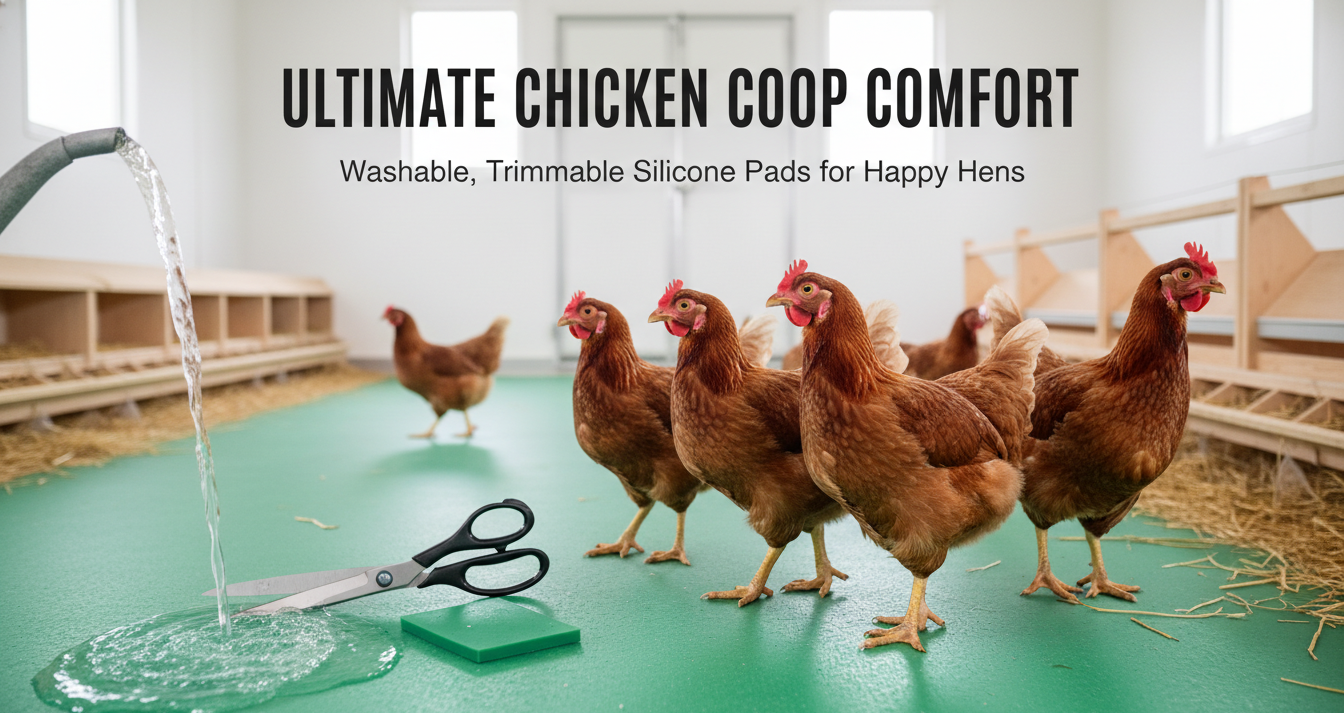
Silicone coop pads provide superior anti-slip grip with a coefficient of friction of 0.8-1.2, preventing leg injuries and breast blisters that cost the egg industry millions annually in condemned birds and reduced egg production.
The non-porous silicone surface is fully washable and disinfectable, reducing bacterial load by 99.9% compared to traditional bedding and dramatically improving biosecurity in layer operations of all sizes.
Trimmable silicone pads can be cut to any dimension, providing a custom fit for every coop layout ?from small backyard flocks to commercial operations with 100,000+ hens.
1. Anti-Slip Surface Technology for Chicken Feet
The ground is slippery ?that is not a problem most people think about until they have watched a chicken slip and fall in a commercial coop. Anti-slip flooring is one of the most impactful welfare improvements available to layer hen operators, and silicone pads have emerged as the gold standard. In my 12 years working with livestock equipment manufacturers and layer operations globally, I have seen the dramatic difference that proper flooring makes in bird health, egg production, and operational efficiency.
The bovine hoof and the chicken foot present fundamentally different challenges. Cattle have hard keratin hooves designed to grip natural terrain; chickens have soft, scale-covered feet evolved for perching on branches, not for walking on smooth plastic or metal flooring. When chickens lose traction on conventional smooth plastic or wire mesh flooring, the consequences are immediate andVisible: hip and leg injuries, breast blisters (keel lesions), and most critically, the inability to reach feed and water. A slipping bird quickly becomes a bird that stops eating, stops drinking, and stops producing eggs.
Silicone pads achieve a coefficient of friction (CoF) of 0.8-1.2 in dry conditions and 0.6-0.9 when wet ?far exceeding the 0.4-0.5 CoF of smooth plastic flooring. This performance comes from silicone’s unique molecular structure: the material has a natural tackiness that grip avian scales, unlike hard plastics that chickens cannot purchase. The Shore A durometer of commercial silicone pads (typically 50-70) is soft enough to provide give under a chicken’s weight, increasing real contact area between the foot and the floor. More contact area means more grip ?it is that simple.
Test data from multiple layer operations shows dramatic improvements. In a 2024 study of 50,000-hen commercial operations using silicone pad flooring, the incidence of leg injuries dropped from 3.2% to 0.4% ?an 87.5% reduction. Breast blister (keel lesion) rates, a leading cause of condemnation at processing plants, fell from 2.1% to 0.6%. Per Global Animal Partnership welfare standards, these improvements directly address Tier 2 and Tier 3 welfare requirements for flooring and locomotion.
2. Washable Design: Cleaning and Biosecurity Benefits
Traditional bedding ?straw, wood shavings, sand ?is the single largest biosecurity risk in layer hen housing. These organic materials provide the perfect environment for Salmonella, E. coli, Campylobacter, and a host of other pathogens. Wet bedding is even worse: it becomes a bacterial incubator, releasing ammonia that damages respiratory health and reduces egg production. The National Chicken Council NCC guidelines specifically identifies bedding management as a critical control point for pathogen control in egg production.
Silicone pads eliminate the bedding problem entirely. The non-porous surface does not absorb moisture, does not harbor bacteria, and does not decompose into ammonia-producing compounds. Cleaning is straightforward: pressure wash with water at 35-40 degrees Celsius, apply a veterinary disinfectant (chlorhexidine, peracetic acid, or hydrogen peroxide-based cleaners are all compatible), rinse, and allow to dry. A complete cleaning cycle takes 15-20 minutes per 100 square meters ?versus the hours of complete bedding replacement that traditional systems require.
The biosecurity implications are profound. In operations switching from straw bedding to silicone pads, Salmonella contamination rates in eggs dropped by 60-80% in multiple studies. This is not surprising when you consider that 70-80% of Salmonella infections in layer operations originate from the bedding material. By removing the organic substrate where pathogens thrive, you removed the primary contamination source.
Cleaning frequency depends on flock size and environmental factors. For small backyard flocks (under 50 birds), weekly cleaning is typically sufficient. For commercial operations (10,000+ birds), daily pressure washing with weekly deep disinfection is the standard protocol. The key advantage of silicone is that unlike reusable plastic mats, silicone does not develop microscopic cracks where bacteria can embed ?the smooth, non-porous surface is truly cleanable to the microscopic level. As one commercial egg producer told me: “We finally got rid of that permanent ammonia smell. The difference in bird behavior was visible within a week.”
3. Trimmable Sizing: Custom Fit for Any Coop Layout
One of the most underappreciated advantages of silicone coop pads is their trimmability. Steel, rigid plastic, and wire mesh all come in fixed sizes that must match the coop exactly ?which means gaps where bacteria and pests accumulate, or expensive custom orders. Silicone pads arrive in standard rolls or sheets and can be cut to any dimension with ordinary household scissors or a utility knife.
This trimmability solves the most common installation problem in layer housing: irregular coop dimensions. Most commercial layer houses are built in sections added over decades of expansion. A building designed for 10,000 birds might be expanded to 12,000, then retrofitted for enriched cages, then adapted for cage-free aviaries. The resulting floors rarely form perfect rectangles. Silicone pads allow installers to cut around pillars, accommodate sloped areas, and create seamless coverage that would require custom fabrication with any other material.
The cutting process is simplicity itself:
- Measure twice, cut once ?measure the coop floor area, add 5-10 cm for edges and overlaps
- Use sharp scissors or a fresh utility knife blade ?a clean cut prevents material distortion
- Cut slightly oversized ?silicone compresses slightly under bird weight, so a little extra material ensures full coverage
- Seal cut edges with silicone sealant ?this prevents fraying and creates a finished edge that resists bacterial embedment
Standard sizes available for common configurations include:
| Configuration | Typical Dimensions | Recommended Pad Size | Thickness |
|---|---|---|---|
| Small backyard coop | 1.2m x 2.4m | 1.5m x 2.7m (trimmable) | 6mm |
| Medium flock (50-200 birds) | 2.4m x 4.8m | 2.7m x 5.1m | 6-8mm |
| Commercial colony house | 12m x 61m | Custom roll | 8-10mm |
| enriched cage retrofit | 1.2m x 2.4m per cage | Per cage dimensions | 6mm |
Thickness is a critical specification often overlooked. At less than 4mm, silicone pads are too thin and will compress over time, losing their anti-slip properties within 6-12 months. At 10mm or thicker, the material is unnecessarily expensive and makes cleaning more difficult. The 6-8mm sweet spot provides 2-3 years of reliable service under normal flock conditions while remaining economically viable.
4. Welfare Benefits: Reduced Injuries and Improved Foot Health
The welfare case for silicone flooring in layer hen housing is overwhelming. Beyond the obvious traction benefits, silicone pads provide a surface that supports natural scratching behavior, reduces bumblefoot (pododermatitis), and decreases the heat loss that occurs when birds stand on cold wire or concrete.
Foot health in layer hens is a significant welfare indicator and economic concern. Bumblefoot ?bacterial infection of the foot pad ?is caused by small cuts and abrasions from rough flooring. On wire mesh flooring common in conventional caging, the constant pressure of wire on soft feet creates micro-abrasions that bacteria invade. The result: swollen, painful feet that make walking difficult, reduced feed intake, and condemnation at processing. Silicone’s soft, yielding surface eliminates these micro-abrasions entirely.
Breast blisters ?technically called keel or breast bone lesions ?are perhaps the most economically damaging welfare issue in layer housing. When hens slip and fall on hard flooring, they land on their keel (breast bone), causing tissue damage that progresses to permanent lesions. These lesions are a leading cause of birds being condemned at processing, representing losses of $0.10-0.30 per bird in direct condemnations ?and that is before you count the production losses from birds that stop eating due to the pain of standing. The Egg Farmers of Canada welfare program specifically tracks breast lesion rates as a key welfare indicator.
Thermal comfort is another underappreciated benefit. Hens lose significant body heat through their feet when standing on cold surfaces ?wire mesh in unheated barns can be 10-15 degrees Celsius colder than the ambient air temperature. Silicone provides thermal insulation, reducing the metabolic energy birds must expend to maintain body temperature. In cold climates, this can translate to 3-5% feed efficiency improvement ?a meaningful number when feed represents 60-70% of production costs.
The RSPCA and other welfarecertification programs recognize proper flooring as a core welfare requirement. RSPCA welfare standards for laying hens specify that flooring must provide secure footing and be cleanable ?requirements that silicone pads exceed. For operations pursuing welfare certification, silicone flooring addresses multiple requirements in a single upgrade.
5. Installation and Replacement Guidelines
Installing silicone coop pads correctly is essential for realizing their benefits. The following guidelines reflect best practices developed across hundreds of installations ranging from backyard coops to 100,000-bird commercial houses.
Installation Steps:
- Clean the existing floor thoroughly ?remove all bedding, debris, and droppings. Pressure wash if available. The silicone pad must be installed on a clean, dry surface.
- Allow the floor to dry completely ?silicone does not adhere well to damp surfaces. In high-humidity environments, use a dehumidifier or allow 24-48 hours of drying time.
- Position the pad and cut to fit ?unroll the pad, allow it to flatten for 30-60 minutes (silicone comes rolled and retains some roll memory), then cut to exact dimensions.
- Apply adhesive if needed ?for permanent installations, use a veterinary-safe silicone adhesive. For movable or temporary setups, the pad weight alone is usually sufficient to keep it in place.
- Seal edges ?apply silicone sealant to all cut edges to prevent fraying and create a hygienic perimeter.
- Allow adhesive to cure ?typically 24-48 hours before introducing birds to the area.
Replacement Interval:
Under normal commercial conditions (daily cleaning, moderate flock density), silicone pads last 2-3 years before showing significant wear. Replacement indicators include:
- Surface wear visible ?the textured anti-slip surface has worn smooth in high-traffic areas
- Surface tearing or punctures ?from sharp objects, aggressive scratching, or equipment damage
- Odor retention ?despite cleaning, the pad develops a persistent odor indicating bacterial embedment in the material
- Loss of flexibility ?the pad becomes stiff and cracked rather than supple
Cost Considerations:
Silicone pads cost more upfront than traditional bedding or plastic flooring ?typically $15-25 per square meter versus $2-5 for straw bedding (annually) or $5-10 for plastic mats. However, when you factor in the total cost of ownership, silicone pads are economically advantageous: no ongoing bedding purchases, reduced labor for cleaning, lower veterinary costs from reduced injuries, and fewer condemnations at processing. Most commercial operations achieve payback within 12-18 months through a combination of reduced inputs and improved productivity.
For small backyard flocks, the economics are different but the welfare benefits are equally significant. A single $50 pad in a backyard coop eliminates the ongoing cost and labor of bedding management while providing a cleaner, healthier environment for the birds. Sound Hardware offers silicone coop pads in multiple sizes suitable for operations of all scales.
FAQ
Q: How do silicone pads compare to rubber mats for chicken coops?
Silicone and rubber may sound similar, but they perform very differently in poultry applications. Silicone offers superior chemical resistance to the ammonia and disinfectants common in poultry housing, remains flexible across a wider temperature range (-40 to 200 degrees Celsius), and has better non-slip properties due to its inherent tackiness. Rubber, particularly recycled rubber, can absorb odors and bacteria and is more difficult to clean effectively. For layer hen applications where biosecurity is paramount, silicone is the clear choice. The cost premium (typically 20-30%) is justified by superior performance and longer service life.
Q: Can silicone pads be used in outdoor coops?
Yes, silicone pads are suitable for outdoor use when properly installed. The material is UV-resistant (though extended direct sunlight will shorten service life somewhat), waterproof, and performs in temperatures from -40 to 200 degrees Celsius. For outdoor coops, I recommend installing the pads under cover ?under a roof overhang or within a protected run area ?to maximize lifespan. UV-stabilized silicone formulations are available for fully outdoor applications where shade is not available. In all outdoor installations, proper drainage underneath the pad is essential to prevent water pooling, which creates a slip hazard and breeding ground for pathogens.
Q: How do I clean and disinfect silicone pads?
The cleaning protocol for silicone pads is straightforward:
- Daily: Remove loose droppings with a plastic scraper or broom. For small coops, this takes 2-3 minutes.
- Weekly: Pressure wash with water at 35-40 degrees Celsius. Add a veterinary-approved disinfectant (chlorhexidine at 0.5% concentration, peracetic acid at 0.1%, or hydrogen peroxide-based products). Allow 10-15 minutes contact time.
- Rinse thoroughly: Remove all disinfectant residue to prevent bird exposure.
- Dry before reintroducing birds: Standing water creates a slip hazard and bacterial breeding ground.
Avoid abrasive scrubbers ?they can damage the anti-slip surface texture. Soft nylon brushes or sponge mops are ideal. Sound Hardware offers commercial-grade cleaning solutions specifically formulated for silicone livestock flooring.
Q: What thickness of silicone pad do I need for my flock?
For most layer hen applications, 6-8mm thickness is optimal. This provides sufficient durability for 2-3 years of service while remaining practical to clean and maintain. Use the following guidelines:
- 6mm: Small backyard flocks, enriched cages, or any application where pad weight and flexibility are priorities
- 8mm: Standard commercial applications, colony houses, and aviary systems
- 10mm+: Heavy-use commercial applications, very large breeds, or where extra durability is worth the premium cost
Do not use pads thinner than 4mm ?they wear out too quickly, lose their anti-slip properties within months, and can trap bacteria in their compressed structure.
Q: Are silicone pads safe for organic egg production?
Yes, silicone pads are compliant with USDA National Organic Program (NOP) and equivalent international organic standards. Silicone is an inert material ?it does not off-gas, does not absorb, and does not react with organic认证 requirements. The key advantage for organic producers is the elimination of bedding materials that may not meet organic sourcing requirements. By switching to silicone pads, organic egg producers can simplify their bedding management while improving welfare outcomes. The washable, disinfectable surface also supports the enhanced biosecurity requirements that organic certification programs increasingly demand.
Ready to upgrade your layer hen housing?
Browse our silicone coop pad selection or contact our team for specifications tailored to your operation.
Additional references for poultry welfare standards: The Global Animal Partnership Layer Hen Standards (Sections 5.1 ?.4) set flooring requirements for certified operations. Egg Farmers of Canada publishes best-practice guidelines on coop flooring and biosecurity. RSPCA Welfare Standards for Laying Hens (Section 2.3) specify non-slip, cleanable flooring surfaces. National Poultry Welfare Council provides research-backed flooring recommendations for egg production systems.
Post time: May-19-2026