
 TL;DR
TL;DR
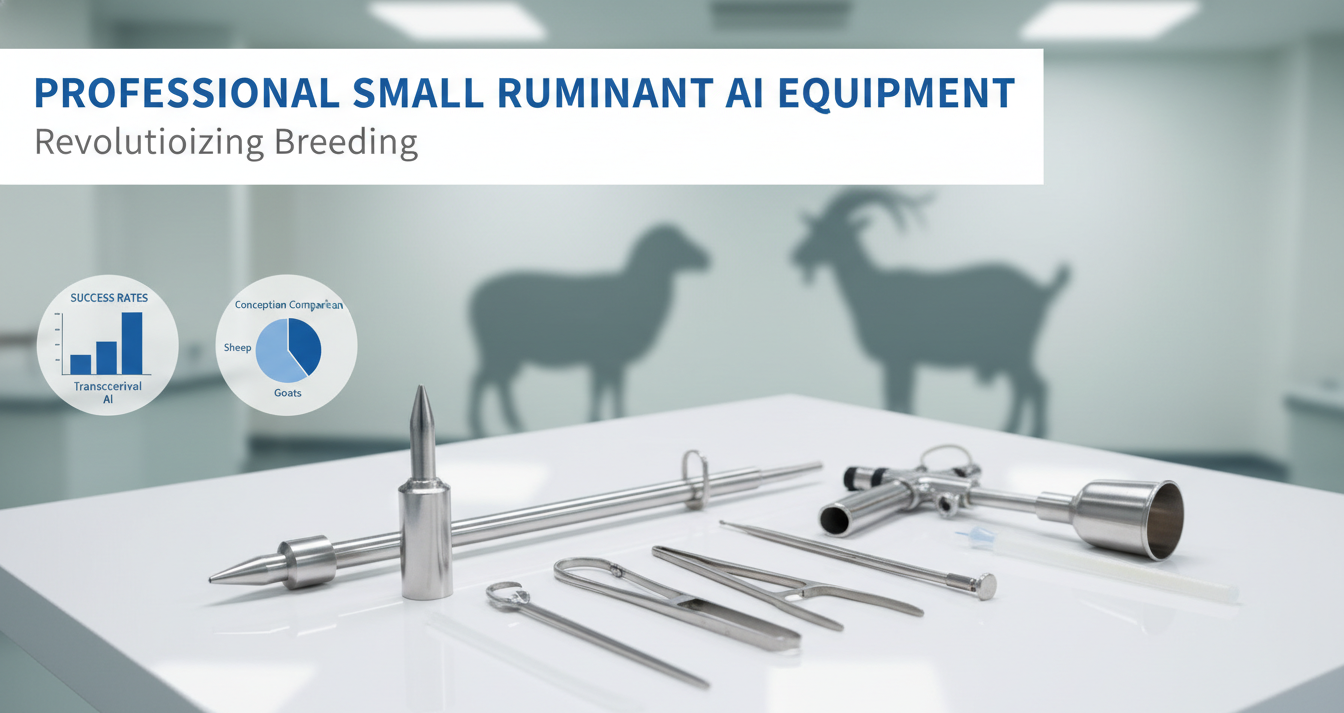
Laparoscopic AI achieves 60-80% conception rates in sheep and goats compared to 40-55% with transcervical methods ?the difference comes from direct uterine horn placement bypassing the cervical barrier that makes transcervical access difficult in small ruminants.
Initial equipment investment ranges from $800-$2,000 for transcervical kits to $8,000-$15,000 for laparoscopic systems, with the higher cost justified for operations inseminating 100+ females annually where conception rate differences translate to significant economic returns.
Transcervical AI is more practical for small flocks (under 50 females) and beginners, while laparoscopic AI delivers superior results for commercial operations and valuable genetics ?but requires veterinary surgical skills and anesthesia equipment.
Laparoscopic AI: Procedure Overview and Success Rates
Laparoscopic artificial insemination (LAP-AI) is the gold standard for small ruminant breeding programs requiring maximum fertility. This technique involves inserting a laparoscopic camera and instruments through small abdominal incisions to directly visualize and inseminate into the uterus, bypassing the notoriously difficult cervical barrier in sheep and goats.
The procedure requires general anesthesia, typically induced with injectable medications such as ketamine and xylazine, with the ewe or doe positioned on her back in a specialized cradle that exposes the ventral abdomen. A small incision (5-10 mm) is made approximately 3-5 cm from the udder and 2-3 cm lateral to the midline on either side. The abdomen is insufflated with CO2 to create working space, and a trocar bearing the laparoscope is inserted.
Under direct visualization, the insemination pipette is guided through the abdominal wall into the uterine horn, approximately 2-3 cm from the utero-tubal junction. Fresh, extended semen (0.1-0.2 mL) is deposited directly into the uterine lumen. The procedure typically takes 3-5 minutes per animal when performed by an experienced technician.
Conception rates with laparoscopic AI are remarkable: published research consistently reports 60-80% conception rates compared to 40-55% for transcervical methods. A study from the Animal Reproduction Science journal showed 73% conception rates in sheep using laparoscopic AI with fresh semen, compared to 52% for transcervical approaches. The higher success rate comes from eliminating the cervical obstacle entirely ?in ewes, the cervical folds are tight and spiral, making transcervical passage success rates below 50% even in experienced hands. For a comprehensive guide to small ruminant AI protocols, see the Sound Hardware AI methodology page.
The primary limitations are cost and skill requirements. Laparoscopic AI requires veterinary involvement for anesthesia and surgical aspects, with a learning curve of 50+ procedures before consistent results are achieved. Equipment costs are substantial: a basic laparoscopic tower (camera, light source, monitor) costs $3,000-$6,000, with disposable consumables (trocar sleeves, insemination pipettes) adding $15-25 per female inseminated. Browse our laparoscopic AI equipment catalog for professional-grade instruments.
Transcervical AI: Technique and Equipment Requirements
Transcervical artificial insemination (TCAI) is the more accessible approach for small ruminant breeding program that avoids the surgical equipment and general anesthesia of laparoscopic methods. In TCAI, semen is deposited through the cervix using specialized pipettes guided by palpation or visual confirmation with a speculum.
The technique requires estrus synchronization and careful timing. Does and ewes must be in standing estrus (12-24 hours from onset for optimal fertility) for the cervix to be sufficiently relaxed. The female is restrained in a standing position, and the inseminator introduces the pipette through the vagina toward the cervix. Digital palpation through the rectum helps guide the pipette toward the cervical opening.
The cervical passage is the technical challenge. In small ruminants, the cervix has thick folds and often a spiral configuration that resists pipette passage. Success rates for transcervical passage alone range from 40-70% depending on operator skill, breed, and individual animal variation. Meat breeds generally have easier cervical passage than Dairy breeds, and olderParous females are easier to inseminate than nulliparous ones.
Equipment for transcervical AI is considerably less expensive than laparoscopic systems:
- Insemination pipettes: $50-150 per set of 50-100 disposable pipettes, or $200-400 for a reusable stainless steel kit
- Speculum/light source: $100-300 for a vaginal speculum with attached light
- Semen extension supplies: $50-100 for extenders,buffers, and mixing equipment
- Thermostat and microscope: $300-600 for semen evaluation equipment
Total startup investment for transcervical AI is approximately $800-$2,000, compared to $8,000-$15,000 for laparoscopic systems. This makes TCAI the practical choice for hobby farms, small flocks, and beginning breeders. Our transcervical AI starter kits include everything needed to begin your breeding program.
Semen quality is more critical in transcervical AI because sperm must survive the hostile vaginal environment (pH 3.5-4.5, enzymatic activity) long enough to reach the uterus. Fresh semen extended within 30 minutes of collection performs significantly better than chilled or frozen-thawed semen ?research from the Merck Veterinary Manual indicates freshextended semen achieves 15-20% higher conception rates than frozen semen in transcervical procedures. Our guide to semen handling best practices provides detailed protocols for maximizing sperm viability.
Success Rate Data: Laparoscopic vs Transcervical
The conception rate differential between laparoscopic and transcervical AI is the primary driver for equipment investment decisions. Below is a comprehensive comparison based on peer-reviewed research and field data:
| Metric | Laparoscopic AI | Transcervical AI |
|---|---|---|
| Conception rate (fresh semen) | 60-80% | 40-55% |
| Conception rate (frozen/thawed) | 45-65% | 25-40% |
| Cervical passage success | 100% (direct uterine) | 50-70% |
| Time per procedure | 3-5 minutes | 5-10 minutes |
| First-service conception | 55-70% | 35-50% |
| Number of services to conception | 1.3-1.6 | 1.8-2.3 |
| Operator skill threshold | 50+ procedures | 20-30 procedures |
| Veterinary involvement required | Yes (anesthesia) | No (trained technician) |
The economic impact is substantial. Consider an operation inseminating 500 females annually with laparoscopic AI at 70% conception rate versus transcervical at 48%. At $25 per straw of semen, laparoscopic AI requires approximately 715 straws ($17,875) for 500 conceptions, while transcervical requires approximately 1,042 straws ($26,050). The additional $8,175 in semen costs far exceeds the additional equipment investment for laparoscopic systems over a breeding season.
Frozen semen performance differs markedly between methods. While laparoscopic AI with frozen-thawed semen maintains reasonable conception rates (45-65%), transcervical frozen semen results drop to 25-40%. This is because frozen-thawed sperm have reduced vitality and cannot survive the vaginal transit delay that occurs during cervical negotiation. For operations using imported frozen genetics, laparoscopic AI is strongly recommended.
Seasonal and breed variations affect both methods. Conception rates peak in the natural breeding season (fall for most breeds) and decline 10-15% during anestrus periods. Boer goats and meat-type sheep generally achieve higher conception rates than dairy breeds due to cervical anatomy differences. The American Association of Small Ruminant Practitioners recommends timing AI to coincide with peak fertility periods for optimal results. Check our estrus synchronization guide for seasonal breeding protocols.
Equipment Cost Comparison: Initial Investment Breakdown
Initial equipment investment is the most significant differentiator between laparoscopic and transcervical AI programs. Here is a detailed cost breakdown for each approach:
| Equipment Category | Laparoscopic AI Cost | Transcervical AI Cost |
|---|---|---|
| Laparoscopic tower (camera, light, monitor) | $3,000-$6,000 | ?/td> |
| Insufflation system (CO2) | $800-$1,500 | ?/td> |
| Trocars and sleeves (set of 2) | $400-$800 | ?/td> |
| Veress needle | $150-$300 | ?/td> |
| Laparoscopic AI pipettes | $200-$400 | ?/td> |
| Anesthesia equipment | $1,500-$3,000 | ?/td> |
| Insemination pipettes | ?/td> | $200-$400 |
| Vaginal speculum with light | ?/td> | $100-$300 |
| Semen handling supplies | $200-$400 | $300-$500 |
| Semen evaluation microscope | $400-$800 | $300-$600 |
| Restraint equipment | $500-$1,000 | $200-$400 |
| TOTAL INITIAL INVESTMENT | $8,000-$15,000 | $800-$2,000 |
Per-procedure costs are equally important to consider. Beyond the initial investment, each insemination has consumable costs:
- Laparoscopic AI: $15-25 per female (trocar sleeves, pipettes, CO2, anesthesia drugs)
- Transcervical AI: $3-8 per female (disposable pipettes, lubricant, gloves)
The break-even analysis favors laparoscopic AI at higher volume. At 10% higher conception rate and $17 additional cost per procedure, laparoscopic AI becomes economically favorable at approximately 100+ annual inseminations. Below this threshold, the lower startup cost and per-procedure expenses of transcervical AI make more financial sense.
Used equipment can significantly reduce startup costs. Refurbished laparoscopic towers are available for $2,000-$4,000, and many veterinary schools and equipment rental programs offer短租 options. The OIE (World Organisation for Animal Health) maintains guidelines for equipment standards that ensure used equipment meets minimum safety and performance requirements. Sound Hardware also offers equipment rental programs for cost-effective access to professional-grade laparoscopic systems.
Choosing the Right AI Method for Your Flock Size
The decision between laparoscopic and transcervical AI should be driven by three factors: flock size, genetics value, and operator skills. Here is a practical framework for making this choice:
Small Flocks (Under 50 Breeding Females)
Transcervical AI is the recommended approach for small flock operations. The lower equipment investment ($800-$2,000) can be justified with minimal annual use, and the technique is within reach of non-veterinarian operators after proper training. Conception rates of 45-55% are adequate when using fresh semen from local, affordable genetics.
Consider laparoscopic AI only if you are breeding valuable registered genetics where each conception has significant economic value and you can justify the equipment investment across a small number of females. In this case, contracting a mobile laparoscopic AI service (commonly available in major livestock regions) may be more cost-effective than owning equipment.
Medium Flocks (50-200 Breeding Females)
This is the break-even zone where careful analysis is warranted. If your primary goal is genetic improvement and you have the capital for equipment investment, laparoscopic AI will deliver superior returns through higher conception rates. Plan for 18-24 months to recover equipment costs through improved fertility.
If budget constraints are significant, start with transcervical AI and improve results through better estrus synchronization, semen handling, and operator skill development. You can always add laparoscopic capability as the operation grows.
Large Operations (200+ Breeding Females)
Laparoscopic AI is strongly recommended for commercial operations. The volume economics favor the higher investment: 200 females at 70% conception (laparoscopic) versus 48% (transcervical) means the difference of approximately 92 additional conceptions per year ?at $150 value per lamb kid, that is an additional $13,800 in annual revenue.
Consider dedicated AI technicians hired or trained specifically for your operation. The learning curve for laparoscopic AI means consistent results require dedicated practice. Many large operations find it cost-effective to employ a full-time AI technician rather than contracting services.
Training and Certification Considerations
Both AI methods benefit from formal training and certification. The American Association of Small Ruminant Practitioners (AASCP) offers certification programs for small ruminant AI technicians that cover both transcervical and laparoscopic techniques.
For transcervical AI: seek 20-30 supervised procedures before attempting independent work. Focus on estrus detection, timing, and pipette passage technique. Many state cooperative extension services offer short courses and hands-on training opportunities. Our AI training resources page lists certified training programs and online courses available for small ruminant technicians. The USDA APHIS also provides guidelines for biosecurity in breeding operations.
For laparoscopic AI: seek 50+ supervised procedures and veterinary partnership. The surgical nature of laparoscopy requires veterinary involvement for anesthesia and post-procedure monitoring. Work with an experienced veterinarian who can provide training and backup support. The American Veterinary Medical Association (AVMA) maintains standards for veterinary surgical procedures that include laparoscopic AI techniques. Our team at Sound Hardware can connect you with certified veterinary partners in your region.
FAQ
Q: Which AI method has higher conception rates in sheep and goats?
Laparoscopic AI consistently achieves higher conception rates (60-80%) compared to transcervical AI (40-55%). The difference is primarily due to bypassing the cervical barrier, which in small ruminants is tight, folded, and often spiraled ?making transcervical passage difficult even for experienced operators. Laparoscopic AI deposits semen directly into the uterine horn, avoiding vaginal environment hostility and cervical transit delays. For valuable breeding stock where each conception carries significant economic value, the higher success rate justifies the additional equipment investment and procedural complexity. Studies from multiple research institutions confirm these rate differentials across breeds and seasons.
Q: What equipment is required for laparoscopic AI in small ruminants?
Laparoscopic AI requires specialized surgical equipment including a laparoscopic tower ($3,000-$6,000), CO2 insufflation system ($800-$1,500), trocars and sleeves ($400-$800), Veress needle ($150-$300), and specialized insemination pipettes ($200-$400). Additionally, general anesthesia equipment ($1,500-$3,000) is required for immobilizing the animal during the procedure. A complete laparoscopic AI setup costs $8,000-$15,000 initially, with consumable costs of $15-25 per female. This is considerably more expensive than transcervical AI ($800-$2,000 startup), but the higher conception rates justify the investment for operations inseminating 100+ females annually or working with valuable genetics.
Q: How does flock size affect AI method selection?
Flock size directly impacts the economic viability of each AI method through volume economics and equipment cost recovery. Small flocks (under 50 females) typically lack the volume to justify laparoscopic equipment investment, making transcervical AI the practical choice. Medium flocks (50-200) are in the break-even zone where careful analysis is needed ?if genetic improvement is the primary goal, laparoscopic AI delivers better returns. Large operations (200+) strongly benefit from laparoscopic AI given the significant conception rate differences translating to substantial annual revenue differences. Operations considering AI should calculate their specific break-even point based on conception rate differentials, semen costs, and the value each conception represents to their operation.
Q: What skill level is required for each AI technique?
Transcervical AI can be learned with 20-30 supervised procedures, while laparoscopic AI requires 50+ procedures due to its surgical complexity. Transcervical AI is within reach of trained livestock technicians, while laparoscopic AI requires veterinary involvement for anesthesia management and post-procedure care. The learning curve for transcervical passage through the small ruminant cervix is steep ?operators should expect 40-50% success rates in their first 10 procedures, improving to 60-70% with experience. Laparoscopic operators need to develop hand-eye coordination for the two-handed technique while viewing the procedure on a monitor. Formal certification through the AASCP or equivalent body is recommended for both methods. Our comprehensive certification pathway guide outlines the steps to become a qualified AI technician.
Q: Can transcervical AI achieve comparable results to laparoscopic AI?
While transcervical AI has lower average conception rates (40-55%), proper technique, optimal timing, and high-quality semen can achieve results at the higher end of this range (50-55%). The gap between methods is primarily attributable to cervical passage difficulty ?when transcervical passage succeeds, conception rates approach laparoscopic results. Key success factors include: precise estrus detection (within 12-hour windows), fresh extended semen with high motility scores (70%+ progressively motile), proper semen handling and temperature control, and operator skill at cervical negotiation. For commercial operations with budget constraints, transcervical AI remains a practical choice ?focus on optimizing the factors within your control rather than matching laparoscopic results. Consider laparoscopic AI as a future upgrade when the operation scales.
Ready to set up your sheep or goat AI program?
Browse our AI equipment selection or contact our sales team for personalized recommendations based on your flock size and breeding goals.
Post time: May-19-2026