
OEM Livestock Breeding Equipment Procurement
TL;DR
- Before ordering OEM livestock AI kits, buyers should prepare species, kit configuration, packaging, logo files, MOQ target, and quality requirements.
- A strong supplier should confirm AI gun compatibility, sheath options, disposable accessories, carton details, samples, and repeat-order support.
- OEM success depends on clear specifications before production, not after goods are packed.
Many importers ask for a quick price first, but OEM artificial insemination kits are not simple single-SKU purchases. A kit may include AI guns, sheaths, gloves, lubricant, semen handling tools, packaging inserts, labels, cartons, and replacement accessories. If the buyer does not define these details early, the supplier may quote a kit that looks correct but does not match the buyer’s actual sales channel.
This guide explains what procurement teams should prepare before contacting a livestock AI kit supplier. It is written for farm supply importers, veterinary wholesalers, breeding equipment distributors, retailers, and private-label buyers sourcing from SOUNDAI at https://www.sound-ai.com/artificial-insemination/.
Define the Target Species and Use Scenario First
The first OEM decision is the target species and use scenario, because cattle, sheep, goats, pigs, and other livestock may require different AI tools and kit configurations. A supplier cannot recommend the right kit if the buyer only says “AI equipment”without application details.
Buyers should clarify whether the kit is for cattle breeding centers, dairy farms, pig farms, small ruminant operations, veterinary service teams, or farm supply retail stores. Each channel has different expectations. A professional technician may care about durable AI guns and compatibility. A small retail customer may care more about price, simple packaging, and clear instructions.
The use scenario also affects accessory selection. A field technician kit may need organized storage and replacement consumables. A retail kit may need attractive packaging and fewer specialized parts. A distributor kit may need flexible carton quantities and mixed product support.
When the supplier knows the target species and customer type, the OEM kit can be designed for real use instead of generic catalog appearance.
Prepare a Clear Kit Configuration List
A clear kit configuration list should identify every item inside the livestock AI kit, including AI guns, sheaths, gloves, lubricant, straw handling tools, cleaning accessories, and optional packaging inserts. This list becomes the basis for quotation, sample approval, production, and inspection.
Buyers should avoid vague requests such as “complete AI kit”because different suppliers may define complete differently. One supplier may include only the main gun and sheaths. Another may include gloves, lubricant, and handling tools. The price difference may appear large, but the products are not actually comparable.
A better inquiry lists the expected parts one by one. For example: one stainless steel AI gun, a defined number of sheaths, a defined number of gloves, one lubricant option, one instruction sheet, and one retail box. If replacement parts are needed, they should be listed separately.
OEM sourcing becomes smoother when the kit is treated as a bill of materials, not a loose product name.
Confirm AI Gun and Sheath Compatibility
AI gun and sheath compatibility is one of the most important technical checks in an OEM livestock AI kit order. If the parts do not fit smoothly, the buyer may face complaints even if the packaging looks professional.
Procurement teams should confirm AI gun length, diameter, plunger design, semen straw compatibility, sheath size, and whether the sheath fits securely during use. They should also check whether the supplier can provide matching consumables for repeat orders. A private-label kit is easier to sell when replacement sheaths and accessories are available from the same source.
Compatibility should be tested during the sample stage, not assumed from catalog photos. Buyers should request a physical sample or a detailed demonstration before approving bulk production. If the kit will be sold to professional breeding technicians, the sample should be reviewed by someone who understands real field use.
A kit with mismatched parts can damage buyer trust faster than a simple price issue.
Decide on Material Level and Price Positioning
OEM buyers should decide whether the AI kit will be positioned as entry-level, standard professional, or premium before requesting a final quote. Material choices and accessory quality should match that price position.
An entry-level kit may use practical components and simple packaging for price-sensitive markets. A professional kit may include stronger AI guns, better disposable accessories, cleaner packaging, and clearer instructions. A premium kit may emphasize material durability, organized storage, brand presentation, and after-sales spare parts.
Price positioning affects every part of the order. It influences product material, carton quantity, inner box design, accessory count, logo method, and quality control expectations. If the buyer asks for premium presentation but compares only the lowest unit price, the sourcing process becomes confusing.
A good livestock AI kit supplier should help the buyer align material level, market price, and customer expectations before production begins.
Prepare Logo, Label, and Packaging Requirements
For OEM livestock AI kits, packaging requirements should be prepared before sampling, including logo files, label language, barcode needs, carton marks, instruction sheets, and retail presentation. Packaging is not decoration only; it affects sales, inspection, warehousing, and customer confidence.
Buyers should provide logo files in usable formats, preferred colors, box dimensions if required, label text, product naming, and any warning or instruction content needed for the destination market. If the buyer does not have finished artwork, the supplier may still provide basic layout support, but this should be discussed early.
Packaging style depends on channel. Wholesale buyers may prefer neutral cartons and simple labels. Retailers may want branded boxes. E-commerce sellers may care about photo-friendly packaging and protection during parcel shipping. Veterinary distributors may want professional labeling and clear accessory organization.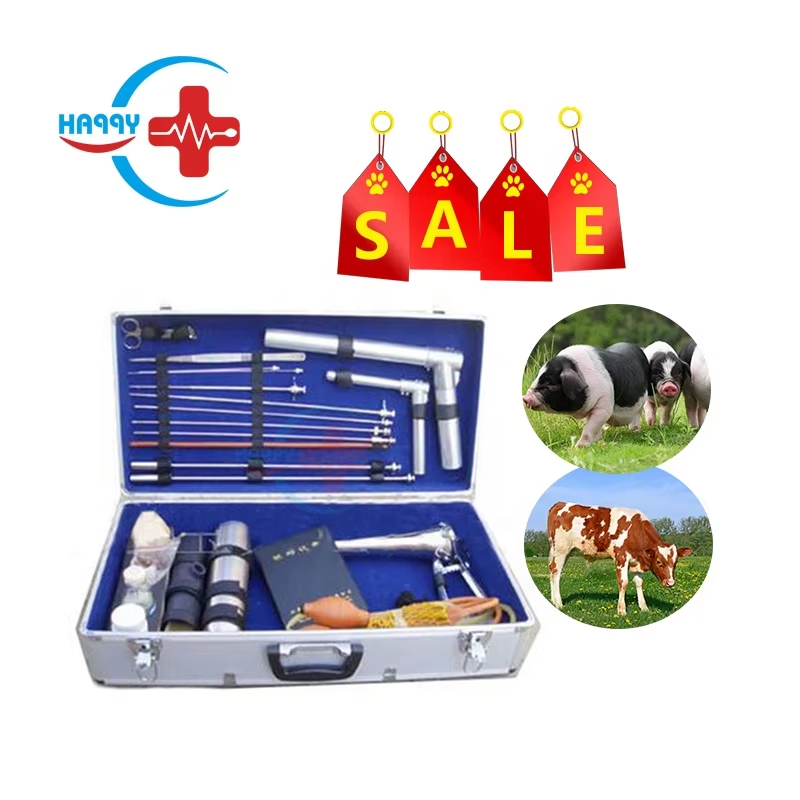
OEM packaging should make the kit easier to sell, easier to identify, and easier to reorder.
Clarify MOQ, Lead Time, and Sample Approval
MOQ, lead time, and sample approval should be confirmed before the buyer finalizes the OEM plan. These details affect cash flow, launch timing, and whether the product can be tested safely before a larger order.
Buyers should ask whether the MOQ changes with custom logo, custom box, mixed accessories, or private-label packaging. A neutral kit may have a lower MOQ than a fully branded retail kit. A custom carton or printed instruction sheet may require additional preparation time.
Sample approval is especially important for AI kits because the buyer needs to check both appearance and function. The sample should confirm gun fit, sheath compatibility, accessory count, packaging layout, label accuracy, and carton information. Buyers should record approval details clearly so the bulk order can be compared against the approved sample.
A supplier who manages sampling carefully helps prevent expensive corrections after mass production.
Build a Quality Checklist Before Production
A quality checklist for OEM livestock AI kits should cover item count, material condition, fit testing, packaging accuracy, label spelling, carton strength, and accessory placement. The checklist should be agreed before production instead of created after a problem appears.
For the product itself, buyers should inspect AI gun surface condition, plunger movement, sheath fit, glove quality, accessory completeness, and cleaning or storage requirements. For packaging, they should inspect logo position, barcode, language, carton marks, quantity per carton, and whether accessories are organized as expected.
The checklist also helps with third-party inspection or internal warehouse checks. When the buyer has a written standard, the supplier has a clearer target. This reduces arguments about whether a detail is acceptable.
Quality control is easier when the buyer defines “acceptable”before the supplier starts packing cartons.
Consider Documentation and Market Communication
OEM buyers should prepare product names, short descriptions, specification sheets, use notes, and marketing claims before launching livestock AI kits. Good documentation helps distributors sell the kit correctly and reduces after-sales questions.
Product communication should be accurate and practical. Do not claim that an AI kit alone guarantees conception. Instead, explain that proper equipment supports semen handling, hygiene, and consistent technique. This is more credible and better aligned with professional livestock management.
For broader animal-health and training context, buyers can review the World Organisation for Animal Health and the FAO animal health care worker manual. External references help procurement and content teams frame AI equipment as part of responsible livestock management.
Clear documentation turns an OEM kit from a box of tools into a sellable breeding equipment solution.
Why Source OEM AI Kits from SOUNDAI?
SOUNDAI is a practical sourcing option for OEM livestock AI kits because it supplies artificial insemination related products within a broader livestock equipment category range. This helps importers combine related tools and reduce supplier fragmentation.
Buyers can review the artificial insemination category at SOUNDAI Artificial Insemination. Related internal pages include AI Gun, Animal Syringe, Syringes, Feeding, Watering, and Cow Magnet.
For private-label buyers, a supplier with multiple livestock categories can support more complete catalog development. A distributor may order AI kits together with syringes, feeding tools, watering products, and other farm accessories. This can simplify communication, shipment planning, and reorder management.
A livestock AI kit supplier should help buyers build a practical product line, not only quote isolated components.
Bulk Order Preparation Checklist
Before sending a formal inquiry, prepare a structured checklist so the supplier can quote the OEM livestock AI kit accurately. This saves time and improves the quality of the first quotation.
- Target species and target customer group.
- Kit contents and quantity of each accessory.
- AI gun material, size, and sheath compatibility requirements.
- Disposable accessories such as sheaths, gloves, lubricant, and cleaning items.
- Logo file, label text, retail box design, and carton mark requirements.
- Expected MOQ, sample quantity, and launch schedule.
- Destination country and preferred shipping method.
- Inspection checklist and approved sample reference.
- Need for replacement consumables or repeat-order accessory packs.
Common OEM Mistakes to Avoid
Common OEM mistakes include requesting a price without a kit list, approving artwork too late, ignoring compatibility tests, and failing to define packaging standards. These mistakes can delay production or create quality disputes after shipment.
Another mistake is overloading the first order with too many custom details. If a buyer is testing a new market, it may be safer to begin with a practical standard kit plus simple branding. After sales feedback is collected, the buyer can upgrade packaging, add accessories, or create multiple kit levels.
Buyers should also avoid copying a competitor’s kit without understanding their own customers. A product that works in one market may not fit another market’s price, species, training level, or distribution channel. OEM sourcing should be based on the buyer’s actual sales strategy.
The best OEM orders are specific enough for production but flexible enough to match real market demand.
Plan the First Order Around Market Testing
The first OEM livestock AI kit order should usually be planned around market testing, not maximum customization. Buyers often want a perfect branded kit immediately, but a smarter first order may test the core configuration, price point, packaging acceptance, and customer feedback before adding complex custom details.
A practical launch order can include one or two kit levels, clear accessory counts, simple logo packaging, and enough replacement consumables for follow-up sales. After distributors learn which items customers reorder most often, they can adjust the second order with better evidence. This reduces the risk of slow-moving inventory and helps the buyer negotiate future production with more confidence.
Market testing is also useful for documentation. Sales teams can learn which product names, photos, and use explanations customers understand best. That information can be used to improve private-label packaging, online listings, and printed instructions. For OEM buyers, every first order should create both sales revenue and sourcing knowledge.
Set Up Repeat Orders for Consumables
Repeat-order planning is essential because AI kits include both durable tools and consumable accessories. AI guns may last for multiple breeding seasons, but sheaths, gloves, lubricant, and certain handling accessories may need frequent replenishment. If the buyer does not plan these consumables, the product line may lose long-term value.
Importers should ask the supplier whether consumables can be ordered separately from full kits. They should also confirm packaging units, carton quantity, and whether the same accessories will remain available for future orders. Stable consumable supply helps distributors build recurring revenue and gives farm customers confidence that replacement items will not disappear.
This planning also improves warehouse management. Durable kits and consumable refills can be stocked in different quantities, priced differently, and promoted to different customer groups. A supplier who can support this structure is more useful than one who only sells a one-time bundle.
Buyers should also decide who will approve changes during production. If the purchasing team, sales team, and brand team all give feedback at different times, the supplier may receive conflicting instructions. One responsible contact should confirm artwork, kit content, sample approval, and final packing details. This keeps communication clean and gives the supplier a stable reference for production.
For repeat orders, keep a record of the approved sample, carton label, accessory list, and any customer feedback from the first shipment. These records help the buyer reorder faster and make controlled improvements without accidentally changing the parts that customers already like.
It is also useful to prepare a reorder code for each kit version. A clear code helps the buyer, supplier, and warehouse discuss the same configuration without reopening every design detail. This is especially important when the buyer sells several OEM kit levels in the same market.
Simple version control prevents costly confusion later.
Clear records protect margin.
Conclusion
OEM livestock AI kit orders are most successful when buyers prepare species details, kit contents, compatibility requirements, packaging files, MOQ expectations, sample approval steps, and quality standards before production. Clear preparation helps the supplier quote faster and helps the buyer avoid costly revisions.
For importers, distributors, and private-label farm supply brands, a livestock AI kit can be more than a simple product bundle. It can become a recurring artificial insemination equipment line with replacement consumables, accessory packs, and related livestock tools. That requires a supplier who understands compatibility, packaging, and repeat-order support.
To discuss OEM AI kits, artificial insemination equipment, packaging options, or bulk order requirements, visit https://www.sound-ai.com/artificial-insemination/ or the SOUNDAI website at https://www.sound-ai.com/.
FAQ
What should I prepare before ordering OEM livestock AI kits?
Prepare the target species, kit contents, AI gun and sheath requirements, packaging style, logo files, MOQ target, sample plan, and quality checklist.
Can livestock AI kits be private labeled?
Many OEM buyers request private labeling or neutral packaging. The exact option depends on kit configuration, MOQ, packaging design, and supplier capability.
Why is AI gun and sheath compatibility important?
Compatibility affects field use. If the gun and sheath do not fit smoothly, operators may experience delays, poor handling, or customer complaints.
Should I order samples before bulk production?
Yes. Samples help confirm product fit, accessory count, packaging layout, label accuracy, and overall market suitability before a larger order.
Where can I source OEM livestock AI kits from SOUNDAI?
Buyers can visit https://www.sound-ai.com/artificial-insemination/ and send an inquiry with species, kit list, quantity, packaging, and OEM requirements.
Send an OEM AI Kit Inquiry
Need OEM livestock AI kits for wholesale, farm supply distribution, or private-label resale? Visit SOUNDAI Artificial Insemination and prepare your target species, kit configuration, branding files, packaging requirements, quantity, and destination market.
Suggested inquiry format: “We are looking for an OEM livestock AI kit supplier. Please quote AI kits with AI guns, sheaths, gloves, packaging options, logo support, MOQ, sample cost, production lead time, and repeat-order accessory availability.”
Post time: May-09-2026