
UK CA Marking for Veterinary Equipment Post-Brexit | Sound Hardware
TL;DR — Key Takeaways
- UKCA marking has replaced CE marking for most veterinary devices placed on the Great Britain market — the UK government has announced indefinite recognition of CE marking for medical devices, but this is subject to change and importers should prepare for the transition now.
- Every non-UK manufacturer of regulated veterinary equipment must appoint a UK Responsible Person — a legal entity in the UK who takes responsibility for product compliance and serves as the point of contact for the MHRA.
- The UKCA application path depends on device classification: Class I devices use self-declaration, while Class IIa/IIb devices require assessment by a UK Approved Body — the same classification system as EU CE marking, adapted to UK domestic law.
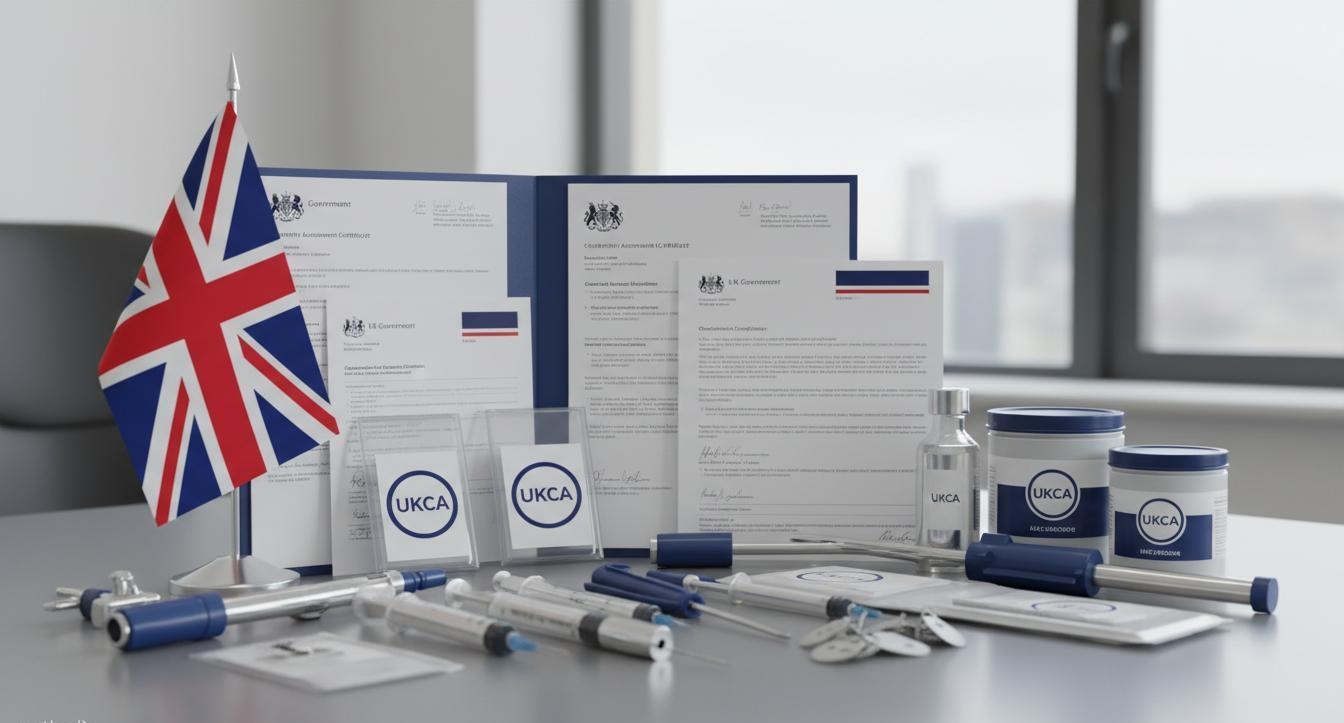
Why UKCA Marking Is Not Just “CE Marking for the UK” — The Key Differences Every Importer Must Know
When the UK left the European Union on January 31, 2020 (with the transition period ending December 31, 2020), the legal basis for CE marking in the UK was severed. The UKCA (UK Conformity Assessed) mark is a legally distinct conformity assessment regime — it is not a renamed CE mark, not a transitional convenience, and not something that will merge back into the CE system. For livestock equipment importers, understanding this distinction is the difference between smooth market access and regulatory non-compliance that can result in product withdrawal.
The UK legal framework is the UK Medical Devices Regulations 2002 (UK MDR 2002), which transposed the EU Medical Devices Directive (93/42/EEC) into UK law and has been amended post-Brexit. Under UK MDR 2002, devices classified as medical or veterinary medical devices placed on the Great Britain market (England, Scotland, and Wales — not Northern Ireland, which follows different rules under the Windsor Framework) must bear UKCA marking. The conformity assessment procedures, essential requirements, and classification rules mirror the EU MDR framework but are administered by the MHRA (Medicines and Healthcare products Regulatory Agency) rather than EU Notified Bodies.
The critical practical difference for Chinese manufacturers like Sound Hardware: our CE certificates issued by EU Notified Bodies do not transfer to the UK. To affix the UKCA mark, we must either: (1) self-declare conformity for Class I devices (under our own responsibility, with supporting technical documentation), or (2) obtain conformity assessment from a UK Approved Body for higher-classification devices. This is a separate compliance cost and timeline from the EU CE process — and it applies to every product placed on the GB market. Per UK Department for Business and Trade (DBT) guidance, the UK government has extended CE marking recognition for medical devices, but this extension is explicitly temporary and importers should not treat it as permanent policy.
UKCA Marking Scope for Veterinary Equipment: Which Products Actually Require It
Not all livestock equipment requires UKCA marking. The scope is determined by whether the product meets the legal definition of a medical device under UK MDR 2002. A product is a medical device if it is: intended by the manufacturer to be used for human or animal beings for the purpose of: diagnosis, prevention, monitoring, treatment or alleviation of disease; diagnosis, monitoring, treatment, alleviation of or compensation for an injury or handicap; investigation, replacement or modification of the anatomy or of a physiological process; or control of conception — and which does not achieve its principal intended action by pharmacological, immunological or metabolic means.
For livestock equipment: AI guns, syringes, injection needles, and cow magnets that are labeled for veterinary diagnostic or therapeutic purposes are within scope and require UKCA marking. Drinking bowls, watering equipment, feeding troughs, and general husbandry tools that make no therapeutic claims are outside scope and do not require UKCA marking or CE marking for the GB market. The classification trigger is the labeling — if your product’s packaging, instructions, or promotional materials state that it diagnoses, treats, prevents, or monitors any animal disease or condition, it is regulated as a veterinary medical device in the UK. At Sound Hardware, we maintain separate UK-specific labeling for products shipped to GB customers, with compliant UKCA marking, UK Responsible Person details, and UK-conformant instructions for use.
The UK Responsible Person Requirement: Why You Cannot Import Without One (And What They Do)
Under UK MDR 2002 as amended, every manufacturer of medical devices located outside the UK must designate a UK Responsible Person (UKRP) — a natural or legal person established in the UK who acts on behalf of the manufacturer for regulatory compliance purposes. The UKRP’s responsibilities include: registering the manufacturer and devices with the MHRA, keeping copies of the technical documentation and declaration of conformity available for MHRA inspection, cooperating with MHRA on any compliance or safety issues, and serving as the legal point of contact for product liability. You cannot legally place UKCA-marked veterinary devices on the GB market without a UKRP — and the UKRP must be established in the UK (not the EU, not the Channel Islands).
The UKRP is not the importer or distributor — these are separate legal roles. The importer (the entity that places the product on the GB market) must verify that the manufacturer has designated a UKRP, that the UKCA marking is correctly affixed, and that the UKRP’s name and address appear on the product labeling. The MHRA registration process requires: the manufacturer’s name and address, the UKRP’s name and address, a list of all device types placed on the GB market, and the device classification for each type. Registration must be completed before any devices are placed on the GB market. At Sound Hardware, we maintain an active UKRP arrangement and provide our GB import clients with the UKRP registration documentation as part of every shipment.
Technical File Requirements: Design History, Risk Analysis, and Clinical Evaluation
For UKCA-marked veterinary devices, the manufacturer must compile and maintain a technical file (also called a technical documentation file or design dossier) that demonstrates conformity with the applicable essential requirements. The technical file structure mirrors the EU MDR technical documentation requirements and must include: device description and specifications, design and manufacturing information (design history, manufacturing process flow, quality control procedures), risk management file (per ISO 14971, identifying hazards, estimating risks, and documenting risk control measures), clinical evaluation report (demonstrating that the device achieves its intended performance without exposing users to unacceptable risk), labeling and instructions for use, and the declaration of conformity.
For Class I veterinary devices (which covers most manual livestock tools), the technical file is maintained by the manufacturer and made available to the UKRP and MHRA upon request — it does not require prior submission or approval. For Class IIa and IIb devices, the technical file must be submitted to and reviewed by a UK Approved Body as part of the conformity assessment process. The MHRA has the authority to request the technical file for any device at any time, and failure to produce a complete technical file within the specified timeframe (typically 30 days) can result in product withdrawal from the market. Per MHRA guidance, the technical file must be maintained for at least 10 years after the last device of that model is placed on the market (or 15 years for implantable devices).
UKCA Marking Application Process: Self-Declaration vs Notified Body Assessment
The conformity assessment route for UKCA marking depends entirely on device classification: Class I devices (non-sterile, non-measuring) use self-declaration — the manufacturer compiles the technical file, issues a declaration of conformity, affixes the UKCA mark, and registers with the MHRA. No third-party assessment is required. Class I sterile devices, Class I measuring devices, and Class IIa/IIb devices require assessment by a UK Approved Body — the manufacturer submits the technical file to an Approved Body, which reviews the documentation and, if satisfied, issues a conformity assessment certificate that enables UKCA marking.
The major challenge for livestock equipment importers: there are very few UK Approved Bodies designated for veterinary medical devices, and their capacity is limited. The transition from EU Notified Bodies to UK Approved Bodies post-Brexit created a bottleneck, with only a handful of Approved Bodies designated for medical device assessment compared to the dozens of EU Notified Bodies available under the CE system. For Class II veterinary equipment, the Approved Body assessment can take 6 to 12 months and cost GBP 5,000 to GBP 25,000 depending on complexity — very similar to FDA 510(k) in timeline and cost magnitude.
Post-Brexit Transition: When UKCA Requirements Become Mandatory vs Currently Voluntary
The UK government has repeatedly extended the deadline for mandatory UKCA marking, and the current status as of 2026 is that CE marking continues to be accepted for medical devices (including veterinary devices) placed on the GB market under transitional provisions. The extensions are motivated by the limited Approved Body capacity, industry readiness concerns, and the broader UK regulatory reform of medical device legislation. However, these extensions are explicitly transitional — the UK government has stated its intention to implement a new UK medical device regulatory framework that will require UKCA marking, and importers who wait until the transition end date to start their UKCA compliance process will face the same capacity bottleneck that caused the extensions. Per MHRA medical device regulation updates, importers should monitor the MHRA website for the latest transition end dates and prepare their UKCA compliance documentation now, regardless of the current transition status.
Frequently Asked Questions
- Q1: What is UKCA marking and does my veterinary equipment need it?
- UKCA marking is the UK’s post-Brexit product conformity mark replacing CE marking for the Great Britain market. Veterinary equipment meeting the UK MDR 2002 medical device definition requires UKCA marking. General husbandry tools (drinking bowls, feeding troughs) without therapeutic claims are outside scope. CE marking is currently accepted under transitional provisions but this is explicitly temporary.
- Q2: Do I need a UK Responsible Person to import veterinary equipment to the UK?
- Yes. Every non-UK manufacturer of UKCA-marked medical devices must designate a UK Responsible Person (UKRP) established in the UK. The UKRP holds technical documentation, registers the manufacturer with MHRA, and serves as the legal compliance contact. The importer must verify the UKRP is designated and that the UKRP’s details appear on product labeling.
- Q3: How does UKCA marking differ from EU CE marking for medical devices?
- UKCA is a legally distinct conformity assessment regime. CE certificates from EU Notified Bodies do not transfer to UKCA. UKCA requires a UK Approved Body (not an EU Notified Body) for assessment of higher-classification devices. UKCA uses the UK MDR 2002 framework vs EU MDR 2017/745, and UKCA requires a UK Responsible Person instead of an EU Authorized Representative.
- Q4: What technical documentation is required for UKCA marking of veterinary equipment?
- Technical documentation must include: device description/specifications, design and manufacturing information, risk management file per ISO 14971, clinical evaluation report, labeling and instructions for use, and declaration of conformity. Class I devices maintain this file for MHRA inspection on request. Class IIa/IIb require submission to a UK Approved Body for review.
- Q5: When did UKCA marking become mandatory for livestock equipment imports?
- The UK government has extended CE marking recognition for medical devices under transitional provisions. CE marking remains accepted on the GB market while these provisions are in effect. However, the government has stated its intention to mandate UKCA marking under new legislation. Importers should prepare UKCA compliance documentation now to avoid the capacity bottleneck when mandatory transition occurs.
External References: DBT UKCA Guide · UK MDR 2002 · MHRA · MHRA Medical Device Regulation · ISO 14971 Risk Management · WTO · BSI Group
Bottom line for livestock equipment importers targeting the UK market: Start your UKCA compliance preparation now, even though CE marking remains accepted under current transitional provisions. The UKRP designation, technical file compilation, and MHRA registration together take 3-4 months and require no changes to your product design — but they must be completed before the transition period ends. Waiting until the last day of the transition will put you in the same queue as every other importer who waited.
Post time: May-20-2026